


 Deutsch
 English
 Español
 Français
 Nederlands
 Português


 Share
Share




Hantavirus Outbreak on MV Hondius: Six Confirmed Cases as German Woman Dies
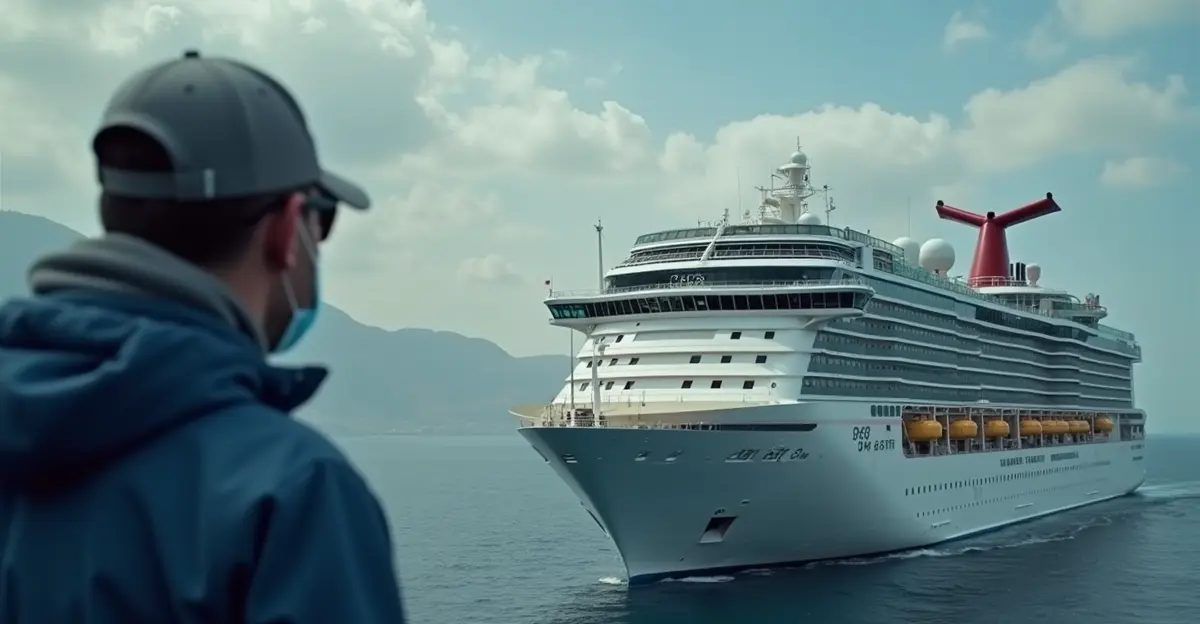
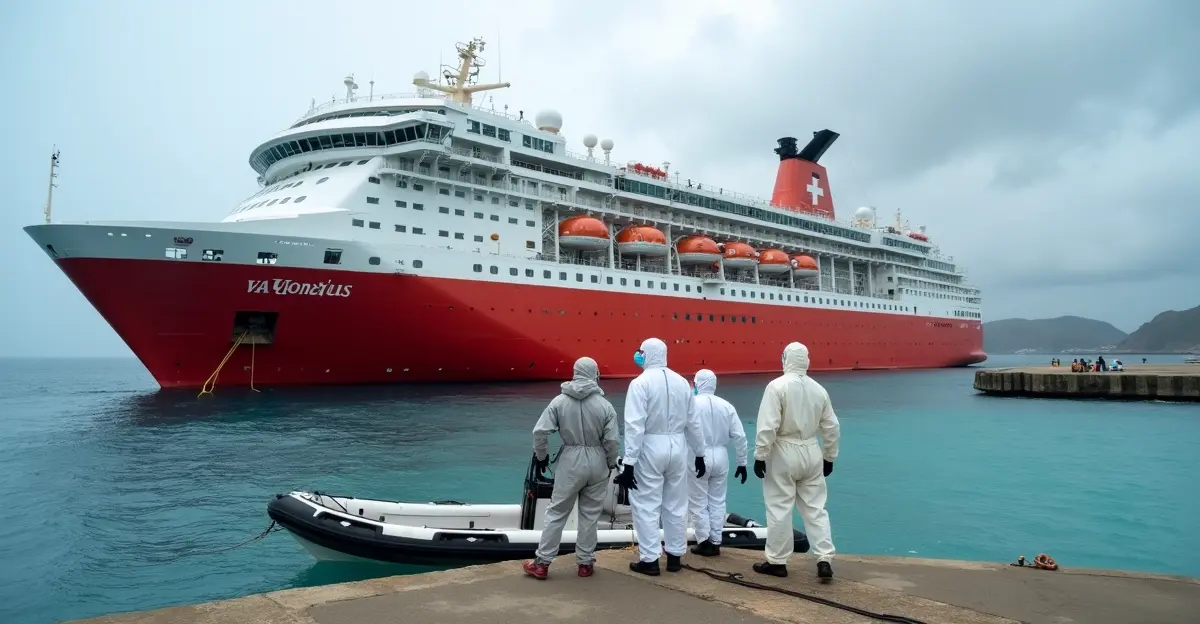
A hantavirus outbreak aboard the Dutch-flagged cruise ship MV Hondius has claimed a third life and now includes six confirmed infections, the World Health Organization (WHO) confirmed on Friday. A 65-year-old German woman who died on the ship has tested positive for the Andes variant of hantavirus, bringing the total number of confirmed cases to six, with two additional probable cases under investigation. The outbreak has triggered a global contact-tracing operation and the quarantine of approximately 150 people still aboard the vessel.
Background: A Deadly Voyage
The MV Hondius, operated by Oceanwide Expeditions, departed Ushuaia, Argentina on April 1, 2026, carrying approximately 175 passengers and crew from 23 nationalities. The vessel traveled through Antarctica, the South Georgia Islands, Tristan da Cunha, Saint Helena, and Ascension Island before reaching Cape Verde. It was during this journey that passengers began falling ill with a severe respiratory illness that would later be identified as hantavirus pulmonary syndrome (HPS) caused by the Andes virus.
The first two fatalities were a Dutch couple, aged 70 and 69, who died within days of each other in mid-April. A third death, the German woman, was confirmed this week after body tissue samples were flown to the Netherlands for testing. The Andes hantavirus transmission is particularly concerning because it is the only hantavirus known to spread from person to person through close, prolonged contact.
Current Situation: Six Confirmed, Two Probable
Confirmed Cases and Hospitalizations
According to the WHO, six cases of Andes hantavirus infection have been laboratory-confirmed as of May 9, 2026. Two additional cases are classified as probable, pending test results. Four patients remain hospitalized, including one British national who is in critical condition in a South African intensive care unit. A Dutch stewardess tested negative for the virus after being evacuated, though a British passenger is believed to be infected.
The German woman's body tissue was retrieved during one of several medical evacuation flights that transported three other ill passengers to the Netherlands. Testing in a Dutch laboratory confirmed the presence of the Andes variant. A German woman who had close contact with the deceased passenger was evacuated to a hospital in Germany for observation but has tested negative.
Ship Status and Quarantine
Approximately 150 people remain aboard the Hondius, which is currently sailing toward the Canary Islands. The ship is expected to dock at Santa Cruz de Tenerife on Sunday, May 10. None of those currently on board are showing symptoms of illness, according to officials. Dutch nationals on the ship will be repatriated as soon as possible and will face a mandatory six-week home quarantine upon arrival in the Netherlands.
The global contact tracing operation is one of the most complex in recent maritime history, with health authorities in multiple countries working to track down passengers who disembarked at various ports along the voyage.
The Andes Variant: A Rare but Deadly Pathogen
The Andes virus (ANDV) is a New World hantavirus found primarily in South America, where it is carried by the long-tailed pygmy rice rat (Oligoryzomys longicaudatus). Unlike most hantaviruses, which spread only through contact with rodent urine, droppings, or saliva, the Andes variant is capable of limited human-to-human transmission through close, prolonged contact or exposure to bodily fluids.
Symptoms and Fatality Rate
Hantavirus pulmonary syndrome progresses through three phases. Early symptoms appear 1-8 weeks after exposure and include fever, muscle aches, headache, nausea, and vomiting. This prodromal phase lasts 1-5 days and is followed by a cardiopulmonary phase characterized by coughing, shortness of breath, and rapid progression to acute respiratory distress syndrome (ARDS) and shock. The final recovery phase can take months, with breathing difficulties persisting for up to two years.
The case fatality rate for Andes hantavirus infection is estimated at 30-50%, making it one of the most deadly viral infections known. There is no specific antiviral treatment or vaccine available; care is supportive and may include mechanical ventilation, extracorporeal membrane oxygenation (ECMO), and intensive monitoring.
How Transmission Occurs
According to the U.S. Centers for Disease Control and Prevention (CDC), the Andes virus is the only hantavirus known to spread person-to-person. Transmission typically requires close, sustained contact with an infected individual, such as living in the same household or providing direct care. The window for human-to-human transmission is short, peaking around the time fever develops. The virus does not spread through casual contact, and health authorities stress that the risk to the general public remains very low.
Primary infection occurs through inhalation of aerosolized rodent excreta. The outbreak on the Hondius is believed to have originated with a male passenger who contracted the virus during a bird-watching excursion at a landfill in Ushuaia, Argentina, before boarding the ship.
Global Response and Public Health Measures
International Coordination
The WHO, European Centre for Disease Prevention and Control (ECDC), and CDC are all actively involved in the response. The CDC has deployed a team of epidemiologists and medical professionals to the Canary Islands to conduct exposure risk assessments for American passengers. The U.S. government has arranged a medical evacuation flight to transport American passengers to the National Quarantine Center at the University of Nebraska Medical Center in Omaha.
Several U.S. states, including California, Texas, Georgia, Virginia, and New Jersey, are monitoring passengers who have already returned home for potential symptoms. Health officials in the United Kingdom, Germany, South Africa, Spain, and Switzerland are also conducting contact tracing and monitoring efforts.
The WHO risk assessment for hantavirus currently rates the global public health risk as low, emphasizing that this is not a pandemic-level threat. Dr. Maria Van Kerkhove, WHO's infectious disease lead, stated: 'This is a contained outbreak. The Andes virus does not spread easily between people, and the measures being taken are appropriate to prevent further transmission.'
Quarantine and Prevention
Dutch authorities have mandated a six-week home quarantine for all Dutch nationals who were on the Hondius. The quarantine period reflects the maximum incubation period for hantavirus, which can range from 4 to 42 days. Passengers are advised to monitor for symptoms including fever, muscle aches, and shortness of breath, and to seek immediate medical care if symptoms develop.
Prevention measures recommended by the CDC include avoiding contact with rodents and their droppings, practicing frequent handwashing, maintaining distance from sick individuals, and not sharing personal items with potentially infected persons. There is no vaccine currently approved for hantavirus prevention in the United States or Europe.
Frequently Asked Questions
What is hantavirus?
Hantavirus is a family of viruses spread primarily by rodents. Infection in humans can cause hantavirus pulmonary syndrome (HPS), a severe respiratory disease with a fatality rate of 30-60%. The Andes variant found in South America is the only hantavirus known to spread between humans.
How does the Andes virus spread from person to person?
The Andes virus spreads through close, prolonged contact with an infected person, including direct physical contact or exposure to bodily fluids. It does not spread through casual contact like coughing in a public space. The transmission window is short, typically around the time fever develops.
What are the symptoms of hantavirus infection?
Symptoms appear 1-8 weeks after exposure and include fever, muscle aches, headache, nausea, vomiting, and diarrhea. Within days, the illness can progress to coughing, shortness of breath, and rapid respiratory failure. Anyone with these symptoms after potential exposure should seek emergency medical care immediately.
Is there a treatment or vaccine for hantavirus?
There is no specific antiviral treatment or vaccine for hantavirus infection. Care is supportive and focuses on managing respiratory distress, maintaining oxygen levels, and supporting organ function. Early medical intervention is critical for survival.
Should the general public be worried about this outbreak?
Health authorities including the WHO and CDC emphasize that the risk to the general public remains very low. The outbreak is contained to individuals who were on the MV Hondius or had close contact with infected passengers. The virus does not spread easily and is not comparable to COVID-19 in terms of pandemic potential.
Sources
This article is based on information from the World Health Organization (WHO), the U.S. Centers for Disease Control and Prevention (CDC), the European Centre for Disease Prevention and Control (ECDC), the Netherlands National Institute for Public Health and the Environment (RIVM), and reporting from NOS, Associated Press, ABC News, and Newsweek.




Follow Discussion