


 Deutsch
 English
 Español
 Français
 Nederlands
 Português


 Share
Share




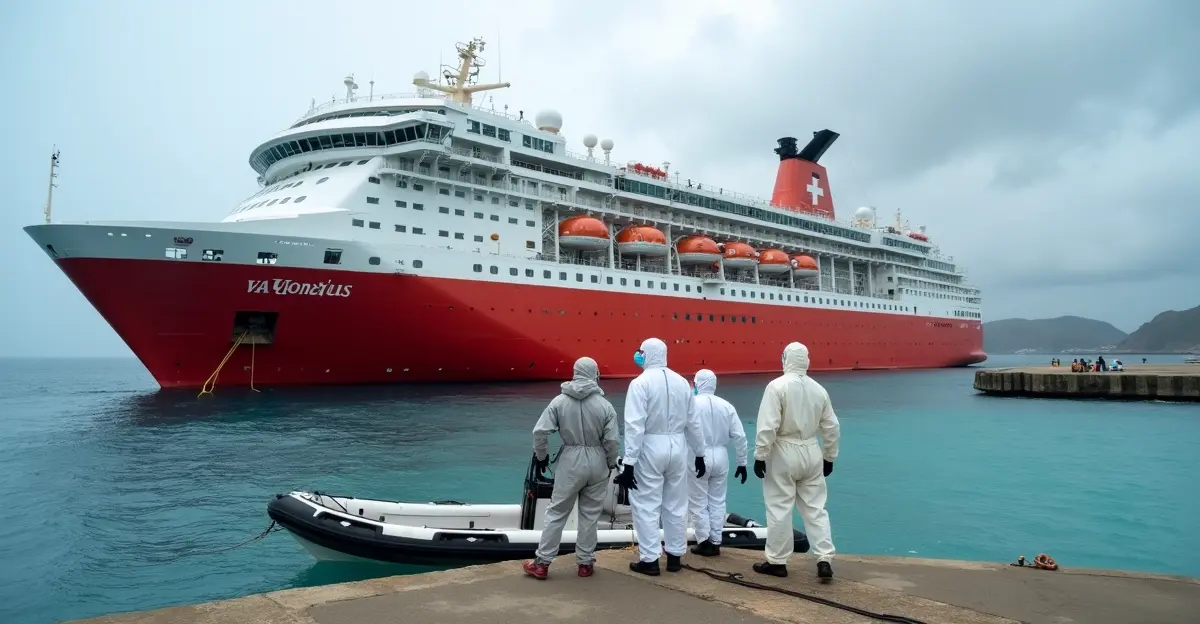
Deadly Hantavirus Outbreak on MV Hondius Sparks Worldwide Contact Tracing Operation
A global health operation is underway to trace passengers who sailed aboard the Dutch cruise ship MV Hondius, following a rare outbreak of the Andes strain of hantavirus that has killed three people and infected several others. The World Health Organization (WHO) has confirmed six cases and eight suspected cases as of May 9, 2026, with passengers and crew from 28 countries now being monitored across multiple continents. The WHO emphasizes that the risk of a pandemic remains low, as the virus does not spread as easily as COVID-19, but the long incubation period of up to six weeks means more cases may emerge.
Timeline of the Outbreak
The MV Hondius departed Ushuaia, Argentina on April 1, 2026, carrying approximately 175 passengers and crew. The outbreak likely began when a Dutch couple visited a landfill site for birdwatching before boarding, where they may have come into contact with rodents carrying the Andes hantavirus. The timeline of events is as follows:
- April 1: Ship departs from Argentina. Two Dutch passengers visit a landfill, potential exposure site.
- April 5: A 69-year-old Dutch man develops fever, headache, and diarrhea.
- April 11: The man dies aboard ship from respiratory failure. The vessel is between South Georgia and Saint Helena.
- April 24: Ship arrives at Saint Helena; 29 passengers from 12 countries disembark. The widow of the deceased man leaves the ship.
- April 25: The widow collapses at a South African airport and dies the next day.
- May 2: A German woman dies aboard the Hondius as the ship heads toward Cape Verde.
- May 3: WHO launches an investigation.
- May 6: Three sick passengers (a Dutch, a British, and a German) are evacuated to European hospitals.
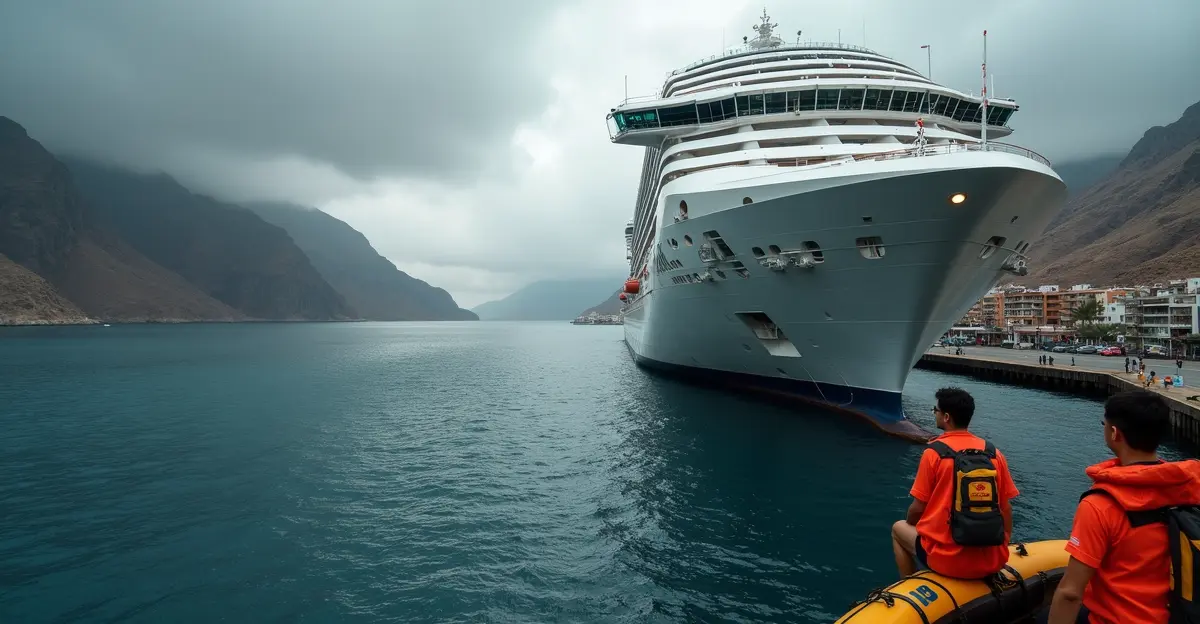
- May 8-9: Ship heads to Tenerife, Canary Islands, for passenger evacuation. Six confirmed cases, three deaths.
What Is the Andes Hantavirus?
The Andes virus (ANDV) is a New World hantavirus that causes hantavirus pulmonary syndrome (HPS), also known as hantavirus cardiopulmonary syndrome (HCPS). According to the WHO, the Andes strain is unique among hantaviruses because it can spread from person to person through close, prolonged contact with infected body fluids. The virus is primarily transmitted through inhalation of aerosols from rodent urine, droppings, or saliva. The case fatality rate ranges from 20% to 60%, with death often occurring suddenly during the cardiopulmonary phase. No specific antiviral treatments or vaccines exist; care is supportive, including mechanical ventilation and ECMO.
Global Tracing: A Complex Operation
Health authorities in at least 12 countries are tracking passengers who may have been exposed. The global response to infectious disease outbreaks involves coordination between WHO, CDC, and national health agencies. Here is a country-by-country breakdown:
Netherlands
Sixteen Dutch nationals were aboard: 11 passengers and 5 crew. Two died (the couple). A Dutch stewardess tested negative. Two patients (a Dutchman and a British passenger) are hospitalized in Leiden and Nijmegen. All Dutch passengers still aboard will be repatriated and must undergo six weeks of home quarantine.
United States
Seventeen American passengers remain on the ship. The CDC is coordinating repatriation via a medical flight to Offutt Air Force Base in Nebraska, with subsequent monitoring at the National Quarantine Unit at the University of Nebraska Medical Center. Five states (Georgia, Texas, Arizona, Virginia, California) are monitoring former passengers.
United Kingdom
Three British passengers tested positive; one is in a South African hospital, two in the Netherlands. Four Britons on Saint Helena show no symptoms. Over 20 British passengers still on the ship must quarantine for 45 days upon return.
Other Countries
Argentina is investigating the possible source. Canada monitors three individuals. Belgium has two passengers who will be taken to Antwerp University Hospital. France has identified eight contacts of the deceased Dutch couple; one has mild symptoms. Germany has one deceased and one hospitalized patient in Düsseldorf. Switzerland has one positive case hospitalized in Zürich. Denmark has one person in home quarantine. Spain is preparing for the ship's arrival at Tenerife, where it will dock at an isolated location. The president of the Canary Islands initially opposed docking but later agreed. Philippines reports no cases among 38 Filipino crew members.
Expert Analysis: Chaotic Response and Low Public Risk
Health experts describe the international response as "particularly chaotic," according to a source speaking to the BBC. However, the WHO maintains that the public health risk is low. Unlike COVID-19, the Andes hantavirus does not transmit efficiently through casual contact; it requires close, prolonged exposure to infected bodily fluids. The incubation period of 1-8 weeks means that more cases may yet be identified, but the outbreak is expected to remain contained to the small group of travelers. Dr. Luis Escobar, a disease ecologist at Virginia Tech, warns that emerging infectious diseases from wildlife are becoming more frequent due to environmental change and increased human mobility. He notes that human behaviors, not viral mutation, are likely driving current transmission.
FAQ: Hantavirus Outbreak on MV Hondius
What is the Andes hantavirus?
The Andes virus is a strain of hantavirus found in South America that causes hantavirus pulmonary syndrome (HPS), a severe respiratory disease with a fatality rate of 20-60%. It is unique among hantaviruses for its ability to spread between humans through close contact.
How is the virus transmitted?
Primarily through inhalation of aerosolized rodent urine, droppings, or saliva. Person-to-person transmission occurs through close, prolonged contact with infected bodily fluids, but this is rare.
What are the symptoms?
Symptoms appear 1-8 weeks after exposure and include fever, muscle aches, headache, shortness of breath, and gastrointestinal issues. The disease progresses to a cardiopulmonary phase with respiratory failure and shock.
Is there a treatment or vaccine?
No specific antiviral treatment or vaccine exists. Care is supportive, including oxygen, mechanical ventilation, and ECMO. Early diagnosis and intensive care improve survival chances.
Should the public be worried?
The WHO states the risk to the general public is very low. The outbreak is confined to passengers and crew of the MV Hondius. However, travelers who visited the same regions in Argentina, Chile, or Uruguay should monitor for symptoms.


Follow Discussion