


 Deutsch
 English
 Español
 Français
 Nederlands
 Português


 Share
Share




Japan Lodges Formal Protest Over Chinese Live-Fire Exercise Near Okinotorishima
Japan has formally protested after a Chinese People's Liberation Army Navy (PLAN) destroyer conducted a live-fire machine-gun exercise on July 19, 2026, inside waters that Tokyo claims as its Exclusive Economic Zone (EEZ) near the remote Okinotorishima atoll. The incident, which also involved a Russian frigate operating in close proximity, marks the first time Japan has publicly reported a foreign warship conducting live-fire drills within its claimed EEZ. The exercise has sharply escalated tensions between Tokyo and Beijing, highlighting the growing strategic rivalry in the Western Pacific and the deepening military coordination between China and Russia.
The Japanese government confirmed that the Chinese Type 052D guided-missile destroyer Kaifeng fired a machine gun approximately 180 kilometers (97 nautical miles) southwest of Okinotorishima, Japan's southernmost territory. The drill occurred around 2:00 a.m. local time on Sunday, July 19, and was detected and monitored by a Japan Maritime Self-Defense Force (JMSDF) vessel that was shadowing the Chinese flotilla. Tokyo lodged a diplomatic protest with Beijing through official channels, arguing that the exercise posed a potential danger to other vessels navigating the area.
Background: What Is Okinotorishima and Why Is It Disputed?
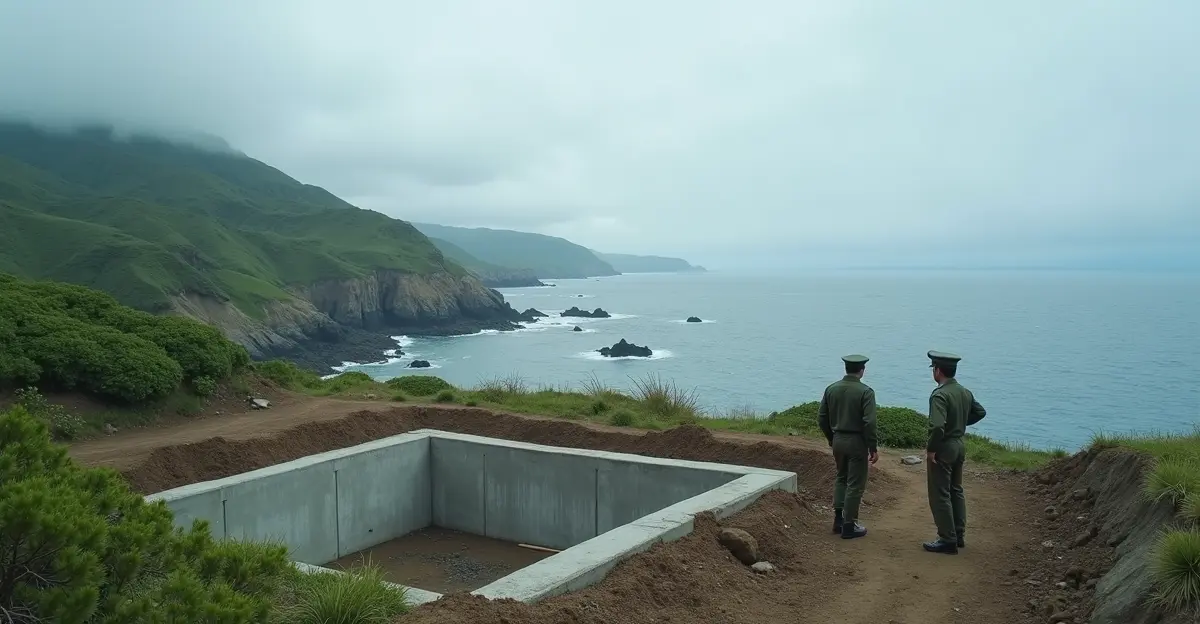
Okinotorishima, also known as Parece Vela, is a coral atoll located approximately 1,740 kilometers (1,080 miles) south of Tokyo in the Philippine Sea. Administered by Japan since 1931, the atoll consists of two small rocks that have been reinforced with concrete tetrapods and seawalls to prevent erosion. Japan considers Okinotorishima an island under the United Nations Convention on the Law of the Sea (UNCLOS) and uses it as a baseline to claim a 200-nautical-mile (370-kilometer) EEZ — an area rich in fisheries and potential seabed resources.
China, however, disputes this status, arguing that Okinotorishima is a "rock" rather than an island under UNCLOS Article 121. Under international law, rocks that cannot sustain human habitation or economic life do not generate an EEZ or continental shelf. Beijing refers to the feature as "Okinotori Reef" or "Okinotori Rock" and considers Japan's EEZ claim illegitimate. South Korea and Taiwan have also raised objections to Japan's position.
The Okinotorishima territorial dispute is part of a broader pattern of maritime disagreements in East Asia, where overlapping claims and competing interpretations of UNCLOS continue to fuel regional tensions.
The Live-Fire Incident: What Happened on July 19, 2026?
According to Japan's Defense Ministry, the Chinese destroyer Kaifeng was part of a four-ship PLAN flotilla that included another Type 052D destroyer (Anshan), a Type 054A frigate (Wuhu), and a replenishment ship (Kekexilihu). The group was accompanied by the Russian Navy's frigate Rezkiy (also reported as Surovy). These vessels had previously participated in the "Joint Sea 2026" bilateral naval exercise held off Qingdao, China, from July 6 to July 13, before transitioning to joint maritime patrols in the Pacific Ocean.
On July 19, the Japanese destroyer JS Kirisame spotted the combined China-Russia flotilla approximately 330 kilometers southwest of Okinotorishima. While shadowing the group, Japanese personnel observed the Kaifeng fire a machine gun in a live-fire drill. The Chinese vessel had reportedly issued a radio warning to nearby shipping about the location and duration of the exercise shortly before opening fire.
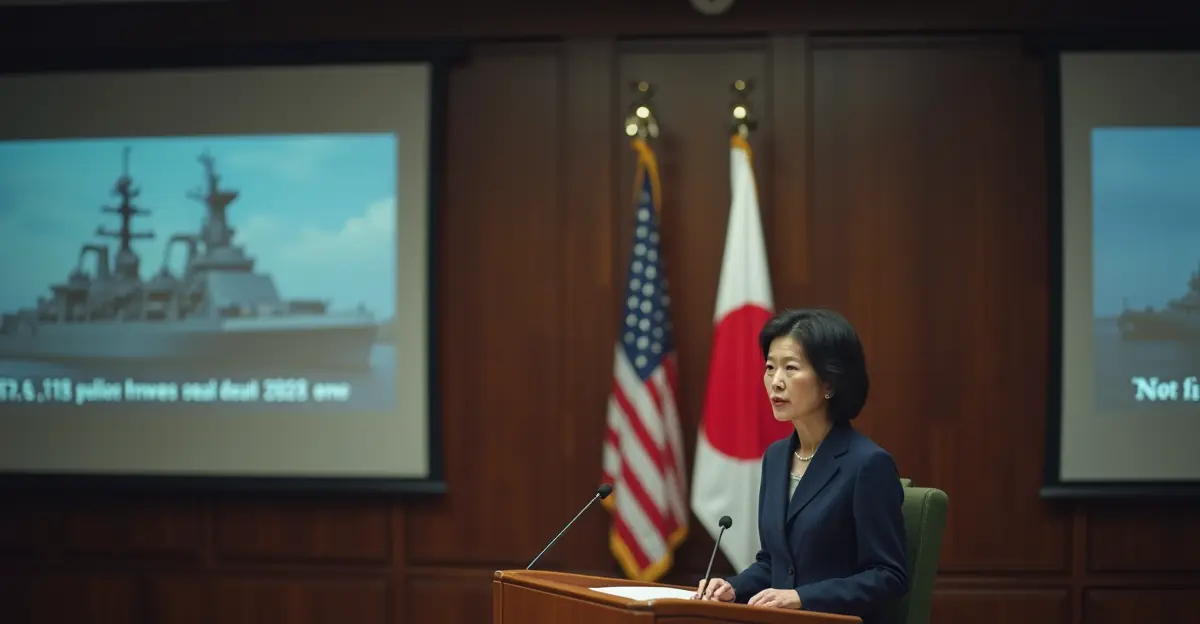
Japan's Chief Cabinet Secretary Minoru Kihara stated that Tokyo considered the drill "extremely regrettable" and emphasized that it could endanger the safety of other vessels. However, Japan did not allege a violation of international law, as military exercises in another state's EEZ are not automatically prohibited under UNCLOS — though the use of live ammunition raises additional safety concerns.
China's Response: 'Unfounded' Protest
China's Foreign Ministry rejected Japan's protest as "unfounded," reiterating that its naval vessels were operating in international waters and had complied with international law. A Chinese spokesperson stated that Okinotorishima does not qualify as an island under UNCLOS and therefore cannot generate an EEZ, making Japan's claim invalid. Beijing also accused Japan of exaggerating the threat to justify expanding its own military capabilities, a charge Tokyo denies.
Growing China-Russia Naval Cooperation
The July 19 incident is the latest example of increasingly close military ties between China and Russia. The two nations have conducted ten joint bomber patrols around Japan, and their navies have held annual "Joint Sea" exercises since 2012. The 2026 iteration, which concluded on July 13, involved ten vessels from both navies conducting live-fire drills, anti-submarine warfare exercises, and command-and-control simulations. Following the exercise, the combined force immediately sailed for joint patrols in the Pacific — a pattern that is becoming routine.
According to Japanese Defense Minister Shinjiro Koizumi, the live-fire drill and the coordinated bomber flights represent "a new phase" in China-Russia military cooperation. "They are increasingly operating together, testing our response capabilities and expanding their reach into the Pacific," Koizumi told reporters.
This growing interoperability is also reflected in the China-Russia joint naval strategy, which analysts say is designed to challenge the U.S.-led security architecture in the Indo-Pacific region.
Yoji Koda, a former admiral and ex-commander of the Japan Maritime Self-Defense Force, told public broadcaster NHK: "With small actions like this live-fire exercise, China is steadily pushing further into the Pacific. Their goal is to extend their military reach to the Ogasawara Islands area, so they can interdict U.S. forces that might come to Taiwan's aid."
Broader Strategic Implications
The live-fire drill comes amid a period of heightened tension in East Asia. In early July 2026, a Chinese nuclear submarine test-launched an unarmed intercontinental ballistic missile (ICBM) into the southern Pacific Ocean, giving surrounding nations only brief advance notice. Japan expressed grave concern over that test, which Beijing described as a routine exercise not directed at any particular country.
Meanwhile, Japan has been steadily increasing its defense budget and military capabilities, citing the deteriorating security environment. Tokyo's 2026 defense budget reached a record high, and the government has been reinforcing its posture in the Nansei Islands chain, which includes Okinotorishima. China has criticized these moves as "new militarism," invoking Japan's wartime aggression in the 1930s and 1940s.
The Japan-China diplomatic crisis 2025-2026 has seen tit-for-tat measures, including China banning exports of certain goods for military use to Japan and postponing high-level bilateral talks. The live-fire drill is likely to further complicate any prospects for dialogue.
FAQ: Understanding the Okinotorishima Live-Fire Incident
What is an Exclusive Economic Zone (EEZ)?
An EEZ is a sea zone extending 200 nautical miles (370 km) from a coastal state's baselines, within which the state has sovereign rights over natural resources, including fisheries and seabed minerals. However, foreign vessels enjoy freedom of navigation and overflight in an EEZ, subject to certain limitations.
Is it legal for China to conduct military exercises in Japan's claimed EEZ?
Under UNCLOS, military exercises in another state's EEZ are not explicitly prohibited, provided they do not interfere with the coastal state's resource rights or endanger navigation. However, live-fire drills raise safety concerns, and many states consider prior notification a norm. Japan protested on safety grounds, not on the basis of illegality.
Why does China claim Okinotorishima is a rock, not an island?
UNCLOS Article 121(3) states that "rocks which cannot sustain human habitation or economic life of their own shall have no exclusive economic zone or continental shelf." China argues that Okinotorishima is a largely submerged atoll with no fresh water or capacity to support a permanent population, and therefore cannot generate an EEZ. Japan counters that it has invested in infrastructure, including a research station and concrete reinforcements, making it habitable and thus an island.
What role did Russia play in this incident?
A Russian frigate was operating alongside the Chinese flotilla during the drill, as part of a joint maritime patrol following the "Joint Sea 2026" exercise. This marks a further step in the deepening naval interoperability between China and Russia, which Japan views as a strategic challenge to regional stability.
How has Japan responded diplomatically?
Japan lodged a formal protest through diplomatic channels and publicly condemned the exercise. Chief Cabinet Secretary Minoru Kihara stated that Japan's rights over Okinotorishima as an island are firmly established. Tokyo also called on Beijing to exercise restraint and avoid actions that could escalate tensions.




Follow Discussion