


 Deutsch
 English
 Español
 Français
 Nederlands
 Português


 Share
Share




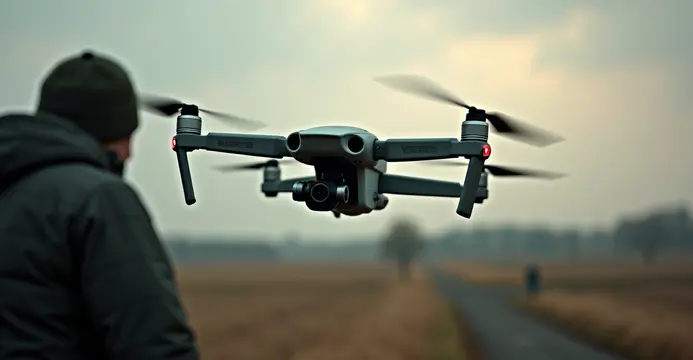
A NATO fighter jet shot down a suspected Ukrainian drone over Estonian airspace on May 19, 2026, in what officials described as the first kinetic interception of an unmanned aerial vehicle on NATO territory during the Russia-Ukraine war. The incident, which occurred over Lake Võrtsjärv in southern Estonia, underscores growing challenges for the alliance as Ukrainian long-range drone strikes on Russian targets increasingly spill into neighboring countries.
Incident Details: Romanian F-16 Intercepts Rogue Drone
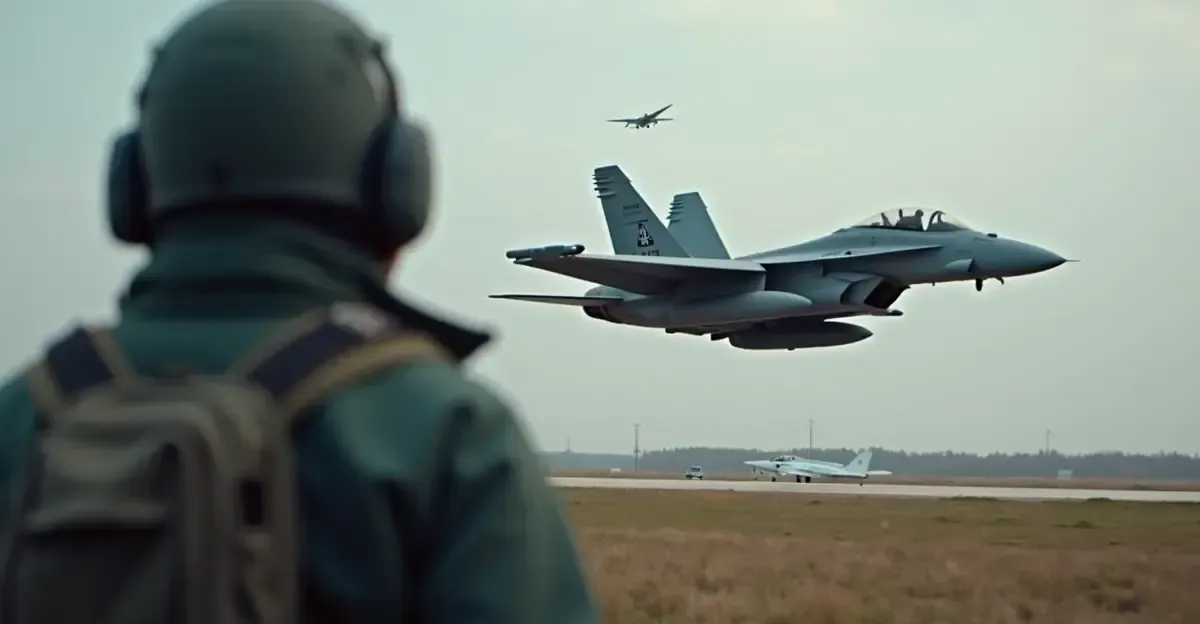
Estonian Defence Minister Hanno Pevkur confirmed that a Romanian Air Force F-16 fighter jet, operating as part of NATO's Baltic Air Policing mission from Šiauliai Air Base in Lithuania, intercepted and destroyed the drone at 12:14 PM local time. The drone entered Estonian airspace from Russia's southeastern corner and was tracked by Estonian and Latvian radar systems before being engaged. The Baltic Air Policing mission has been on heightened alert since March 2026 due to repeated drone incursions.
Estonian authorities issued an air threat alert covering six counties after receiving advance warning from Latvia. The drone was brought down between Lake Võrtsjärv and Põltsamaa, with wreckage landing near the village of Kablaküla. No civilian injuries or property damage were reported. Brigadier General Riivo Valge confirmed that the drone was visually identified before the Romanian pilot fired a single missile to neutralize the threat.
Background: Escalating Drone Incursions in the Baltic Region
The May 19 shootdown is the latest in a series of Ukrainian drone incursions into Baltic NATO territory. In March 2026, Ukraine intensified long-range drone attacks on Russian oil export infrastructure, particularly the ports of Ust-Luga and Primorsk on the Baltic Sea. These strikes, among the largest Ukrainian attacks on Russian oil facilities during the war, have forced repeated suspensions of crude oil and product loadings.
On March 23, a Ukrainian drone crashed near Lake Lavysas in Lithuania. Two days later, on March 25, separate drones entered Latvian and Estonian airspace. In Estonia, a drone struck the chimney of the Auvere power station, about 2 kilometers from the Russian border, though it caused no operational damage. In Latvia, a drone crashed in the village of Dobročina. On May 7, two more suspected Ukrainian drones entered Latvia, with one exploding at an oil storage facility in Rēzekne, prompting the resignations of Latvia's defense minister and prime minister.
Russian Electronic Warfare: A Key Factor
Multiple officials and analysts have pointed to Russian electronic warfare as a primary cause of the navigational errors. The 2025 Russian electronic warfare tactics have evolved significantly, with GPS spoofing and jamming systems deployed near Kaliningrad and along the Baltic coast. Estonia's military confirmed that the May 19 incident occurred amid "heavy electronic warfare, including GPS spoofing and jamming, by Russia."
Finnish Prime Minister Petteri Orpo has stated that the drones were "presumably driven off course into NATO countries by Russian electronic jamming." Ukrainian officials have echoed this assessment, accusing Russia of deliberately redirecting Ukrainian drones into Baltic airspace as part of a coordinated propaganda campaign. Russia has denied these allegations and instead accused Baltic states of allowing Ukrainian drones to transit their airspace toward targets inside Russia.
Political and Diplomatic Fallout
Ukraine issued a public apology shortly after the May 19 incident. Foreign Ministry spokesperson Heorhii Tykhyi expressed regret, stating that the drone was part of legitimate strikes on Russian military infrastructure and that Ukraine had not intended to violate NATO airspace. Estonian officials accepted the apology but stressed that airspace permission had not been granted to Ukraine.
The incident has fueled political tensions in the region. In Latvia, the government collapsed after the May 7 drone explosion at the Rēzekne oil facility, with both the defense minister and prime minister resigning. Estonia's Foreign Affairs Committee chair Marko Mihkelson warned that Russia is exploiting these incidents to undermine NATO unity. The Latvian government collapse over drone incidents highlights the serious domestic repercussions of these spillover events.
NATO Response and Strategic Implications
NATO has reaffirmed its commitment to defending allied airspace. The Baltic Air Policing mission, which rotates fighter detachments among member nations, has been reinforced since March. The Romanian 'Carpathian Vipers' detachment was on a routine training flight when it was retasked for the intercept. Estonian Defence Minister Pevkur praised the swift response, calling it "a demonstration of the effectiveness of joint Baltic air policing."
Estonia's air force commander warned that similar incidents could recur as Ukraine continues its long-range strike campaign. Ukrainian drone attacks have escalated from 50-70 UAVs per raid to 100-200, with some attacks involving up to 300 kamikaze drones. Russia's air defense systems are "stretched too thin," according to Kremlin officials, making it increasingly difficult to prevent drones from veering off course.
Frequently Asked Questions
Why did the drone enter Estonian airspace?
The drone was likely part of a Ukrainian long-range strike mission targeting Russian oil infrastructure on the Baltic Sea. Russian electronic warfare measures, including GPS jamming and spoofing, are believed to have diverted the drone from its intended course, causing it to cross into NATO territory.
Has this happened before?
Yes. In March 2026, Ukrainian drones crashed in Lithuania, Latvia, and Estonia. On May 7, two drones entered Latvia, one exploding at an oil storage facility. The May 19 incident was the first time NATO forces used kinetic force to shoot down an intruding drone over Baltic airspace.
What is NATO's Baltic Air Policing mission?
NATO's Baltic Air Policing mission is a 24/7 Quick Reaction Alert operation that patrols the airspace of Estonia, Latvia, and Lithuania, which lack their own fighter jet capabilities. Member nations rotate deployments of fighter aircraft to Šiauliai Air Base in Lithuania and Ämari Air Base in Estonia.
Did Ukraine apologize for the incident?
Yes. Ukraine's Foreign Ministry issued a public apology shortly after the shootdown, expressing regret for the unintended violation of NATO airspace and emphasizing that the drone was targeting Russian military infrastructure.
Could this escalate into a broader conflict?
While the incident is serious, analysts view it as an accident caused by electronic warfare rather than a deliberate provocation. NATO and Ukraine have maintained diplomatic channels, and no Article 4 or Article 5 consultations have been invoked. However, repeated incursions risk increasing tensions between Russia and NATO.


Follow Discussion