


 Deutsch
 English
 Español
 Français
 Nederlands
 Português


 Share
Share




What is the February 2026 Geopolitical Crisis?
The late February 2026 geopolitical conflicts, particularly the escalation in the Middle East leading to the Strait of Hormuz closure on March 4, 2026, have triggered the most dramatic shift in global economic risk perception in recent memory. According to McKinsey's March 2026 Global Survey, a staggering 72% of global executives now identify geopolitical instability as their top economic concern, overshadowing previous priorities like trade policy, supply chain resilience, and energy price volatility. This sudden escalation has forced corporations and governments worldwide to fundamentally rethink their risk management frameworks, investment strategies, and global operational models in what experts are calling a new era of geopolitical uncertainty.
Context and Background: From Regional Conflict to Global Economic Shock
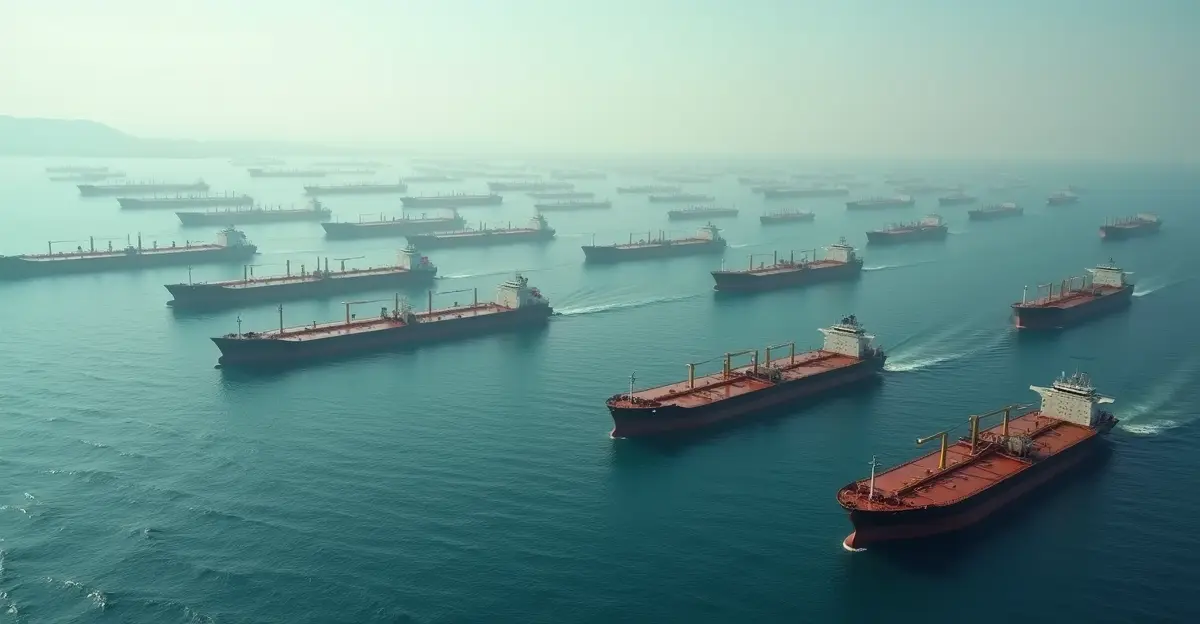
The February 2026 conflicts represent more than regional instability—they've become a systemic global economic threat. The closure of the Strait of Hormuz, through which approximately 20% of global oil shipments pass, has created what the International Energy Agency calls 'the largest supply disruption in the history of the global oil market.' Brent Crude surged past $120 per barrel, while European gas prices nearly doubled to over €60/MWh as Qatari LNG exports were suspended. This energy shock coincided with historically low European gas storage levels at just 30% capacity following a harsh winter, creating perfect storm conditions for global economic disruption.
The crisis has exposed vulnerabilities in the global economic system that were previously underestimated. As one analyst noted, 'The Gulf states are unlikely to sustain high levels of investment spending during or after the war,' marking what Deutsche Welle described as the 'end of the narrative' that the region represents a permanently safe destination for investment and expatriate talent. This represents a fundamental shift in the global investment landscape that will have lasting implications for capital flows and economic development patterns.
The Executive Sentiment Reversal: McKinsey's March 2026 Findings
McKinsey's March 2026 Global Survey reveals a dramatic reversal in executive sentiment that underscores the severity of the geopolitical shift. The 72% figure represents more than just statistical data—it reflects a fundamental reordering of corporate priorities. Previously dominant concerns have been relegated to secondary status:
- Trade policy uncertainty dropped from primary to secondary concern
- Supply chain resilience remains important but now viewed through geopolitical lens
- Energy price volatility transformed from cyclical concern to strategic threat
- Inflation management now complicated by supply-side shocks
The survey findings align with the World Economic Forum's Global Risks Report 2026, which identified geoeconomic confrontation as the top global risk, climbing eight positions in the two-year outlook. Half of experts surveyed expect a turbulent or stormy global outlook over the next two years, while only 1% anticipate calm conditions.
Cascading Effects on Global Economic Systems
Financial Markets and Investment Strategies
The February 2026 conflicts have triggered significant market volatility and strategic realignment. According to market analysis, U.S. military operations in Iran triggered oil price surges and market volatility, with gold emerging as a preferred diversifier. International equities outperformed U.S. markets, driven by record inflows to international equity funds and strong performance in Asian markets, particularly Japan (+8.6%) and Asia-ex Japan (+5.9%). This represents a notable shift in global capital allocation patterns that may have long-term implications for investment strategies.
Energy Security and Industrial Impact
The energy crisis has had immediate industrial consequences. European chemical and steel manufacturers have imposed surcharges of up to 30% to offset surging electricity and feedstock costs, potentially leading to permanent deindustrialization in energy-intensive sectors. The European Central Bank postponed its planned interest rate reductions on March 19, raising its 2026 inflation forecast and cutting GDP growth projections. UK inflation is expected to breach 5% in 2026, creating challenging conditions for monetary policy and economic management.
Supply Chain and Trade Disruptions
The maritime blockade has triggered a concurrent 'grocery supply emergency' across Gulf Cooperation Council states, which rely on the Strait for over 80% of their caloric intake. By mid-March, 70% of the region's food imports were disrupted, forcing retailers to airlift staples and resulting in a 40–120% spike in consumer prices. The regional aviation sector, including Emirates and Qatar Airways, faced a near-total cessation of operations due to multi-national airspace closures, causing widespread disruption to global air travel.
Strategic Adaptation: How Organizations Are Responding
Forward-thinking organizations are implementing several strategic adaptations in response to the new geopolitical reality:
- Enhanced Geopolitical Intelligence: Companies are investing in sophisticated geopolitical risk assessment capabilities and scenario planning
- Supply Chain Diversification: Accelerated efforts to build redundancy and regionalization into supply networks
- Energy Transition Acceleration: Renewed focus on renewable energy and energy independence initiatives
- Financial Resilience Building: Strengthening balance sheets and liquidity positions to weather volatility
- Regional Strategy Reassessment: Re-evaluating market entry and expansion plans based on new risk assessments
As noted in recent business analysis, 'Companies must focus on preparedness, financial discipline, and long-term orientation rather than trying to predict geopolitical events.' This represents a fundamental shift from prediction-based to resilience-based strategic planning.
Impact on International Alliances and Technology Competition
The February 2026 conflicts have accelerated existing trends in international relations and technology competition. The crisis has highlighted the strategic importance of energy security, potentially reshaping international alliances and cooperation frameworks. Technology competition, particularly in artificial intelligence and cybersecurity, has taken on new urgency as nations and corporations seek technological advantages in an increasingly volatile environment. The World Economic Forum report notes that adverse AI outcomes climbed from 30th in the two-year horizon to 5th in the 10-year horizon, reflecting growing concerns about technological risks in geopolitical contexts.
Expert Perspectives and Future Outlook
Industry experts emphasize that the February 2026 events represent a structural rather than cyclical shift in global economic dynamics. 'The war has irreversibly shaken the region's image, exposing a deep-seated fragility beneath the facade of the Gulf's rapid economic transformation,' noted the Qatar-funded Middle East Council on Global Affairs. This sentiment is echoed across the business community, where leaders recognize that the old assumptions about global stability no longer apply.
The future outlook suggests continued volatility and adaptation. Emerging markets remain a top investment call with earnings expected to grow 34-35% year-over-year in 2026, though this projection may need revision based on ongoing developments. Despite short-term volatility from geopolitical events, the outlook for U.S. equities remains constructive with expectations of high-single digit returns for the S&P 500, though this optimism is tempered by recognition of increased systemic risks.
FAQ: Understanding the February 2026 Geopolitical Crisis
What triggered the February 2026 geopolitical conflicts?
The escalation involved U.S. military operations in Iran leading to the closure of the Strait of Hormuz on March 4, 2026, creating the largest oil supply disruption in history.
Why are 72% of executives now prioritizing geopolitical risk?
The sudden and severe economic impacts—including oil price surges, supply chain disruptions, and market volatility—have demonstrated that geopolitical events can have immediate and profound economic consequences.
How has the crisis affected global energy markets?
Brent Crude surged past $120 per barrel, European gas prices nearly doubled, and Qatari LNG exports were suspended, creating a second major energy crisis for Europe.
What are the long-term implications for global business strategy?
Companies must shift from prediction-based to resilience-based planning, diversify supply chains, accelerate energy transitions, and build stronger financial buffers against volatility.
How is this different from previous geopolitical crises?
The scale of disruption, combined with pre-existing vulnerabilities in global systems and the concentration of critical resources in conflict zones, makes this crisis uniquely systemic.
Conclusion: Navigating the New Geopolitical Reality
The February 2026 geopolitical conflicts have fundamentally reshaped global economic priorities, forcing a rapid and comprehensive reassessment of risk management, investment strategies, and operational models. The 72% executive concern figure from McKinsey's survey represents more than statistical data—it reflects a collective recognition that the rules of global business have changed. Organizations that successfully adapt to this new reality will be those that build resilience, enhance geopolitical intelligence, and develop flexible strategies capable of navigating an increasingly volatile world. As the crisis continues to unfold, the ability to manage geopolitical risk will become a core competency rather than a peripheral concern in global business leadership.




Follow Discussion