


 Deutsch
 English
 Español
 Français
 Nederlands
 Português


 Share
Share




What Are China's New Rare Earth Export Controls?
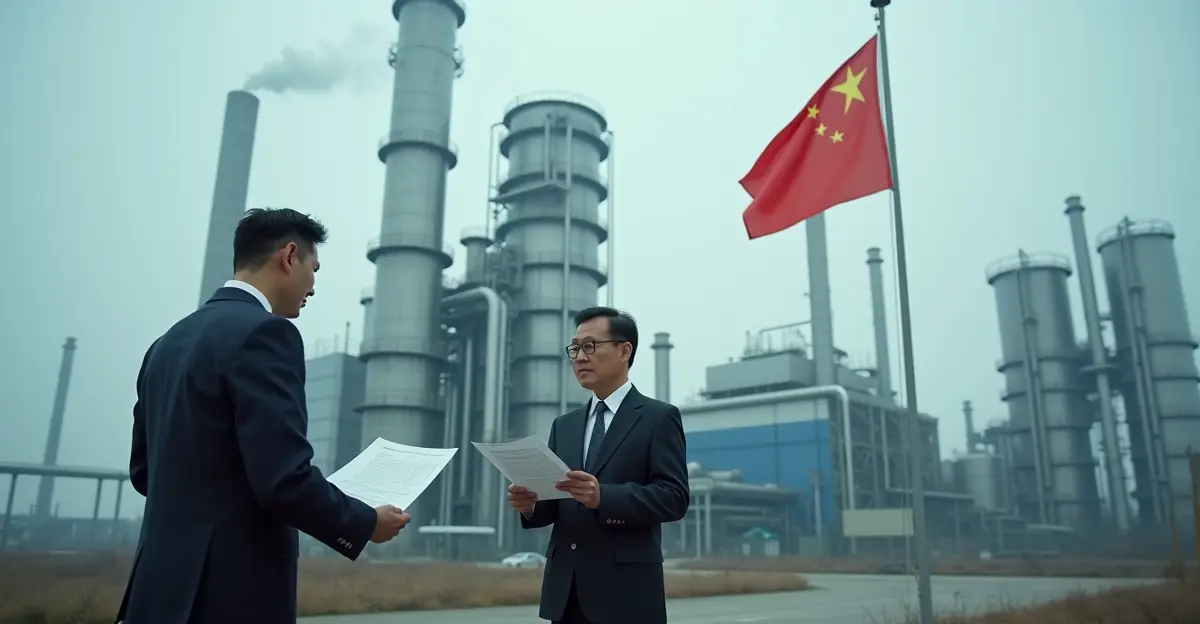
China's Ministry of Commerce has implemented sweeping new export restrictions on rare earth elements effective December 1, 2025, representing a major escalation in strategic control over critical minerals just as global semiconductor and AI industries face supply chain vulnerabilities. The regulations, outlined in MOFCOM Notice 2025 No. 61, require foreign companies to obtain export licenses for products containing as little as 0.1% Chinese-origin rare earth materials, even when manufactured outside China using Chinese technology. This policy specifically targets semiconductor and artificial intelligence sectors through case-by-case reviews for advanced chips (14nm or below logic chips, 256+ layer memory chips) and AI development with potential military applications. The move fundamentally reshapes the geopolitical calculus around critical minerals and advanced technology manufacturing, extending China's regulatory reach beyond its borders and exposing the vulnerability of global tech supply chains.
Context and Background: China's Rare Earth Dominance
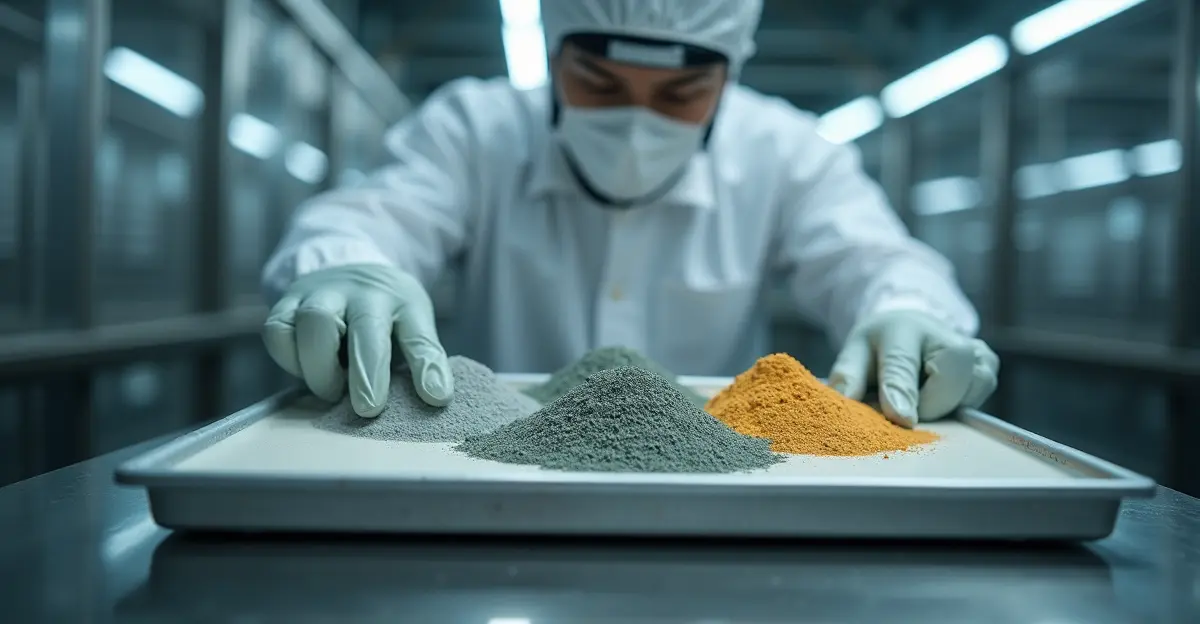
China controls approximately 70% of global rare earth mining, 90% of processing capacity, and 93% of permanent magnet manufacturing, giving it unprecedented leverage over industries ranging from defense to renewable energy. Rare earth elements are essential components in everything from F-35 fighter jets and missile guidance systems to electric vehicle motors and wind turbines. The country's dominance stems from decades of strategic investment, with the Chinese rare earth industry developing since the 1980s under government programs like Program 863 and Program 973. According to the International Energy Agency, China accounted for about 91% of global separation and refining production and 94% of sintered permanent magnet production in 2024. This near-monopoly position has allowed Beijing to weaponize its control over these critical materials, particularly as tensions escalate in the US-China technology competition.
The New Regulatory Framework: MOFCOM Notice 2025 No. 61
Key Provisions and Thresholds
The December 2025 regulations introduce several unprecedented measures. First, the 0.1% de minimis rule requires export licenses for any product containing trace amounts of Chinese-origin rare earths, effectively extending China's jurisdiction globally. Second, the policy implements China's version of the Foreign Direct Product Rule (FDPR), restricting foreign-made items produced using Chinese rare earth technologies. Third, the regulations mandate a Declaration of Compliance for every transfer, detailing rare earth content percentage and promising not to use materials in ways that harm China's security interests. The controls cover five additional rare earth elements: holmium, erbium, thulium, europium, and ytterbium, expanding beyond the traditional 17 rare earths.
Targeted Industries and Technologies
The policy specifically singles out advanced semiconductor manufacturing and AI development. For semiconductors, case-by-case reviews apply to exports tied to logic chips at 14nm or below and memory chips with 256+ layers. For AI, restrictions target development with potential military applications, including autonomous weapons systems and surveillance technologies. The regulations also affect defense contractors, renewable energy companies, and medical device manufacturers, creating ripple effects across multiple high-tech sectors. Companies affiliated with foreign militaries face automatic rejection for export license requests, while commercial applications undergo rigorous scrutiny.
Strategic Implications for Global Supply Chains
The new controls represent a fundamental shift in how nations approach supply chain security. By extending regulatory reach extraterritorially, China has created a powerful tool to influence global technology development. The 0.1% threshold is particularly significant because it captures virtually all high-tech products, given the pervasive use of rare earths in modern manufacturing. This creates compliance nightmares for multinational corporations that must now track minute quantities of Chinese-origin materials through complex supply chains. The policy also strengthens China's position ahead of diplomatic negotiations, providing leverage in trade disputes and technology standards discussions. As noted by industry analysts, 'This represents the most sophisticated weaponization of supply chain dominance we've seen in modern economic history'.
Impact on Semiconductor and AI Industries
Semiconductor Manufacturing Vulnerabilities
The semiconductor industry faces immediate disruption, as rare earths are essential for sputtering targets, polishing compounds, and specialized materials used in chip fabrication. Advanced nodes below 14nm rely on precise rare earth formulations for performance characteristics, making alternative sourcing difficult and expensive. Memory manufacturers producing 256+ layer NAND chips face similar challenges, potentially slowing the pace of innovation in data storage technologies. The global semiconductor shortage of recent years could be exacerbated by these new restrictions, particularly affecting companies without established relationships with Chinese regulators.
AI Development and Military Applications
Artificial intelligence development faces heightened scrutiny under the new rules. Rare earth permanent magnets are critical components in high-performance computing systems, data center infrastructure, and specialized AI hardware. The case-by-case review process for AI with potential military applications creates uncertainty for defense contractors and dual-use technology developers. This comes at a time when nations are racing to develop AI military capabilities, making the control of underlying materials a strategic priority. The regulations effectively give China veto power over certain AI development pathways outside its borders.
Expert Perspectives and Industry Response
Industry experts warn of significant disruptions ahead. 'This is a game-changer in tech geopolitics,' says Dr. Elena Rodriguez, a supply chain analyst at Georgetown University's Center for Strategic and International Studies. 'China has moved from controlling raw materials to controlling entire technology ecosystems. The 0.1% threshold means even products with trace amounts of Chinese content fall under Beijing's regulatory umbrella.' Defense contractors are particularly concerned, as rare earths are essential for precision-guided munitions, radar systems, and stealth technologies. The U.S. Department of Defense has accelerated efforts to develop alternative rare earth supply chains, but these initiatives face significant technical and economic hurdles.
Future Outlook and Mitigation Strategies
Companies are exploring several strategies to mitigate the impact of China's new controls. These include diversifying rare earth sourcing to countries like Australia, Canada, and the United States; investing in recycling technologies to recover rare earths from electronic waste; and redesigning products to reduce or eliminate rare earth content. Governments are responding with policy measures, including the US Critical Minerals Strategy and European Union initiatives to secure strategic supply chains. However, these efforts face significant challenges given China's decades-long head start in rare earth processing technology and infrastructure. The long-term implications suggest a more fragmented global technology landscape, with separate supply chains emerging for different geopolitical blocs.
Frequently Asked Questions
What products are affected by China's new rare earth export controls?
Virtually all high-tech products containing rare earth elements are affected, including semiconductors, electric vehicle motors, wind turbines, medical imaging devices, defense systems, and consumer electronics. The 0.1% threshold captures even trace amounts of Chinese-origin materials.
How do the regulations affect semiconductor manufacturing?
Semiconductor manufacturers face case-by-case reviews for advanced chips (14nm or below logic chips, 256+ layer memory chips). This creates uncertainty for production planning and could slow innovation in cutting-edge chip technologies.
What is the effective date of these new controls?
The regulations took effect on December 1, 2025, as outlined in MOFCOM Notice 2025 No. 61. Companies had limited time to prepare for compliance requirements.
Can companies avoid these controls by sourcing rare earths from other countries?
Not entirely. The regulations apply to products containing any Chinese-origin rare earths, regardless of where final manufacturing occurs. Additionally, the Foreign Direct Product Rule restricts items made using Chinese rare earth technologies.
What are the penalties for non-compliance?
Penalties include denial of export licenses, inclusion on China's Unreliable Entity List (which prohibits trade activities), and potential restrictions on access to Chinese markets and technologies.


Follow Discussion