Nederlands
 English
 Deutsch
 Français
 Español
 Português





Nuclear Arms Control Enters Dangerous New Era
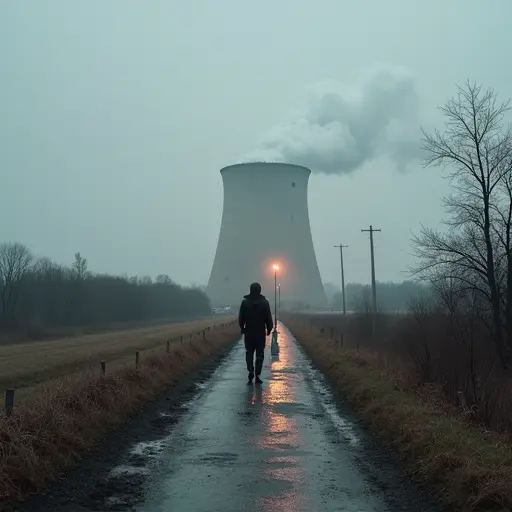
The world entered a perilous new phase in nuclear arms control on February 5, 2026, as the New START treaty between the United States and Russia officially expired, leaving the two nuclear superpowers without binding limits on their strategic arsenals for the first time since the Cold War. The situation became more complex when China announced it would not participate in any future nuclear arms control negotiations, creating a three-way standoff that experts warn could trigger a new global arms race.
China's Defiant Stance
China's Foreign Ministry made its position clear: 'China will not participate in any negotiations on a new nuclear weapons treaty at this time. Our nuclear capabilities are of a completely different scale than those of the United States and Russia.' This statement came as the United States had insisted that any extension of New START or new agreement must include China, given Beijing's rapidly expanding nuclear arsenal.
According to the SIPRI Yearbook 2025, China's nuclear arsenal is growing at approximately 100 new warheads annually, potentially reaching 1,500 by 2035. While current estimates place China's stockpile at around 600 warheads, this represents a significant increase from just a few years ago and marks the fastest nuclear expansion of any country.
End of an Era for US-Russia Relations
The New START treaty, signed in 2010 and entering force in 2011, had capped each country at 1,550 deployed strategic nuclear warheads, 700 deployed delivery systems, and 800 total launchers. The treaty included crucial verification measures like on-site inspections and data exchanges that provided transparency between the two nuclear giants.
Russia had suspended its participation in the treaty in February 2023, citing U.S. support for Ukraine, but claimed to still adhere to the numerical limits. With the treaty's expiration, both countries are now completely free from any constraints on their nuclear arsenals for the first time in over half a century.
Global Concerns Mount
UN Secretary-General António Guterres issued a stark warning about the situation: 'This is a grave moment for international peace and security. For the first time in over half a century, there are no binding limits on the strategic nuclear arsenals of the two countries that control more than 80% of the world's nuclear warheads.' In his official statement, Guterres noted that the risk of nuclear weapon use is now the highest it has been in decades.
The Kremlin responded by stating that Russia would maintain a 'responsible approach' despite the treaty's expiration, while emphasizing that national interests would come first. The White House indicated that President Trump would determine the next steps regarding nuclear weapons 'at a time of his choosing.'
What Comes Next?
Experts are deeply concerned about the implications. 'We're entering uncharted territory,' says nuclear policy analyst Dr. Elena Petrova. 'Without the transparency and predictability provided by arms control agreements, misunderstandings and miscalculations become much more likely. The addition of China's growing arsenal to the equation creates a three-body problem in nuclear stability that we've never had to manage before.'
The Federation of American Scientists estimates that approximately 12,321 nuclear warheads exist globally as of early 2026, with the United States and Russia possessing about 86% of the total inventory. Of these, 3,912 warheads are actually deployed on operational forces, with approximately 2,100 U.S., Russian, British, and French warheads on high alert status.
As the world navigates this new nuclear landscape, the absence of China from the negotiating table presents a significant obstacle to any future arms control framework. With all three major nuclear powers now pursuing different strategic paths, the international community faces the daunting challenge of preventing a new arms race while maintaining global stability in an increasingly multipolar world.