


 Deutsch
 English
 Español
 Français
 Nederlands
 Português


 Share
Share




On January 1, 2026, the European Union's Carbon Border Adjustment Mechanism (CBAM) entered its financially binding phase, marking a historic shift in global trade. Importers of steel, aluminium, cement, fertilizers, hydrogen, and electricity must now purchase carbon certificates at roughly €75 per tonne of CO₂—a cost projected to exceed €12 billion in 2026 alone, with 81% falling on the steel sector. As the first quarterly compliance declarations approach on April 30, 2026, the mechanism is already triggering a structural realignment of global supply chains and accelerating the race for equivalent carbon pricing worldwide.
How CBAM Works in Its Definitive Phase
CBAM, legislated as part of the European Green Deal, completed a transitional phase from October 2023 to December 2025 during which importers only reported emissions. Since January 1, 2026, importers of covered goods exceeding a 50-tonne annual threshold must apply for authorized declarant status and purchase CBAM certificates priced at the weekly EU ETS auction rate. In Q1 2026, the certificate price stood at €75.36 per tonne of CO₂ equivalent, while Q2 2026 averaged €75.28 per tonne.
Importers are currently liable for only 2.5% of embedded emissions—the so-called CBAM factor—which will rise incrementally to 100% by 2034 as free allowances under the EU ETS are phased out. The first annual CBAM declaration and certificate surrender for 2026 imports is due by September 30, 2027, with certificates purchased retroactively from February 1, 2027. However, quarterly reporting obligations began in April 2026, making compliance a continuous operational reality.
The EU ETS carbon pricing mechanism underpins the entire CBAM system, ensuring imported goods face the same carbon cost as domestic production. This design aims to prevent carbon leakage—the relocation of emissions-intensive production outside the EU—while incentivizing global decarbonization.
Steel Sector Bears the Heaviest Burden
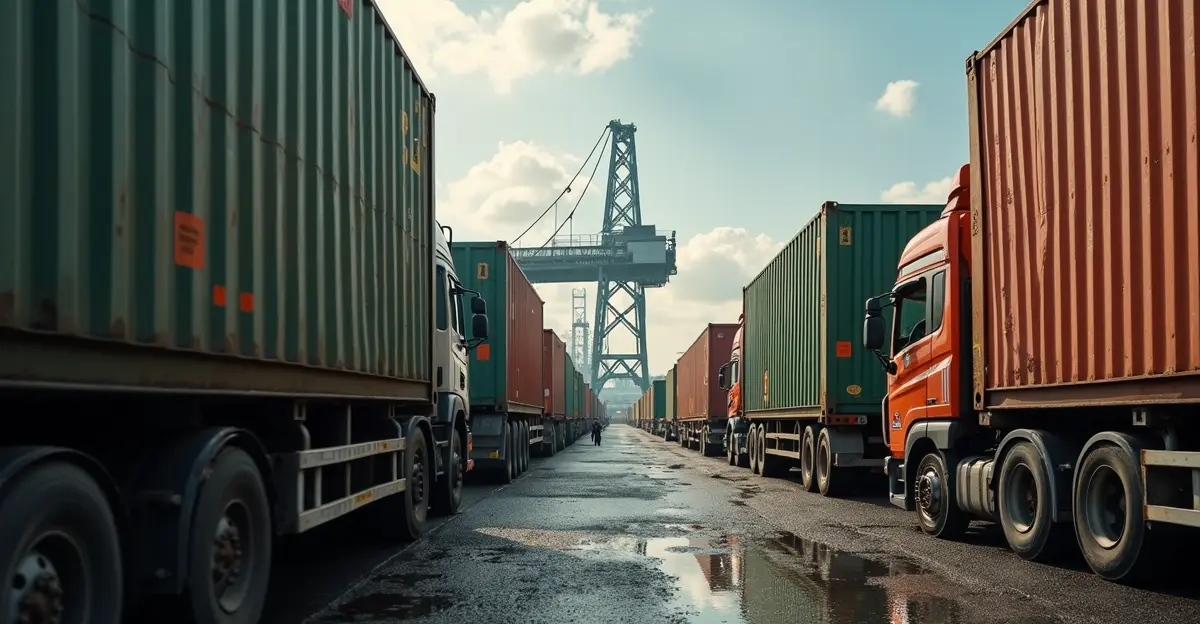
The iron and steel sector accounts for approximately 81% of projected CBAM certificate costs, with potential charges exceeding €12 billion in 2026. According to S&P Global, Europe's steel industry faces its "2026 reckoning" as CBAM raises costs, tightens supply, and risks pushing prices higher before sufficient volumes of affordable low-carbon steel become available.
Major exporters to the EU—including China, India, and Türkiye—now face significant new compliance costs. China, the world's largest steel producer, relies heavily on coal-fired blast furnaces with high emission intensity. India's steel sector, also coal-dependent, faces effective tariff rates that could reach 154% for high-emission producers under full CBAM implementation. Türkiye, the EU's largest steel exporter by volume, has already begun exploring its own carbon pricing mechanism to mitigate the impact.
Efficient producers with lower embedded emissions gain a competitive advantage. For example, a steel mill emitting 1.4 tonnes of CO₂ per tonne of steel needs only €14.80 per tonne in domestic carbon pricing to eliminate CBAM liability, while an average producer at 1.9 tonnes requires €34.60. This mathematical structure heavily favors policy-based carbon pricing over capital-intensive industrial retrofits, making domestic carbon pricing the decisive competitive strategy for exporters.
Global Response: A Race for Carbon Pricing Equivalents
CBAM is triggering a cascade of policy responses worldwide. The United States, Canada, the United Kingdom, and Australia are all developing equivalent carbon pricing mechanisms to protect their exporters and capture carbon tax revenue domestically rather than letting it flow to Brussels.
Canada has proposed a federal border carbon adjustment for steel, aluminium, and cement, building on its existing provincial carbon pricing systems. The UK, which left the EU ETS after Brexit, launched consultations on a UK CBAM in 2025, targeting implementation by 2027. Australia's government announced plans for a carbon border adjustment mechanism in its 2025-26 budget, focusing on emissions-intensive trade-exposed industries. The United States has seen bipartisan congressional proposals for a carbon border adjustment, though federal legislation remains pending.
The global carbon pricing landscape is rapidly evolving. As of 2026, over 70 carbon pricing initiatives are in operation or development worldwide, covering about 23% of global greenhouse gas emissions. CBAM's extraterritorial reach is accelerating this trend, creating the early architecture of a carbon-based trade regime that could define industrial competition for the next decade.
WTO Challenges and Developing Country Concerns
CBAM has sparked formal WTO challenges from India, China, Brazil, and South Africa, who argue it constitutes green protectionism and unfairly penalizes developing nations. Critics contend that the mechanism violates the principle of common but differentiated responsibilities under the Paris Agreement, as developing countries have historically contributed less to cumulative emissions yet face higher compliance costs due to less efficient production technologies.
The European Commission maintains that CBAM is WTO-compatible because it treats imported goods no less favorably than domestic products and allows deduction of carbon prices already paid abroad. The mechanism also includes provisions for technical assistance and capacity building in developing countries, though critics argue these measures are insufficient.
On June 12, 2026, the EU Council agreed to expand CBAM to approximately 180 downstream products with high steel or aluminium content—including car doors, gearboxes, and household appliances—effective January 2028. This expansion significantly broadens the mechanism's scope and intensifies compliance pressures on global supply chains.
Corporate Strategy in the CBAM Era
Companies are responding to CBAM through multiple strategies. Many are implementing internal carbon pricing to prepare for escalating costs, investing in digital emissions monitoring systems, accelerating renewable energy transitions, and exploring carbon capture technologies. Some are restructuring supply chains to source from lower-emission producers or relocating production facilities to regions with carbon pricing.
The corporate carbon pricing strategies adopted by multinational firms are becoming critical competitive differentiators. Early movers that invest in emissions measurement and reduction gain not only compliance advantages but also preferential access to EU markets and potential revenue from selling surplus CBAM certificates.
FAQ: CBAM 2026
What is CBAM?
CBAM is the EU's Carbon Border Adjustment Mechanism, a carbon tariff on imported goods designed to prevent carbon leakage and ensure imported products face the same carbon price as EU-made goods.
Which sectors are covered?
Six sectors: iron and steel, aluminium, cement, fertilizers, electricity, and hydrogen. From 2028, approximately 180 downstream products will be added.
How much do CBAM certificates cost?
Certificates are priced at the weekly EU ETS auction rate. In Q1 2026, the price was €75.36 per tonne CO₂; Q2 2026 averaged €75.28 per tonne.
When is the first compliance deadline?
Importers must submit quarterly declarations by April 30, 2026, for Q1 2026 imports. The first annual declaration and certificate surrender is due September 30, 2027.
How does CBAM affect developing countries?
Developing countries face higher compliance costs due to less efficient production. India, China, Brazil, and South Africa have filed WTO challenges, arguing CBAM constitutes green protectionism.
Outlook: The Carbon Trade Regime Takes Shape
CBAM's entry into force represents a watershed moment for global climate policy and trade architecture. By 2030, all sectors covered by the EU ETS will fall under CBAM, and by 2034 free allowances will be fully phased out. The mechanism is already catalyzing a global shift toward carbon pricing, with major economies racing to establish equivalent systems.
The future of carbon border adjustments will likely involve greater coordination and potential harmonization among trading blocs, though geopolitical tensions and WTO disputes may complicate progress. What is clear is that carbon competitiveness has become a central axis of industrial strategy, and CBAM is the template that will define this new era.



Follow Discussion