


 Deutsch
 English
 Español
 Français
 Nederlands
 Português


 Share
Share




A devastating climate-fueled cyclone in November 2025 killed an estimated 58 Tapanuli orangutans on the Indonesian island of Sumatra, wiping out roughly 7 percent of the entire population of the world's rarest great ape, according to a new study published in Current Biology. The Tapanuli orangutan (Pongo tapanuliensis), which was only recognized as a distinct species in 2017, now numbers fewer than 800 individuals in the wild, making this single extreme weather event a catastrophic blow to its survival prospects.
Cyclone Senyar: A Rare and Deadly Storm
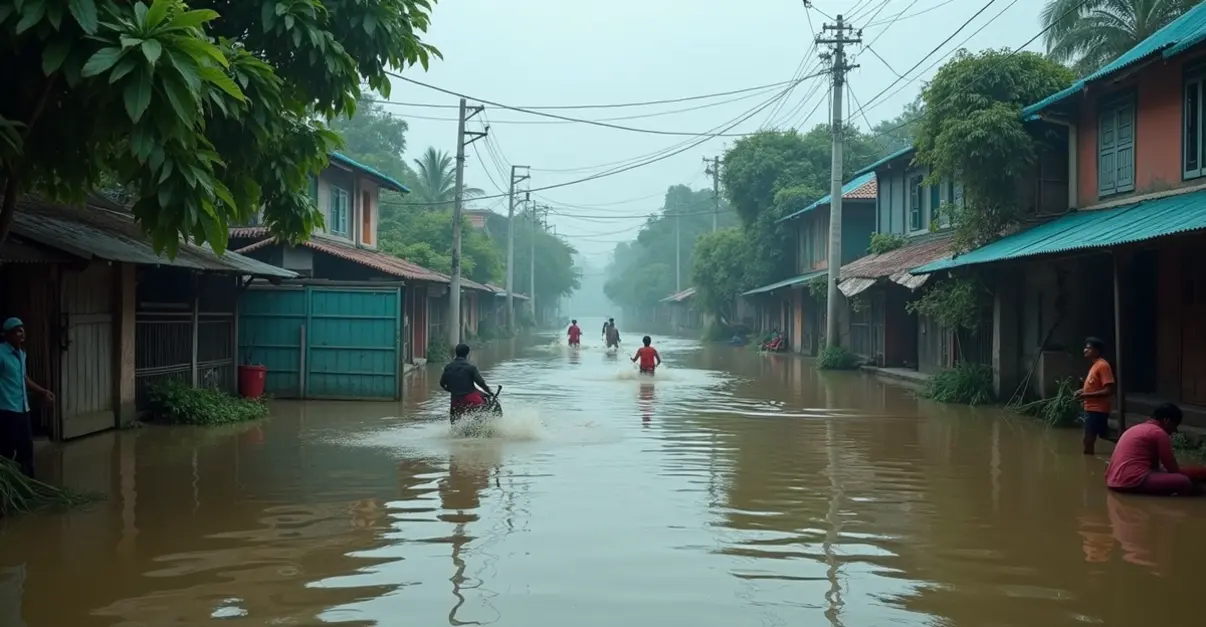
Cyclone Senyar, also known as Tropical Depression 34W, formed over the Strait of Malacca on November 25, 2025, and struck the Malay Peninsula and Sumatra over four days. It was only the second documented tropical cyclone in that region after Cyclone Vamei in 2001. The storm brought more than 1,000 millimeters (39 inches) of rain, triggering thousands of landslides across the Batang Toru ecosystem in North Sumatra. The disaster claimed at least 1,200 human lives in Indonesia alone, making it the deadliest natural disaster in Southeast Asia in 2025, and caused over $19.8 billion in damage across the region.
The study, conducted by researchers from Borneo Futures, World Weather Attribution, Liverpool John Moores University, and Wageningen University & Research, used satellite imagery to map more than 50,000 landslide scars in the Batang Toru forest. The West Block of the forest, which covers approximately 8,300 hectares (12 percent of the orangutan's habitat), was the most severely affected area. The researchers estimate that 58 orangutans were killed directly by landslides or buried under debris. Some animals were found heavily mutilated, crushed by falling trees and mud.
'It seems to have become a graveyard,' said a relief worker who discovered the carcass of what was believed to be a Tapanuli orangutan weeks after the disaster. 'They used to come here to eat fruit. But now it seems to have become their graveyard.'
Why Tapanuli Orangutans Are So Vulnerable
The Tapanuli orangutan is the rarest of the three orangutan species, with a range restricted to about 1,000 square kilometers in the Batang Toru region of South Tapanuli, North Sumatra. Genetically, it diverged from Sumatran orangutans about 3.4 million years ago and became further isolated after the eruption of Lake Toba approximately 75,000 years ago. Unlike the other two species, Tapanuli orangutans are exclusively arboreal, likely due to the presence of Sumatran tigers and other predators on the forest floor. This makes them especially vulnerable to landslides that destroy the forest canopy they depend on.
The species also faces severe ongoing threats from habitat destruction, hunting, and the illegal wildlife trade. A proposed hydroelectric dam in the Batang Toru area could impact up to 10 percent of the remaining habitat. Conservationists have predicted an 83 percent population decline over three generations without urgent intervention. The 2025 climate disasters in Southeast Asia have added a new and acute threat: extreme weather amplified by human-induced climate change.
Climate Change as a Threat Multiplier
The study found that human-induced climate change increased the intensity of rainfall from Cyclone Senyar by 9 to 50 percent, depending on the region. Warmer air holds more moisture, making extreme rainfall events more frequent and severe. Professor Douglas Sheil of Wageningen University & Research, a co-author of the study, warned that the crisis facing the Tapanuli orangutan illustrates the collision of climate instability, biodiversity loss, and vulnerability.
'The crisis facing the Tapanuli orangutan illustrates the confluence of climate instability, biodiversity loss, and vulnerability, and calls for a coordinated response that matches the scale of the threat,' the researchers concluded in their paper.
Deforestation in Sumatra has compounded the disaster. Approximately 1.4 million hectares of forest were cleared between 2016 and 2025 for mining and palm oil plantations, severely degrading the soil's ability to absorb water and increasing landslide risk. The combination of steep topography, tectonic instability, and land-use change made the region a tinderbox for disaster. The impact of deforestation on biodiversity is clearly visible in the aftermath of this storm.
Bleak Prospects for Survival
With fewer than 800 individuals left, the Tapanuli orangutan can only survive if the annual population decline remains below 1 percent. The loss of 58 individuals in just four days represents a decline of roughly 7 percent in a single event, far exceeding the sustainable threshold. Even before the cyclone, the species was classified as Critically Endangered on the IUCN Red List.
Researchers warn that extreme rainfall events are expected to become more frequent and intense in the region due to climate change, putting both the orangutans and their habitat under increasing pressure. The study's authors urge the Indonesian government to develop a coordinated action plan that addresses both immediate threats and the underlying drivers of climate change and deforestation. Key recommendations include strengthening protected area management, restoring degraded forest corridors, curbing illegal hunting, and integrating climate adaptation into conservation planning.
'If a few hectares of forest disappear in a massive landslide, even strong orangutans are helpless,' said one researcher. 'It must have been hell in the forest at that time.' The future of critically endangered species in a warming world hangs in the balance as scientists race to find solutions before it is too late.
Frequently Asked Questions
What is a Tapanuli orangutan?
The Tapanuli orangutan (Pongo tapanuliensis) is a critically endangered species of great ape found only in the Batang Toru forest of South Tapanuli, North Sumatra, Indonesia. It was identified as a distinct species in 2017 and is the rarest of the three orangutan species, with fewer than 800 individuals remaining.
How many Tapanuli orangutans were killed by Cyclone Senyar?
An estimated 58 Tapanuli orangutans were killed by landslides and flooding triggered by Cyclone Senyar in November 2025, representing approximately 7 percent of the global population.
What caused the extreme rainfall in Sumatra in 2025?
The extreme rainfall was caused by Cyclone Senyar, a rare tropical cyclone that formed over the Strait of Malacca. Human-induced climate change intensified the rainfall by 9 to 50 percent, according to the study published in Current Biology.
What are the main threats to Tapanuli orangutans?
The main threats include habitat destruction from logging and palm oil plantations, hunting, the illegal wildlife trade, a proposed hydroelectric dam, and increasingly, extreme weather events linked to climate change.
What can be done to save the Tapanuli orangutan?
Conservation measures include protecting and restoring forest habitat, enforcing anti-poaching laws, stopping illegal logging, canceling the proposed dam, and implementing climate adaptation strategies to mitigate the impacts of extreme weather.



Follow Discussion