


 Deutsch
 English
 Español
 Français
 Nederlands
 Português


 Share
Share




What is the Qatar Gas Crisis?
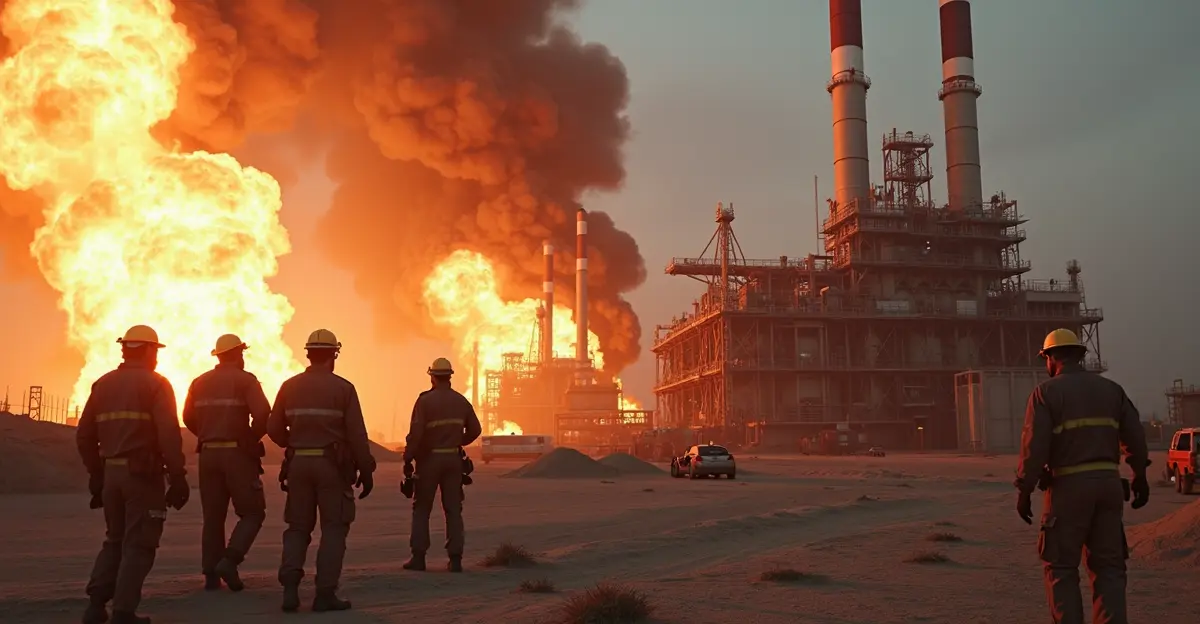
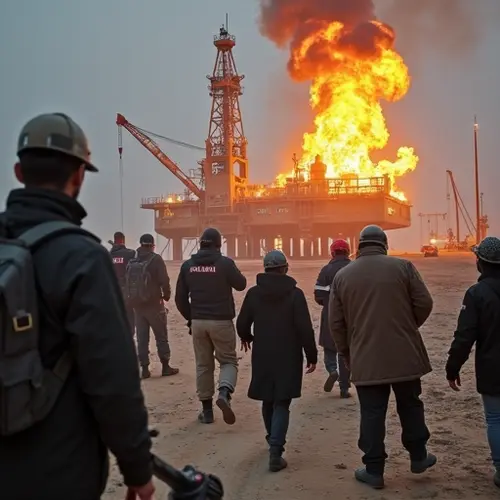
The global energy market faces unprecedented disruption following coordinated attacks on Qatar's liquefied natural gas (LNG) facilities in March 2026. Iranian retaliatory strikes on Qatar's Ras Laffan Industrial City have severely damaged critical infrastructure, wiping out 17% of the world's second-largest LNG exporter's capacity for three to five years. This comes after Israel's initial attack on Iran's South Pars gas field, part of the world's largest natural gas reserve shared between Iran and Qatar. The escalating conflict has sent European gas prices soaring 35% and threatens long-term energy security across Europe and Asia.
Background: The South Pars/North Dome Gas Field
The South Pars/North Dome gas field is the world's largest natural gas reserve, containing an estimated 1,800 trillion cubic feet of in-situ natural gas - enough to supply global needs for 13 years. The field spans 9,700 square kilometers in the Persian Gulf, with 3,700 square kilometers (South Pars) in Iranian waters and 6,000 square kilometers (North Dome) in Qatari waters. Before the attacks, Qatar was producing approximately 18.5 billion cubic feet per day from the field, accounting for around 80% of Qatari government revenues. The Middle East energy infrastructure has become a primary target in escalating regional conflicts.
Timeline of Events: How the Crisis Unfolded
March 18, 2026: Initial Israeli Attack
Israeli Air Force strikes targeted Iran's South Pars gas field, damaging facilities that accounted for nearly 12% of Iran's total gas production. The attack halted output at two refineries with a combined capacity of 100 million cubic meters per day. U.S. officials denied coordination with Israel, but President Donald Trump later threatened to 'massively blow up the entirety of the South Pars Gas Field' if Iran continued targeting Qatar's energy facilities.
March 19, 2026: Iranian Retaliation
Iran launched retaliatory missile attacks targeting Qatar's Ras Laffan LNG terminal, Saudi Arabia's Samref refinery, and UAE energy infrastructure. The Ras Laffan complex, one of the world's largest LNG export hubs, suffered extensive damage to two of Qatar's 14 LNG trains and one gas-to-liquids facility. QatarEnergy CEO Saad al-Kaabi reported that the damage affected '17 percent of the export of the company' and would require three to five years to repair.
Market Impact: Immediate Price Shock
The attacks triggered immediate market reactions:
- European natural gas prices surged 35% on the Amsterdam TTF exchange
- Brent crude oil briefly hit $119 per barrel before settling at $113-$114
- S&P 500 fell 1.4% to 6,624.70, hitting a fresh 2026 low
- Asian LNG spot prices jumped 40% in overnight trading
Long-Term Consequences: Force Majeure Declarations
QatarEnergy has announced it may declare force majeure on long-term LNG contracts with several countries due to the extensive damage. The affected contracts include:
| Country | Contract Volume | Duration Impact |
|---|---|---|
| Italy | 8 million tons/year | 3-5 years |
| Belgium | 4 million tons/year | 3-5 years |
| South Korea | 6 million tons/year | 3-5 years |
| China | 10 million tons/year | 3-5 years |
The damage sidelines 12.8 million tons per year of LNG production, representing approximately $20 billion in lost annual revenue for Qatar. Repair costs are estimated at $26 billion, with regional energy infrastructure development set back 10-20 years.
Expert Analysis: Energy Market Implications
René Peters, energy expert at TNO, explains the severity of the situation: 'We have the world's largest gas field that's ten times larger than the Groningen gas field when it was first discovered - about 30,000 billion cubic meters of gas. If you damage the facilities for extracting and liquefying gas, recovery takes much longer than simply reopening shipping routes.' Peters notes that while Europe may weather the storm due to its wealth advantage, developing nations like Bangladesh are already experiencing shortages, with cooking gas running out and businesses partially closing to conserve energy.
The crisis highlights Europe's vulnerability following reduced reliance on Russian pipeline gas. The European energy security strategy now faces new challenges as alternative LNG supplies become constrained. Energy analysts warn that the disruption could last longer than the 2008 financial crisis impact on energy markets, with ripple effects across global manufacturing and transportation sectors.
Geopolitical Ramifications
The attacks represent a dangerous expansion of regional conflicts beyond direct Israel-Iran confrontations to include Gulf energy infrastructure. Iran has vowed 'zero restraint' if its energy facilities are targeted again, while Gulf states have condemned the escalation. The UAE called it a 'serious escalation' and Qatar labeled the attacks 'dangerous and irresponsible.' The situation has prompted diplomatic efforts to secure safe passage through the Strait of Hormuz, which handles significant LNG shipments.
Similar to previous global energy supply shocks, this crisis demonstrates how regional conflicts can rapidly transform into global economic challenges. The International Energy Agency has already called for emergency measures including increased home working where possible, carpooling, and lower speed limits to conserve energy.
Frequently Asked Questions
How long will Qatar's LNG disruption last?
QatarEnergy estimates 3-5 years for full recovery of damaged facilities, with 17% of export capacity affected during this period.
Which countries are most affected by Qatar's force majeure?
Italy, Belgium, South Korea, and China face the most significant impacts, with long-term contracts potentially suspended for up to five years.
How much did European gas prices increase?
Prices surged 35% on the Amsterdam TTF exchange immediately following the attacks, though they have since retreated slightly to around €61 per MWh.
What is the South Pars/North Dome gas field?
It's the world's largest natural gas field, shared between Iran and Qatar, containing enough gas to supply global needs for 13 years.
Will this affect global inflation?
Yes, energy analysts warn that sustained high energy prices could increase inflation risks and pressure European industries facing higher production costs.

Follow Discussion