


 Deutsch
 English
 Español
 Français
 Nederlands
 Português


 Share
Share




The AI Energy Paradox: How Data Center Expansion is Reshaping Global Power Markets and Climate Strategy
The explosive growth of artificial intelligence is creating an unprecedented energy paradox: while AI promises transformative efficiency gains across industries, its own infrastructure demands are fundamentally reshaping global power markets, grid reliability, and climate policy timelines. According to the International Energy Agency's World Energy Outlook 2024 and recent analyses from the Belfer Center, data center electricity consumption could reach 12% of total U.S. demand by 2028, creating urgent challenges for energy planners and policymakers worldwide.
What is the AI Energy Paradox?
The AI energy paradox describes the contradictory relationship between artificial intelligence's potential to optimize energy systems and its massive infrastructure requirements that strain those same systems. Data centers, the physical backbone of AI computation, currently consume approximately 415 terawatt hours annually—about 1.5% of global electricity—with projections indicating this could more than double to 945 TWh by 2030. This growth represents one of the fastest-expanding segments of global energy demand, creating what experts call the 'AI energy tax' on consumers and grid infrastructure.
The Scale of Data Center Energy Demand
Recent analyses reveal staggering growth projections. The U.S. Department of Energy reports that data center electricity consumption has tripled over the past decade, increasing from 58 TWh in 2014 to 176 TWh in 2023. By 2028, this could reach 325-580 TWh, representing 6.7-12.0% of total U.S. electricity consumption. The Belfer Center analysis warns that this rapid expansion is already straining grid capacity, with incidents like a July 2024 voltage fluctuation in northern Virginia causing 60 data centers to disconnect simultaneously, creating a 1,500-megawatt power surplus that nearly triggered cascading outages.
Key Statistics on AI-Driven Energy Demand
- Global data center electricity consumption: 415 TWh (2024), projected to reach 945 TWh by 2030
- U.S. data center share of electricity: 4.4% (2023), projected to reach 6.7-12.0% by 2028
- AI data centers expected to consume over 40% of total data center power by 2026
- Major tech companies (Amazon, Microsoft, Google, Meta) spent over $200 billion on capital expenditures in 2024, a 62% year-over-year increase
- 20% of planned global data center projects face potential delays due to electric grid constraints
Tech Companies' Energy Procurement Strategies
Major technology firms are fundamentally reshaping energy markets through aggressive procurement strategies. According to BloombergNEF, Amazon, Meta, Google, and Microsoft accounted for 49% of global clean power purchase agreement volumes in 2025, dominating the corporate clean energy market. Despite overall corporate clean PPA volumes declining by 10% to 55.9 GW in 2025, big tech companies expanded clean energy purchases to meet AI infrastructure demands, with Meta and Amazon leading at 10.24 GW and 10.22 GW respectively.
The corporate clean energy procurement landscape is shifting toward more sophisticated 'baseload-like' products including co-located solar and storage, hybrid systems, and nuclear PPAs. This pivot toward nuclear power represents nearly a quarter of Meta and Amazon's PPA activity, reflecting the need for firm, 24/7 power supply that renewables alone cannot provide.
Impact on Consumer Electricity Costs
The 'AI energy tax' is becoming a tangible reality for consumers as data center expansion drives up electricity costs and strains grid infrastructure. The concentration of data centers in specific regions—particularly northern Virginia, Texas, and the Pacific Northwest—creates localized demand spikes that utilities must address through infrastructure upgrades, the costs of which are often passed to ratepayers. The grid reliability challenges are particularly acute in deregulated markets where data centers can negotiate preferential rates, potentially shifting costs to residential and small business customers.
Grid Infrastructure and Reliability Challenges
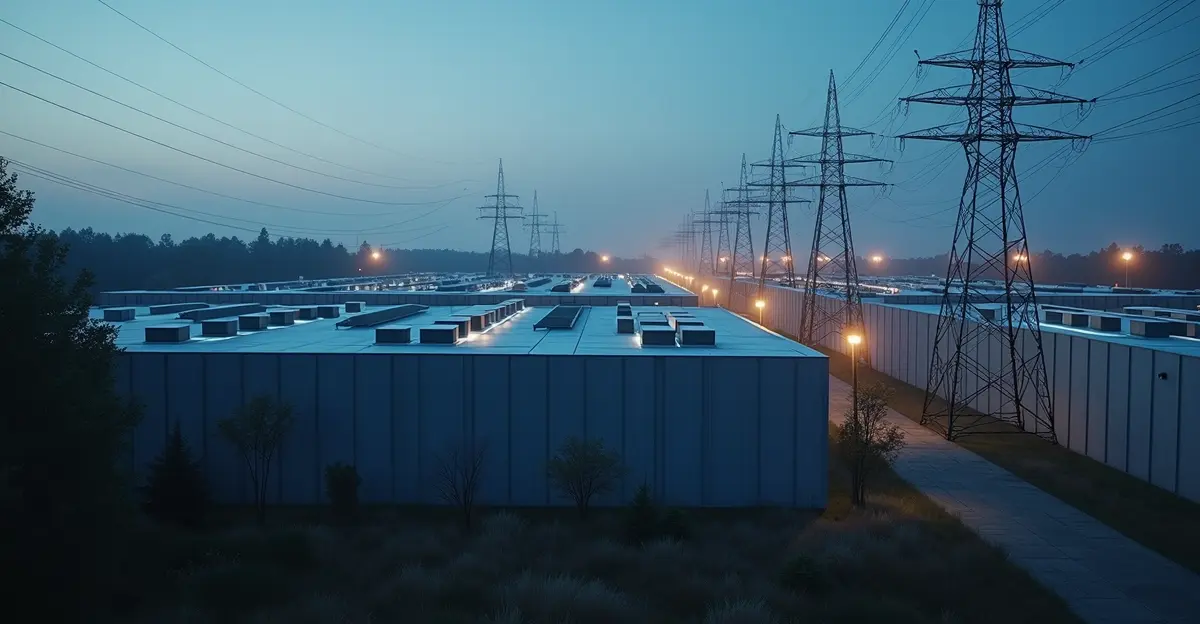
Data center expansion is exposing critical weaknesses in aging grid infrastructure. According to JLL's 2026 Global Data Center Outlook, grid connection wait times now exceed four years in primary markets, prompting increased adoption of on-site power generation and battery storage. The Searchlight Institute report argues that the U.S. faces a decades-long grid investment deficit that threatens economic growth, industrial competitiveness, and national security, particularly as data centers become essential infrastructure for AI dominance.
Climate Policy Implications
The AI energy surge is forcing a strategic reassessment of energy transition timelines and climate goals. While data center operators increasingly pursue carbon-free energy sources, the sheer scale of demand growth threatens to outpace renewable deployment. The IEA recommends a diversified energy strategy combining renewables (providing half of new demand), natural gas (175 TWh additional capacity), and nuclear power to support AI expansion without compromising climate objectives.
The energy transition timeline faces particular pressure as data centers require reliable, 24/7 power that intermittent renewables cannot yet provide at scale. This reality is prompting difficult conversations about the balance between technological competitiveness and climate commitments, with some regions potentially delaying fossil fuel retirement to ensure grid stability.
Expert Perspectives and Policy Recommendations
'The rapid growth of AI-driven data center expansion represents a watershed moment for the U.S. electric grid,' states the Belfer Center analysis. 'Insufficient regulation risks grid instability, rising consumer costs, reliance on high-emission energy sources, and setbacks to climate goals, while overregulation could hinder AI development.'
Policy shifts are emerging at state and federal levels. Texas has passed legislation addressing reliability and affordability concerns, while the Searchlight Institute proposes an American Grid Infrastructure Fund to systematically capture public benefits from data center development. This fund would coordinate grid investment at scale, provide ratepayer protection, unlock proactive transmission investment, and boost domestic manufacturing through aggregated procurement.
Future Outlook and Strategic Considerations
The AI energy paradox presents both unprecedented challenges and opportunities. Total investment required for data center infrastructure approaches $3 trillion by 2030, including $1.2 trillion in real estate value creation and $1-2 trillion for IT equipment fit-outs. This massive capital flow could be strategically directed to accelerate grid modernization and clean energy deployment if policymakers implement coordinated frameworks.
The global power market dynamics are shifting as data center concentration creates new energy geopolitics. Regions with abundant, reliable, and affordable power—whether from renewables, nuclear, or natural gas—gain competitive advantage in attracting AI infrastructure investment, potentially reshaping global economic patterns.
Frequently Asked Questions
How much electricity do AI data centers consume?
AI data centers currently consume approximately 415 terawatt hours annually globally, representing about 1.5% of total electricity demand. This is projected to more than double to 945 TWh by 2030, with AI-specific workloads expected to represent over 40% of total data center power consumption by 2026.
What is the 'AI energy tax'?
The 'AI energy tax' refers to the increased electricity costs and infrastructure expenses passed to consumers as data center expansion strains grid capacity and requires utility upgrades. In concentrated regions, this can lead to significant rate increases for residential and small business customers.
How are tech companies addressing their energy footprint?
Major technology firms are pursuing aggressive clean energy procurement strategies, with Amazon, Meta, Google, and Microsoft accounting for 49% of global clean power purchase agreements in 2025. They're increasingly investing in nuclear power, co-located renewable-storage systems, and advanced efficiency technologies to reduce their carbon footprint.
Can renewable energy meet data center power demands?
While renewables can provide a significant portion of data center energy needs, their intermittent nature creates challenges for 24/7 operations. Most experts recommend a diversified strategy combining renewables with firm power sources like nuclear, natural gas with carbon capture, or advanced storage solutions.
What policy changes are needed to address AI energy challenges?
Experts recommend coordinated grid investment frameworks, ratepayer protection mechanisms, accelerated transmission permitting, strategic siting policies, and incentives for energy efficiency innovations. The Searchlight Institute proposes an American Grid Infrastructure Fund to systematically capture public benefits from data center development.

Follow Discussion