


 Deutsch
 English
 Español
 Français
 Nederlands
 Português


 Share
Share




For the first time since 1995, the U.S. dollar's share of global central bank reserves has fallen below 57%, marking what the International Monetary Fund's latest COFER data confirms as a historic inflection point. At 56.77% in the fourth quarter of 2025, the greenback's reserve dominance—once above 71% as recently as 2000—is now confronting a structural realignment that extends far beyond statistical noise. The question is no longer whether a multipolar currency system is emerging, but how quickly and with what consequences.
What Is Driving the Dollar's Reserve Decline?
The erosion is not monocausal. Three converging forces stand out. First, the weaponization of the dollar-based financial system—most vividly the freezing of roughly $300 billion in Russian central bank reserves after 2022—has spurred central bank diversification away from dollar assets. Second, the operational maturation of BRICS+ payment infrastructure has made local-currency trade settlement a practical alternative: intra-bloc trade in local currencies reached 67% in early 2026, up from negligible levels a decade ago. Third, record central bank gold purchases—over 1,200 tonnes in 2025 alone, with Poland, China, India, and Turkey leading—signaled a broad-based flight into the ultimate neutral reserve asset.
The BRICS+ Infrastructure Revolution
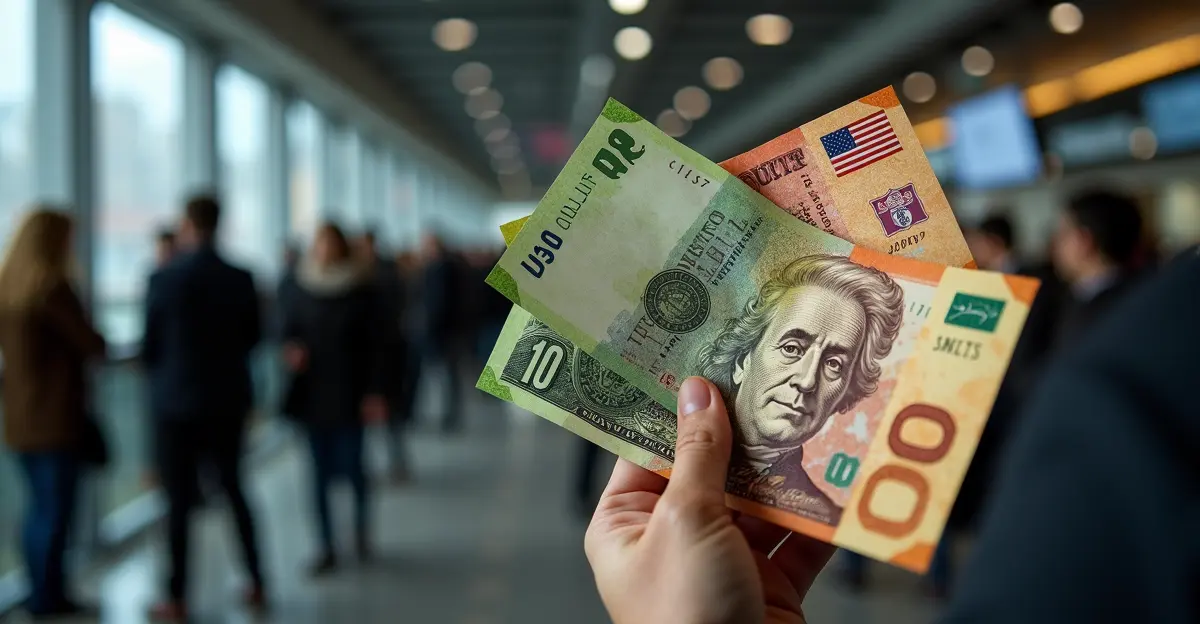
In early 2026, the BRICS+ bloc launched 'The Unit,' a gold-backed digital settlement token designed for institutional cross-border use. Backed 40% by physical gold and 60% by a basket of member currencies—the Brazilian real, Chinese yuan, Indian rupee, Russian ruble, and South African rand—the instrument settles on a permissioned blockchain and is explicitly intended to bypass SWIFT. It is not a consumer currency but a wholesale settlement rail for central banks and sovereign commodity trade.
Parallel infrastructure reinforces the shift. BRICS Pay now links Russia's SPFS, China's CIPS, India's UPI, and Brazil's Pix. The mBridge platform, co-developed by the BIS Innovation Hub and the central banks of China, Hong Kong, Thailand, and the UAE, provides an interoperable central bank digital currency (CBDC) corridor. These systems do not yet rival SWIFT's 11,000-institution network, but they represent the first operational multi-rail alternatives at scale.
Gold's Renaissance and the Yuan's Energy Push
Central banks bought a net 1,200–1,237 tonnes of gold in 2025, the fifth consecutive year of heavy accumulation. In early 2026, aggregate central bank gold holdings surpassed U.S. Treasury holdings for the first time—a symbolic but powerful milestone. Goldman Sachs analysts have publicly linked the buying to de-dollarization trends and sanctions risk, with gold now trading near $4,400 per ounce.
Meanwhile, the yuan's role in energy invoicing has moved from pilot to operational scale. In March 2026, China National Offshore Oil Corporation settled a 65,000-tonne LNG purchase from TotalEnergies in yuan via the Shanghai Petroleum and Natural Gas Exchange. Bilateral oil and gas agreements priced in yuan, rupees, and dirhams have materially reduced the dollar's share of cross-border energy invoices, particularly in Russia-China and Middle East-Asia corridors.
What This Means for U.S. Borrowing Costs
Analysts at J.P. Morgan warn that each one-percentage-point decline in foreign holdings of U.S. Treasuries relative to GDP—roughly $300 billion—could lift yields by more than 33 basis points. With foreign official holdings already at decade lows, sustained Treasury demand erosion would raise U.S. government borrowing costs, amplify yield volatility, and feed through to higher mortgage rates and corporate debt servicing. The Federal Reserve and Treasury possess tools to blunt these effects—balance-sheet operations, issuance tenor shifts—but such measures are not costless over time.
Is the Dollar Collapsing?
No. The dollar still accounts for 88–89% of global foreign exchange transactions, and no single currency rivals it for depth, liquidity, and institutional trust. What is underway is not a collapse but a gradual loss of monopoly—a transition from a unipolar to a multipolar reserve system. Businesses and policymakers must now navigate multi-currency settlement complexity rather than relying on a single dominant rail. This means investing in multi-currency treasury capabilities, hedging against currency fragmentation risk, and monitoring the evolution of alternative payment infrastructures.
Frequently Asked Questions
What is the dollar's current share of global reserves?
According to IMF COFER data for Q4 2025, the U.S. dollar accounts for 56.77% of allocated global foreign exchange reserves, the lowest level since 1995.
Why are central banks buying so much gold?
Central banks are diversifying away from dollar-denominated assets due to sanctions risk, geopolitical uncertainty, and the desire for a neutral reserve asset. Gold holdings surpassed U.S. Treasury holdings for the first time in early 2026.
What is the BRICS 'Unit' token?
'The Unit' is a gold-backed digital settlement token launched in early 2026 for institutional use among BRICS+ central banks. It is backed 40% by physical gold and 60% by a basket of member currencies, enabling trade settlement outside the SWIFT system.
Does de-dollarization mean the dollar will collapse?
No. The dollar remains dominant in FX transactions and trade invoicing. De-dollarization represents a gradual diversification into a multipolar reserve system rather than an abrupt collapse of dollar dominance.
How could de-dollarization affect U.S. consumers?
Sustained de-dollarization could raise U.S. Treasury yields, increasing mortgage rates and borrowing costs. A weaker dollar could also lift import prices, contributing to inflation.
Outlook: Navigating a Multi-Rail Future
The sub-57% threshold is less a cliff than a signpost. The global financial system is not abandoning the dollar, but it is building redundancy. For treasurers, investors, and policymakers, the imperative is clear: prepare for a world of multiple settlement rails, diversified reserve portfolios, and a dollar that remains central but no longer singular. As the IMF's data brief authors noted, the rise in 'other currencies' to 6.13% of reserves—more than double the 2021 level—underscores that the fragmentation is real, structural, and accelerating.





Follow Discussion