


 Deutsch
 English
 Español
 Français
 Nederlands
 Português


 Share
Share




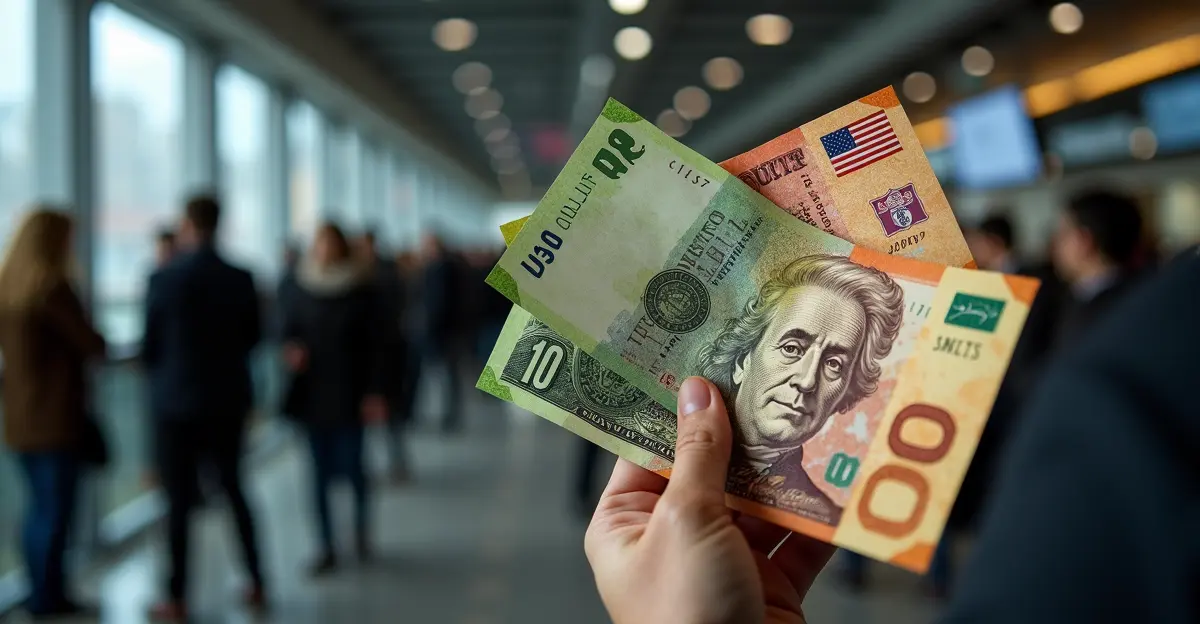
The U.S. dollar's share of global foreign exchange reserves has fallen below 57% for the first time since 1995, marking a historic inflection point in the international monetary system. According to the IMF's Q1 2026 COFER data, the dollar now accounts for just 56.3% of allocated reserves, down from 71% in 2000 and 65% as recently as 2016. This decline is not an isolated statistic — it is the visible symptom of a deeper structural transformation: de-dollarization. Driven by the weaponization of financial sanctions, the rise of BRICS local-currency trade settlements, and record central bank gold purchases, the world is quietly building a multipolar financial architecture. This analysis examines whether we are witnessing gradual reserve diversification or an accelerated systemic shift away from dollar hegemony, and what it means for global stability, U.S. borrowing costs, and the future of money.
The Data: A Thirty-Year Low
The IMF's Currency Composition of Official Foreign Exchange Reserves (COFER) database, updated March 27, 2026, shows the dollar's share at 56.32% — a decline of 0.15 percentage points quarter-over-quarter and roughly 9.5 percentage points since 2015. The euro has held steady near 20%, while the Chinese yuan has inched up to 1.95%. The most striking shift is in the 'other currencies' category, which has grown from 1.7% in 2000 to approximately 10% today, reflecting a broad diversification into Australian dollars, Canadian dollars, Swiss francs, and — increasingly — gold.
Central bank gold purchases reached 1,237 tonnes in 2025, the third consecutive year above 1,000 tonnes, according to the World Gold Council. The National Bank of Poland led with 102 tonnes, while China added an estimated 290 tonnes. Over 40 central banks participated in the buying spree, with BRICS+ nations now holding 17.4% of global gold reserves, up from 11.2% in 2019. The central bank gold buying trend shows no signs of abating, with the World Gold Council projecting 750–850 tonnes in 2026.
Drivers of De-Dollarization
Sanctions Weaponization
The freezing of approximately $300 billion in Russian central bank reserves in 2022 was a watershed moment. It demonstrated that dollar-denominated assets could be seized for geopolitical reasons, prompting central banks from Beijing to Brasília to reconsider the safety of their dollar holdings. The WEF Global Risks Report 2026 ranks geoeconomic confrontation as the top short-term risk, with 68% of respondents expecting a more fragmented global political environment over the next decade. As one senior IMF official noted, 'The dollar's reserve status was built on trust. Sanctions have eroded that trust faster than any economic metric.'
BRICS Local-Currency Trade
BRICS+ nations now conduct approximately 67% of intra-bloc trade in local currencies, up from under 20% a decade ago. Russian Foreign Minister Sergey Lavrov confirmed that only 33% of intra-BRICS transactions are settled in dollars. The Chinese yuan alone accounts for 24% of trade settlements within the bloc. This shift is supported by new financial infrastructure: China's Cross-Border Interbank Payment System (CIPS) processed over $14.7 trillion in 2025, connecting 1,500+ institutions across 117 countries. The CIPS payment system growth represents a direct challenge to SWIFT's dominance in cross-border messaging.
Petrodollar Erosion
Saudi Arabia has increased yuan-priced oil exports to China from 15% to 22% of total shipments, according to 2025 trade data. While the Kingdom has not formally abandoned the petrodollar system, the trend is unmistakable. China's crude imports hit a record 11.6 million barrels per day in 2025, and Saudi Arabia remains a key supplier despite periodic tensions. The petrodollar system decline is further evidenced by Saudi Arabia's participation in Project mBridge, a multi-CBDC platform for cross-border payments that has already handled over $55 billion in transactions.
Impact on Global Financial Stability
The de-dollarization trend carries profound implications. For the United States, a declining reserve share means higher borrowing costs. Foreign holdings of U.S. Treasuries have fallen from a peak of $7.2 trillion in 2021 to approximately $6.5 trillion in early 2026. China alone has reduced its holdings to $759 billion, down from over $1 trillion in 2021. Analysts estimate that each percentage point decline in the dollar's reserve share could add 10–15 basis points to U.S. long-term interest rates, potentially increasing the federal deficit by tens of billions annually.
For emerging markets, the shift offers both opportunities and risks. Local-currency trade reduces reliance on dollar intermediation, lowering transaction costs and currency mismatch. However, the transition to a multipolar system introduces fragmentation: different payment networks, varying regulatory standards, and potential liquidity shortages in non-dollar markets. The multipolar monetary system risks include increased volatility as central banks adjust reserve compositions.
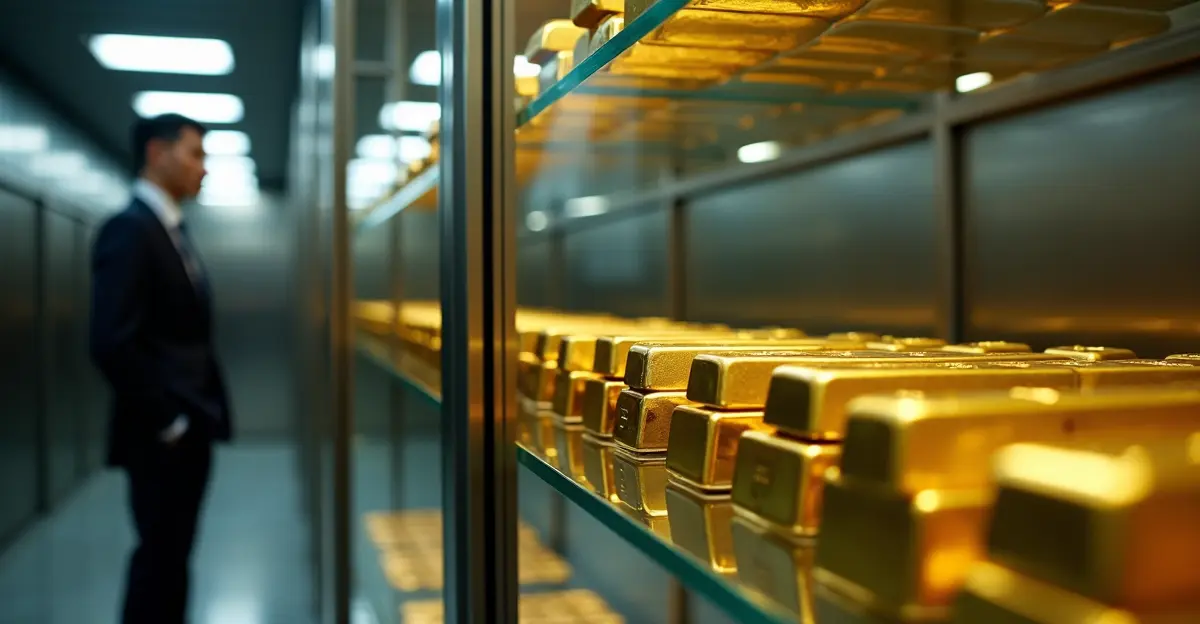
Gold has emerged as the primary beneficiary. With central banks buying over 1,000 tonnes annually for three consecutive years, gold prices have surged past $3,500 per ounce in 2025. The metal now accounts for roughly 30% of global reserve assets, up from 13% a decade ago. This sovereign demand creates a structural price floor, with analysts projecting a support level near $4,500–$4,600.
Expert Perspectives
Economists remain divided on the speed and extent of de-dollarization. Eswar Prasad, professor at Cornell University and author of The Future of Money, argues that 'the dollar's dominance is eroding from multiple directions — reserve diversification, trade settlement shifts, and digital currency innovation. We are witnessing the birth of a more fragmented, multipolar system.'
Others caution against overinterpreting the data. The dollar still accounts for 88% of global foreign exchange turnover and 57% of allocated reserves — a share that, while declining, remains larger than the next five currencies combined. As one Federal Reserve official noted, 'Reports of the dollar's death are greatly exaggerated. The network effects, liquidity, and institutional depth of dollar markets are not easily replicated.'
FAQ
What is de-dollarization?
De-dollarization refers to the reduction in the use of the U.S. dollar for international trade, central bank reserves, and cross-border financial transactions. It is driven by geopolitical, economic, and technological factors.
Why is the dollar's reserve share declining?
The decline is driven by the weaponization of sanctions (especially the freezing of Russian reserves), the rise of BRICS local-currency trade, record central bank gold purchases, and the development of alternative payment systems like CIPS and mBridge.
Will the dollar lose its reserve currency status?
Most experts believe a sudden collapse is unlikely. The dollar benefits from deep liquidity, strong institutions, and network effects. However, a gradual transition to a multipolar system — where the dollar shares dominance with the euro, yuan, gold, and digital currencies — is widely expected.
How does de-dollarization affect U.S. borrowing costs?
As foreign central banks reduce their dollar holdings, demand for U.S. Treasuries declines, potentially pushing up long-term interest rates. Each percentage point drop in the dollar's reserve share could add 10–15 basis points to U.S. bond yields.
What role does gold play in de-dollarization?
Central banks are buying gold as a sanctions-proof reserve asset. Gold now accounts for ~30% of global reserves, up from 13% a decade ago. This sovereign demand has pushed gold prices above $3,500/oz and created a structural price floor.
Conclusion: A Multipolar Future
The dollar at 57% is not a crisis — but it is a signal. The global financial order is undergoing its most significant transformation since the end of Bretton Woods. The rise of BRICS, the expansion of CIPS, the gold rush, and the erosion of the petrodollar all point toward a more fragmented, multipolar system. For investors, policymakers, and citizens, the key question is no longer whether de-dollarization will happen, but how quickly and how disruptively. The future of the dollar as reserve currency will depend on U.S. fiscal discipline, geopolitical restraint, and the ability to adapt to a world where no single currency dominates.




Follow Discussion