


 Deutsch
 English
 Español
 Français
 Nederlands
 Português


 Share
Share




Senate Confirms Kevin Warsh as Federal Reserve Chair in Narrow Vote
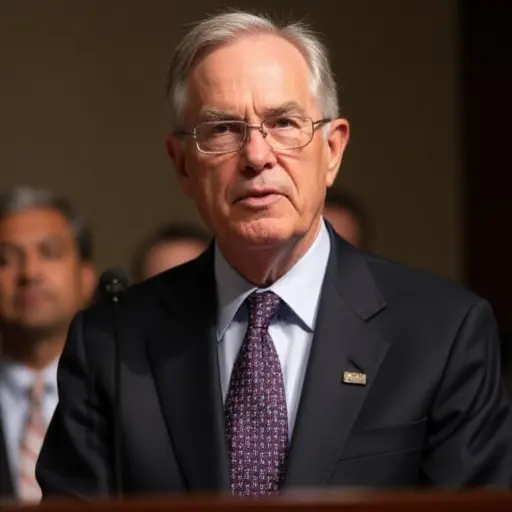
The United States Senate has confirmed Kevin Warsh as the new chairman of the Federal Reserve, the nation's central bank, in a tight 54-45 vote. Warsh, 56, succeeds Jerome Powell, whose term as chair expires this week. The confirmation marks the narrowest margin ever for a Fed chair appointment, according to Bloomberg News. All Republican senators voted in favor, joined by one Democrat, reflecting deep partisan divisions over monetary policy and central bank independence.
President Donald Trump nominated Warsh in late January, following months of public attacks on Powell for not cutting interest rates aggressively enough. The Federal Reserve independence debate has intensified under Trump, who has pushed for lower rates to stimulate the economy ahead of the 2026 midterm elections. Warsh's confirmation signals a potential shift in monetary policy direction, though he is considered more moderate than some Trump allies had hoped.
Who Is Kevin Warsh? Background and Experience
Kevin Warsh previously served as a member of the Federal Reserve Board of Governors from 2006 to 2011, appointed by President George W. Bush. A Stanford-trained lawyer and former investment banker at Morgan Stanley, Warsh also served as the first assistant secretary of the Treasury for financial institutions under Bush. He was a key architect of the Troubled Asset Relief Program (TARP) during the 2008 financial crisis.
Warsh is known for his hawkish views on inflation but has also criticized the Fed's aggressive quantitative easing programs. He has taught at Stanford University's Graduate School of Business and is a fellow at the Hoover Institution. His academic and policy background positions him as a technocrat, though his close ties to Trump have raised concerns about the Fed's political independence.
Warsh vs. Powell: A Changing of the Guard
Jerome Powell, originally appointed by Trump in 2017, will remain on the Fed's board as a governor, retaining influence over interest rate decisions. Powell had resisted Trump's demands for steep rate cuts, only lowering rates after months of pressure and less dramatically than the president wanted. The Jerome Powell Fed tenure was marked by a delicate balancing act between economic growth and inflation control.
Warsh inherits an economy facing multiple headwinds: persistent inflation above the Fed's 2% target, rising unemployment in key sectors, and the fallout from ongoing trade wars. The Fed's benchmark rate currently stands at 4.25%-4.50%, and markets are divided on whether Warsh will accelerate cuts.
Trump's Influence and Fed Independence Concerns
The confirmation process highlighted growing tensions over central bank autonomy. Trump's public pressure on Powell—whom he called an 'enormous loser'—set a precedent that critics say undermines the Fed's credibility. The Trump Fed pressure campaign has drawn comparisons to historical episodes where presidents tried to influence monetary policy, though never so openly.
Warsh has stated his commitment to the Fed's dual mandate of maximum employment and price stability, but his close relationship with Trump has skeptics worried. "The independence of the Federal Reserve is not a partisan issue; it is a foundational principle of sound monetary policy," said former Fed Vice Chair Alan Blinder in a recent interview. "Any perception of political interference can unanchor inflation expectations and damage the dollar's credibility."
Market Reaction and Economic Implications
Financial markets reacted calmly to the confirmation, with the S&P 500 edging up 0.3% and the dollar remaining steady. Gold and silver prices had previously fallen on expectations of a more moderate Fed chair. Bond yields ticked lower as traders priced in a slightly higher probability of rate cuts later this year.
Economists are divided on Warsh's likely policy path. Some expect him to gradually lower rates to support growth, while others predict he will prioritize inflation fighting. The 2026 US economic outlook remains uncertain, with GDP growth slowing and consumer spending softening.
FAQ: Kevin Warsh and the Federal Reserve
What does the Federal Reserve chair do?
The Fed chair leads the central bank's Board of Governors, sets monetary policy direction, testifies before Congress, and represents the U.S. in international financial forums. The chair influences interest rate decisions that affect inflation, employment, and economic growth.
Why was the vote so narrow?
Democrats opposed Warsh due to concerns about his independence from Trump and his past support for deregulation. The 54-45 margin reflects deep partisan polarization over economic policy and the Fed's role.
Will Warsh cut interest rates quickly?
It's uncertain. Warsh has signaled a data-dependent approach. While Trump wants steep cuts, Warsh may move cautiously to avoid reigniting inflation. Markets expect one or two quarter-point cuts by year-end.
What happens to Jerome Powell?
Powell remains a Fed governor until his board term expires in 2028. He retains a vote on the Federal Open Market Committee and will continue to influence policy decisions.
How does this affect the global economy?
The Fed's policies have worldwide ripple effects. A more accommodative Fed could weaken the dollar, boosting emerging market exports but potentially fueling capital outflows from developing countries.
Follow Discussion