


 Deutsch
 English
 Español
 Français
 Nederlands
 Português


 Share
Share




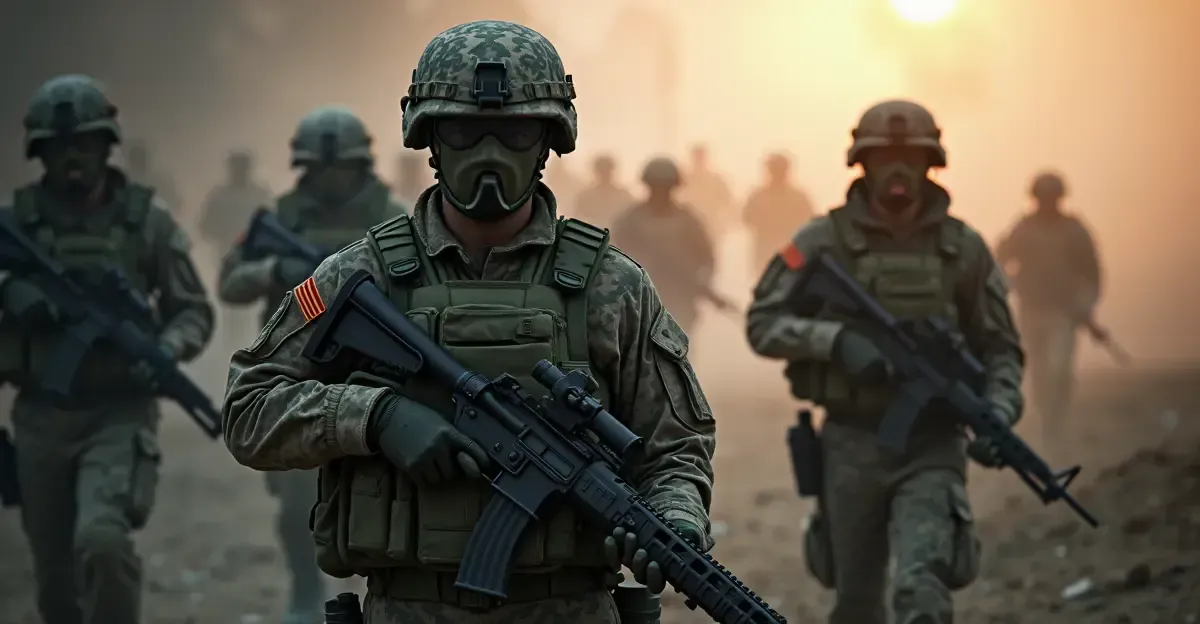
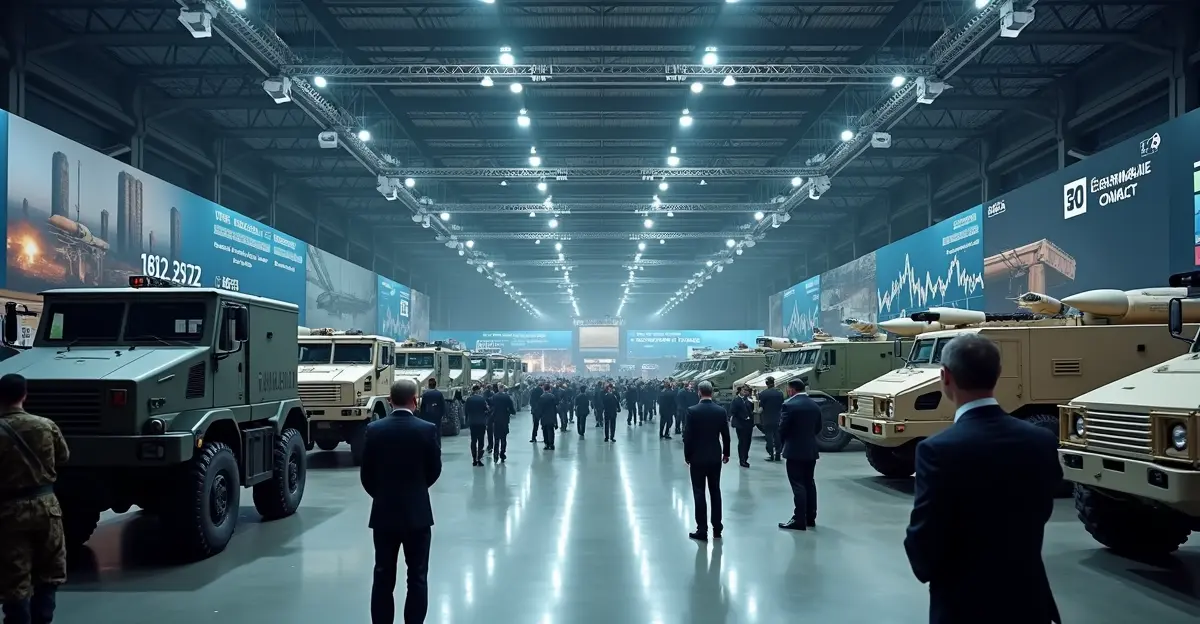
Global defense spending is on track to surpass $2.6 trillion in 2026 as NATO pushes toward a 3.5% of GDP target and major powers ramp up military budgets amid intensifying geoeconomic confrontation. Yet this unprecedented peacetime rearmament coincides with record sovereign debt levels, sticky inflation, and rising interest costs that are constraining fiscal space across advanced and emerging economies alike. The International Monetary Fund's April 2026 World Economic Outlook (WEO), subtitled 'Global Economy in the Shadow of War,' and the World Economic Forum's Global Risks Report 2026 both identify defense spending as a top-tier macroeconomic variable for the first time in decades, with geoeconomic confrontation ranked the #1 global risk.
Record Defense Outlays in a High-Debt Era
According to the Stockholm International Peace Research Institute (SIPRI), global military expenditure hit a record $2.72 trillion in 2024, a 9.4% real-terms increase — the steepest since the Cold War. The IISS Military Balance 2026 confirms that the upward trajectory continues, with the United States alone accounting for roughly 37% of global spending at nearly $1 trillion. NATO's new target of 3.5% of GDP for core defense spending — part of a broader 5% goal including infrastructure — is driving European allies to accelerate budget increases. Germany has doubled its defense budget to €95 billion, Poland spends 4.7% of GDP, and the eurozone aggregate is projected to rise from 1.8% of GDP in 2024 to 2.5% in 2026.
However, this rearmament push comes at a precarious fiscal moment. The IMF's April 2026 Fiscal Monitor warns that global public debt rose to nearly 94% of GDP in 2025 and is projected to reach 100% by 2029 — one year earlier than previously forecast. The global debt sustainability challenge is being exacerbated by higher interest rates: the OECD Global Debt Report 2026 notes that borrowing costs have risen sharply, with many governments now spending more on interest payments than on defense. In the United States, net interest costs exceeded $1 trillion in fiscal 2025, while the UK's debt interest bill topped £100 billion.
Macroeconomic Trade-Offs: The IMF's Warning
The IMF's WEO dedicates a full chapter to the macroeconomic effects of defense spending booms. The analysis finds that while increased military expenditure can boost short-term aggregate demand — particularly in economies with spare capacity — the medium-term consequences are troubling. Defense spending booms typically add 7 percentage points to public debt within three years, with about a quarter of the increase funded by cutting social programs. The report also warns that defense-driven fiscal expansion can reignite inflationary pressures, complicating central banks' efforts to bring inflation back to target.
Chapter 3 of the WEO examines the economic impact of conflicts, finding that they cause large, persistent output losses exceeding those from financial crises. The IMF's baseline scenario projects global growth slowing to 3.1% in 2026 and 3.2% in 2027, below pre-pandemic averages, with headline inflation expected to rise modestly before declining. An adverse scenario — involving prolonged conflict and further trade fragmentation — could push growth down to 2.5% and inflation above 5.4%.
Who Can Absorb the Burden?
The ability to finance higher defense spending varies dramatically across economies. The United States, despite its high debt-to-GDP ratio of 123%, benefits from the dollar's reserve currency status and deep capital markets, allowing it to borrow at relatively low cost. However, the US fiscal sustainability outlook is increasingly questioned, with Moody's maintaining a negative outlook on global sovereigns for 2026, citing policy uncertainty and high debt levels.
European economies face a starker trade-off. Countries like Italy and Spain, with debt-to-GDP ratios above 100% and limited fiscal space, are struggling to meet NATO targets without significant spending cuts elsewhere or tax increases. Germany, by contrast, has more room following its 2024 debt brake reform and a special defense fund, but even Berlin faces borrowing requirements increasing by €19 billion in a single quarter. The IMF notes that defense spending in Europe will likely crowd out investment in green transition and digital infrastructure — two pillars of long-term competitiveness.
Emerging markets are the most vulnerable. Many are already grappling with high debt service costs, currency depreciation, and limited access to international capital markets. The emerging market debt crisis risks are compounded by the need to fund defense modernization amid regional tensions. India, now the fifth-largest military spender globally at over $80 billion, faces particular pressure as it balances defense needs with social spending and infrastructure investment.
Geoeconomic Confrontation as the Top Global Risk
The WEF Global Risks Report 2026, based on surveys of over 1,300 global leaders, ranks geoeconomic confrontation as the most severe immediate risk, followed by interstate conflict, extreme weather, and societal polarization. The report notes that economic risks — downturn and inflation — both rose eight spots year-on-year, reflecting the interconnected nature of defense spending, debt dynamics, and macroeconomic stability. Half of experts surveyed expect a turbulent or stormy global outlook in 2026, with only 1% anticipating calm.
The geoeconomic fragmentation impact on trade is already visible: the IMF warns that trade tensions and protectionist industrial policies are exacerbating supply chain disruptions and raising costs for defense procurement. The closure of the Strait of Hormuz in the Middle East conflict — cutting off roughly 25% of global seaborne oil trade — has driven a 19% spike in energy commodity prices, further straining fiscal accounts in oil-importing nations.
Policy Pathways: Taxes, Cuts, or Monetary Accommodation?
Governments have limited options to fund the defense buildup. Tax increases are politically difficult in many countries, particularly where corporate tax rates are already high or where populist anti-tax sentiment is strong. Spending cuts elsewhere — especially to social welfare, healthcare, and education — carry significant political and human costs. The IMF's Fiscal Monitor urges credible and well-sequenced fiscal adjustment, but acknowledges that the scale of the defense ramp-up may require a combination of all three approaches.
Monetary accommodation is unlikely to provide relief. Central banks remain focused on fighting inflation, with the Federal Reserve, European Central Bank, and Bank of England all maintaining relatively restrictive stances. The IMF's WEO notes that defense-driven fiscal expansion could force central banks to keep rates higher for longer, further squeezing fiscal space through higher debt service costs.
Expert Perspectives
'The structural tension between defense needs and fiscal sustainability is the defining macroeconomic challenge of our time,' said IMF Chief Economist Pierre-Olivier Gourinchas at the WEO launch. 'Countries must prioritize spending efficiency, broaden revenue bases, and avoid protectionist measures that undermine global economic integration.'
The WEF report echoes this sentiment, calling for multilateral cooperation to manage the risks of geoeconomic confrontation. 'We are witnessing a vicious cycle where security concerns drive up defense spending, which in turn strains fiscal positions and fuels domestic instability,' noted WEF Managing Director Saadia Zahidi.
Frequently Asked Questions
How much is global defense spending expected to be in 2026?
Global defense spending is projected to surpass $2.6 trillion in 2026, continuing a trend of rapid increases driven by NATO targets and geopolitical tensions. The United States remains the largest spender, accounting for over a third of the global total.
What is NATO's new defense spending target?
NATO has raised its target to 5% of GDP, comprising 3.5% for core defense spending and 1.5% for security-related infrastructure. The target includes a 10-year timeline with a 2029 interim review, providing flexibility for member states.
How does increased defense spending affect national debt?
According to the IMF, defense spending booms typically add 7 percentage points to public debt within three years. About a quarter of the increase is funded by cutting social programs, while the remainder comes from higher borrowing or taxes.
Which countries are most vulnerable to the defense-debt dilemma?
Emerging markets and highly indebted European economies like Italy and Spain face the greatest strain. Countries with limited fiscal space, high debt service costs, and exposure to energy price shocks are particularly vulnerable.
What are the main risks identified in the WEF Global Risks Report 2026?
The top risk is geoeconomic confrontation, followed by interstate conflict, extreme weather, societal polarization, and misinformation. Economic downturn and inflation both rose sharply in the rankings compared to the previous year.
Conclusion: A Precarious Balancing Act
The defense-debt dilemma represents a structural shift in global macroeconomics. For the first time in decades, military spending has become a first-order variable in fiscal sustainability analysis, with the IMF and WEF both highlighting the risks of unchecked rearmament. The path forward requires difficult trade-offs: governments must find ways to fund defense without undermining long-term fiscal stability, social cohesion, or economic growth. As the global economic outlook 2026 remains clouded by conflict and fragmentation, the choices made today will shape fiscal trajectories for years to come.




Follow Discussion