


 Deutsch
 English
 Español
 Français
 Nederlands
 Português


 Share
Share




2026 Global Economic Resilience Test: How Fiscal Policy and AI Investment Are Redefining Growth Trajectories
The global economy faces a critical resilience test in 2026 as major institutions release diverging forecasts revealing deep structural shifts. The International Monetary Fund (IMF), Goldman Sachs, and UNCTAD have published conflicting projections that highlight how technology investment, particularly in AI infrastructure, is creating new growth drivers while fiscal policies in major economies produce divergent outcomes. This analysis examines whether current growth patterns represent sustainable recovery or temporary stimulus effects, and what systemic risks emerge from the growing divergence between technology-driven economies and those facing structural constraints.
What is the 2026 Economic Resilience Test?
The 2026 economic resilience test refers to the global economy's ability to withstand multiple pressures while maintaining growth momentum. According to the IMF's January 2026 World Economic Outlook, global growth is projected at 3.3% for 2026, showing a slight upward revision from October 2025. However, this masks significant divergence: Goldman Sachs forecasts 2.9% growth, while UNCTAD projects a more pessimistic 2.7%. This 0.6 percentage point spread represents the widest forecast gap in recent years, signaling fundamental disagreements about underlying economic health.
The AI Investment Boom: Creating New Growth Drivers
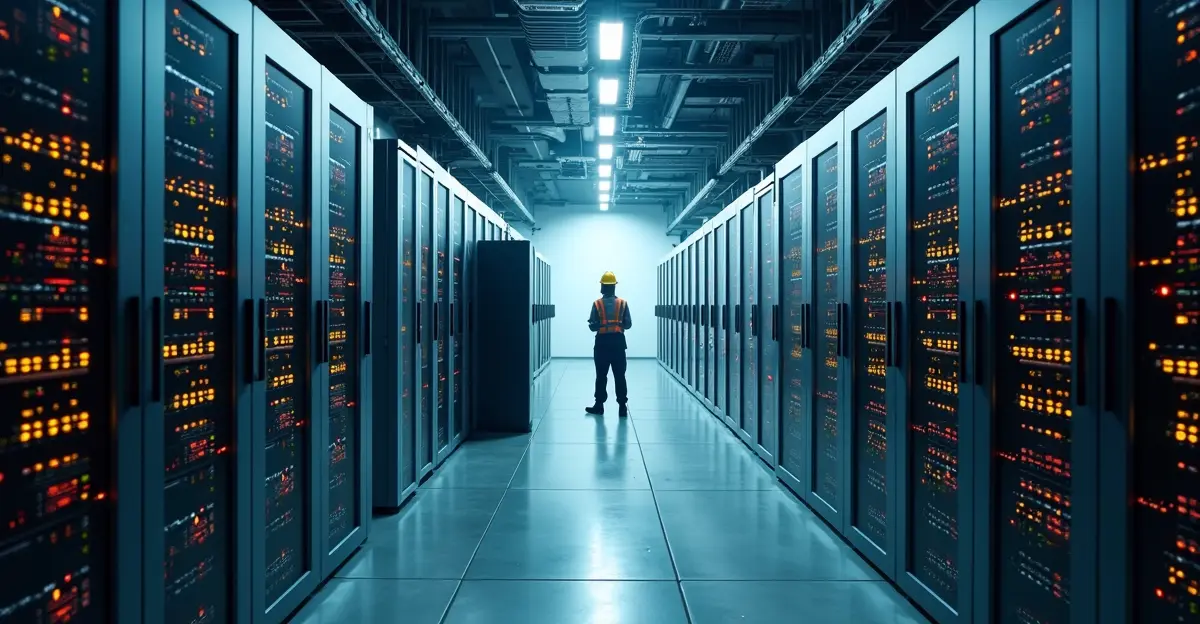
Artificial intelligence infrastructure investment has emerged as a primary growth driver, with the U.S. leading a global build-out expected to exceed half a trillion dollars in 2025 alone. The Federal Reserve analysis reveals that AI-related investment drove nearly half of merchandise trade growth in the first half of 2025 despite representing only about 15% of total trade. "The AI infrastructure boom is significantly impacting global trade, with data-center spending expected to accelerate further through 2030," notes the Fed report.
Key AI Investment Statistics for 2026:
- U.S. AI infrastructure investments projected to reach $660 billion (approximately 2% of GDP)
- AI-related computing capacity boosting demand for critical components like servers and graphics cards
- Data-center spending exceeding half a trillion dollars in 2025
- AI investment supporting exports in key supplier economies across Asia and the Middle East
Fiscal Policy Divergence: Creating Winners and Losers
Fiscal policies are creating starkly different outcomes across major economies. The U.S. has implemented substantial income tax cuts through the One Big Beautiful Bill Act, while maintaining massive AI infrastructure investments. According to the UCLA Anderson Forecast, this fiscal stimulus is estimated to add 0.5-1% to GDP, with risks shifting from contraction toward potential overheating. Meanwhile, Europe faces more constrained fiscal space, with the euro area anticipating just 1.3% growth according to Goldman Sachs.
Regional Growth Projections for 2026:
| Region | Goldman Sachs Forecast | IMF Forecast | Key Drivers |
|---|---|---|---|
| United States | 2.8% | 3.0% | Tax cuts, AI investment, fading tariffs |
| Euro Area | 1.3% | 1.5% | Limited fiscal space, structural reforms |
| China | 4.8% | 4.5% | Strong exports, industrial policy |
| Japan | 0.6% | 0.8% | Domestic demand, monetary support |
The Tension Between Consumer Resilience and Inflation
Resilient consumer spending continues to support growth but faces persistent inflation pressures. The Stanford Institute for Economic Policy Research policy brief outlines the Federal Reserve's stagflation challenge: balancing weakening labor markets against tariff-induced inflation above the 2% target. President Trump's sweeping tariff regime has raised effective tariff rates from 2.1% to 11.7%, with over 50% of costs passed to consumers, projected to increase inflation by 1%.
"The economy shows resilience despite policy uncertainty and AI disruption, with growth expected to continue even as the job market slows," states the SIEPR analysis. This creates a complex environment where consumer spending remains robust but faces erosion from persistent price pressures.
Trade Policy Normalization and Strategic Industrial Competition
Trade policy normalization remains elusive as strategic industrial policies reshape global economic competition. The BCG geopolitical analysis highlights a global shift toward increasing multipolarity, with six emerging arenas of competition centered around global markets, supply chain security, and access to industrial, technological, and human capabilities. Realignment in trade and foreign direct investment continues, with US tariff hikes and bilateral deals creating a patchwork of new agreements replacing WTO norms.
Systemic Risks: The Growing Technology Divide
The most significant systemic risk emerging from 2026 forecasts is the growing divergence between technology-driven economies and those facing structural constraints. The World Bank's January 2026 Global Economic Prospects reveals a concerning trend: while nearly all advanced economies have per capita incomes above 2019 levels, about one in four developing economies remains poorer than before the pandemic. Developing economies face significant challenges with projected growth slowing to 4% in 2026, and per capita income growth lagging historical averages.
Expert Perspectives on Sustainable Recovery
Economists remain divided on whether current growth patterns represent sustainable recovery or temporary stimulus effects. The IMF emphasizes that "technology investment, fiscal and monetary support, accommodative financial conditions, and private sector adaptability" are helping offset trade policy headwinds. However, UNCTAD warns that "the global economy has shown resilience, but the outlook is clouded by trade tensions, fiscal strains, and persistent uncertainty."
FAQ: 2026 Global Economic Outlook
What is the main driver of economic growth in 2026?
AI infrastructure investment is the primary growth driver, particularly in the United States, where projected investments reach $660 billion (approximately 2% of GDP) and drive nearly half of merchandise trade growth.
How do fiscal policies differ across major economies?
The U.S. has implemented substantial tax cuts and AI investments, while Europe faces more constrained fiscal space. This divergence creates significantly different growth trajectories, with the U.S. projected at 2.8-3.0% growth versus Europe's 1.3-1.5%.
What are the main inflation risks in 2026?
Persistent tariff-induced inflation remains a key risk, with effective U.S. tariff rates rising from 2.1% to 11.7% and over 50% of costs passed to consumers, projected to increase inflation by 1%.
How is trade policy evolving in 2026?
Trade policy continues to fragment, with bilateral deals replacing WTO norms and strategic industrial policies reshaping global competition around supply chain security and technological capabilities.
What is the biggest systemic risk for 2026?
The growing technology divide between AI-driven economies and those facing structural constraints represents the most significant systemic risk, potentially creating permanent economic disparities.
Conclusion: Navigating the Resilience Test
The 2026 global economic resilience test reveals an economy at a crossroads. While AI investment creates powerful new growth drivers, fiscal policy divergence and persistent inflation pressures create complex challenges. The widening gap between institutional forecasts—from IMF's optimistic 3.3% to UNCTAD's cautious 2.7%—reflects genuine uncertainty about whether current growth represents sustainable recovery or temporary stimulus effects. As strategic industrial policies reshape global competition, policymakers must balance short-term resilience with long-term structural reforms to ensure inclusive growth across both technology-driven and traditionally constrained economies.
Sources
IMF World Economic Outlook Update January 2026, Goldman Sachs Research 2026 Forecasts, UNCTAD World Economic Situation and Prospects 2026, Federal Reserve AI Infrastructure Analysis, UCLA Anderson Forecast Spring 2026, World Bank Global Economic Prospects January 2026, Stanford Institute for Economic Policy Research Policy Brief, BCG Geopolitical Forces Analysis.




Follow Discussion