


 Deutsch
 English
 Español
 Français
 Nederlands
 Português


 Share
Share




Global Growth 2026: How AI Investment Masks Systemic Economic Vulnerabilities
The global economy in 2026 presents a paradox of apparent resilience masking deep structural vulnerabilities, with growth increasingly concentrated in narrow artificial intelligence-driven sectors while broader economic foundations remain fragile. According to the IMF's January 2026 World Economic Outlook Update, global growth is projected at 3.3% for 2026 and 3.2% for 2027, representing a slight upward revision from previous forecasts. However, this steady growth narrative conceals what PwC's 'Teetering Resilience' report identifies as increasingly fragile and concentrated growth drivers, primarily in AI investment, data center expansion, and technology infrastructure.
What is 'Teetering Resilience' in Global Economics?
The concept of 'teetering resilience' describes an economic condition where growth continues but on increasingly narrow and fragile foundations. PwC's 2026 Annual Outlook report forecasts global GDP growth of 2.7% in 2026, with US growth at 2.1%, but warns that this growth is concentrated in specific drivers like AI investment, supportive fiscal policy, and financial market confidence. This concentration creates systemic risks as economies become over-reliant on a single growth engine while broader structural weaknesses persist. The World Bank's January 2026 Global Economic Prospects report reveals a concerning disparity: while nearly all advanced economies have per capita incomes above 2019 levels, about one in four developing economies remains poorer than before the pandemic, highlighting the uneven nature of the current recovery.
The AI Investment Concentration: Growth Engine or Vulnerability?
The global economic landscape in 2026 is increasingly dominated by AI-driven capital expenditure, which has become the primary growth engine for many advanced economies. According to the IMF, AI advancements are playing a crucial role in offsetting trade-related challenges and providing significant economic stimulus. However, this concentration creates several systemic risks:
1. Over-reliance on Narrow Growth Drivers
Global growth has become disproportionately dependent on AI investment and technology infrastructure. PwC's analysis shows that 83% of executives are adopting more long-term, US-focused strategies, with AI investment anchoring the US economy alongside resilient consumer spending. This narrow focus leaves economies vulnerable to sector-specific shocks, similar to patterns observed during the dot-com bubble of 2000.
2. Diverging Economic Trajectories
The World Bank report highlights that more than one-quarter of emerging market and developing economies still have per capita incomes below 2019 levels, creating what the institution calls 'the weakest decade for global growth since the 1960s.' This divergence between AI-capable economies and those lacking digital infrastructure threatens to create permanent economic divides, with implications for global stability and development goals.
Energy Constraints and New Inflation Dynamics
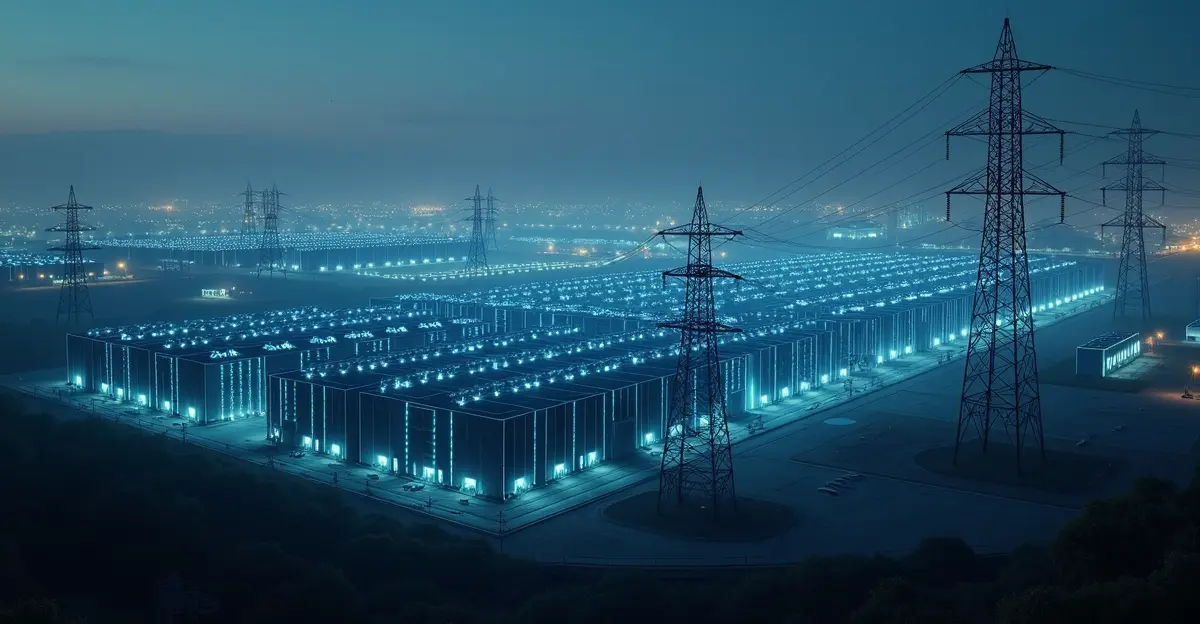
The AI boom is driving unprecedented data center expansion, creating new energy constraints that are reshaping inflation dynamics. According to JLL's 2026 Global Data Center Outlook, data centers are projected to grow at a 14% CAGR through 2030, with AI potentially representing half of all data center workloads by 2030. This expansion comes with significant energy costs:
- U.S. data centers consumed 183 terawatt-hours of electricity in 2024, representing over 4% of the nation's total electricity consumption
- Data center energy use is projected to grow by 133% to 426 TWh by 2030
- Construction costs have been rising at 7% CAGR, with an estimated $3 trillion investment required for 100 GW of new supply by 2030
These energy demands create new inflation pressures, with PwC noting uneven inflation patterns including electricity prices rising 4.2% and medical care costs up 8.5%. The concentrated energy demand strains local power grids, with data centers consuming 26% of Virginia's total electricity supply in 2023, creating regional disparities in energy availability and costs.
Geopolitical Implications of Growth Concentration
The concentration of growth in specific technology corridors has significant geopolitical implications. The Atlantic Council outlines how AI will shape geopolitics in 2026, noting that the US is aggressively exporting its AI tech stack to counter China's influence, signing partnerships with countries like Saudi Arabia and UAE. This creates what the World Economic Forum describes as a 'digital Cold War' with both nations viewing AI leadership as crucial for national power.
Data centers, once considered back-end infrastructure, are now strategic assets comparable to power plants or ports, with the US hosting 51% of global data centers. This concentration has prompted other nations to build domestic capacity to ensure digital sovereignty and reduce foreign dependence, leading to fragmentation of global tech ecosystems. The geopolitical landscape features rising trade barriers, export controls on advanced chips, and competing AI ambitions, creating challenges for global economic integration similar to those seen during the US-China trade war.
Systemic Risks and Policy Implications
The IMF warns of key downside risks including a potential reevaluation of technology expectations and escalation of geopolitical tensions. Policymakers are advised to restore fiscal buffers, preserve price and financial stability, reduce uncertainty, and implement structural reforms to maintain economic resilience. The World Bank emphasizes that despite resilience, economic dynamism and resilience cannot diverge indefinitely without fracturing public finance and credit markets, especially given record levels of public and private debt.
To address these challenges, governments must liberalize private investment and trade, rein in public consumption, and invest in new technologies and education. The European Green Deal provides one model for balancing technological advancement with broader economic resilience, though its implementation faces challenges in the current economic climate.
Expert Perspectives on the Fragile Recovery
Alexis Crow, Chief Economist at PwC, highlights that while the global economy continues to grow, it does so on narrower and more fragile foundations. 'Despite eight quarters of growth, underlying fragility persists, requiring businesses to carefully assess vulnerabilities and strategic positioning,' Crow notes in the 'Teetering Resilience' report.
The IMF's analysis emphasizes that the global economy remains steady despite divergent forces, with resilient growth driven by technology investment, fiscal and monetary support, accommodative financial conditions, and private sector adaptability offsetting trade policy headwinds. However, this balance remains precarious, particularly as developing economies struggle to catch up with their advanced counterparts.
FAQ: Understanding Global Growth Vulnerabilities in 2026
What is 'teetering resilience' in economics?
Teetering resilience describes an economic condition where growth continues but on increasingly narrow and fragile foundations, with over-reliance on specific sectors like AI investment masking broader structural vulnerabilities.
How does AI investment affect global economic growth?
AI investment has become a primary growth engine for advanced economies, providing significant economic stimulus but creating concentration risks and energy constraints that could undermine long-term stability.
Why are developing economies falling behind in 2026?
About one in four developing economies have per capita incomes below 2019 levels due to lack of digital infrastructure, limited access to AI technology, and structural barriers to participating in the technology-driven growth model.
What are the energy implications of data center expansion?
Data center energy use is projected to grow by 133% to 426 TWh by 2030, creating new inflation dynamics and straining power grids, particularly in regions with concentrated data center development.
How is AI shaping geopolitical competition?
AI has become central to geopolitical power struggles, with nations viewing AI leadership as crucial for national power and implementing policies to ensure digital sovereignty, leading to fragmentation of global tech ecosystems.
Conclusion: Navigating the Fragile Growth Landscape
The global economic outlook for 2026 presents both opportunities and significant risks. While AI-driven investment provides growth momentum, the concentration of economic activity in narrow sectors creates systemic vulnerabilities that could undermine long-term stability. The divergence between AI-capable economies and those lacking digital infrastructure threatens to create permanent economic divides, while energy constraints from data center expansion create new inflation dynamics.
Policymakers face the dual challenge of harnessing AI's growth potential while building broader economic resilience through structural reforms, investment in education and infrastructure, and international cooperation to prevent further fragmentation of the global economy. The global supply chain resilience initiatives of recent years provide important lessons for addressing these interconnected challenges in an increasingly complex economic landscape.





Follow Discussion