


 Deutsch
 English
 Español
 Français
 Nederlands
 Português


 Share
Share




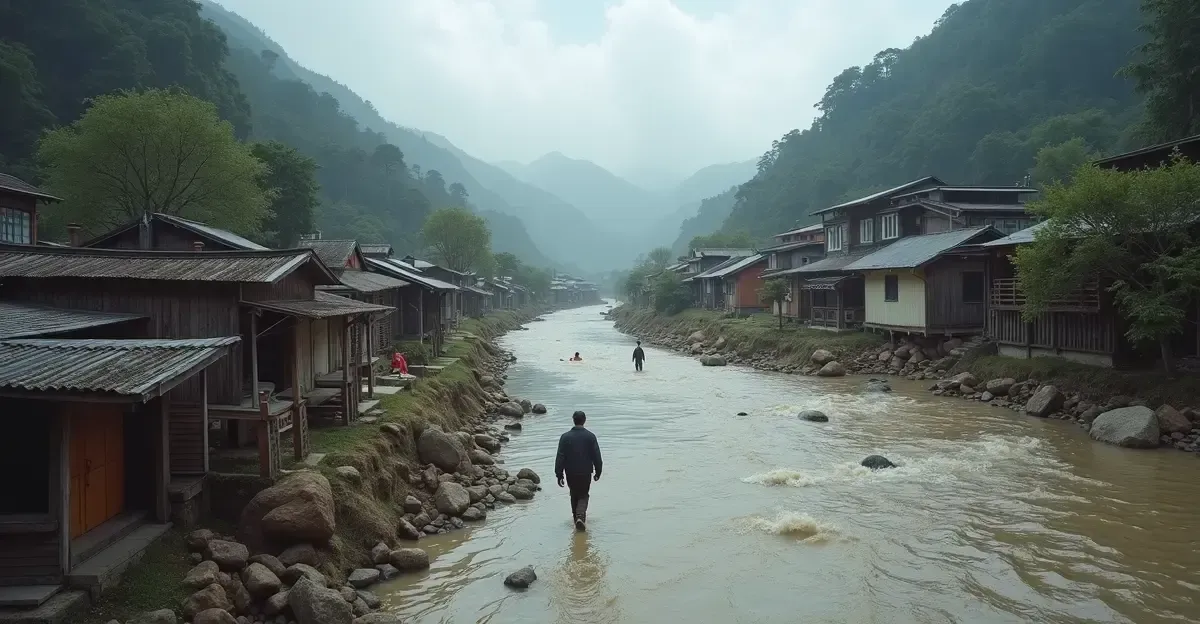
Four days after the catastrophic Nepal flood disaster that tore through the Trishuli River valley on 26 August 2026, residents of the hardest-hit Nuwakot district are still waiting for aid. With at least 682 people confirmed dead, more than 1,473 injured, and nearly 3,000 still missing, survivors describe a river they no longer recognise and an evacuation effort that arrived too late for many.
What happened in Nepal's Trishuli Valley?
The disaster began on the morning of 26 August when a glacier roughly 610 metres wide collapsed near Langtang Lirung in the Himalayas, sending an ice-and-debris avalanche down the Lende Khola–Bhote Koshi–Trishuli river system. The surge travelled up to 180 km/h, covering 20 kilometres in about seven minutes and destroying the Gyirong Port border crossing with China. Floodwaters spread along a 72-kilometre stretch across seven districts, including Rasuwa, Nuwakot and Dhading. The 2026 Nepal glacier collapse has been linked by scientists to permafrost weakening driven by climate change.
Four days on: survivors describe waiting for help
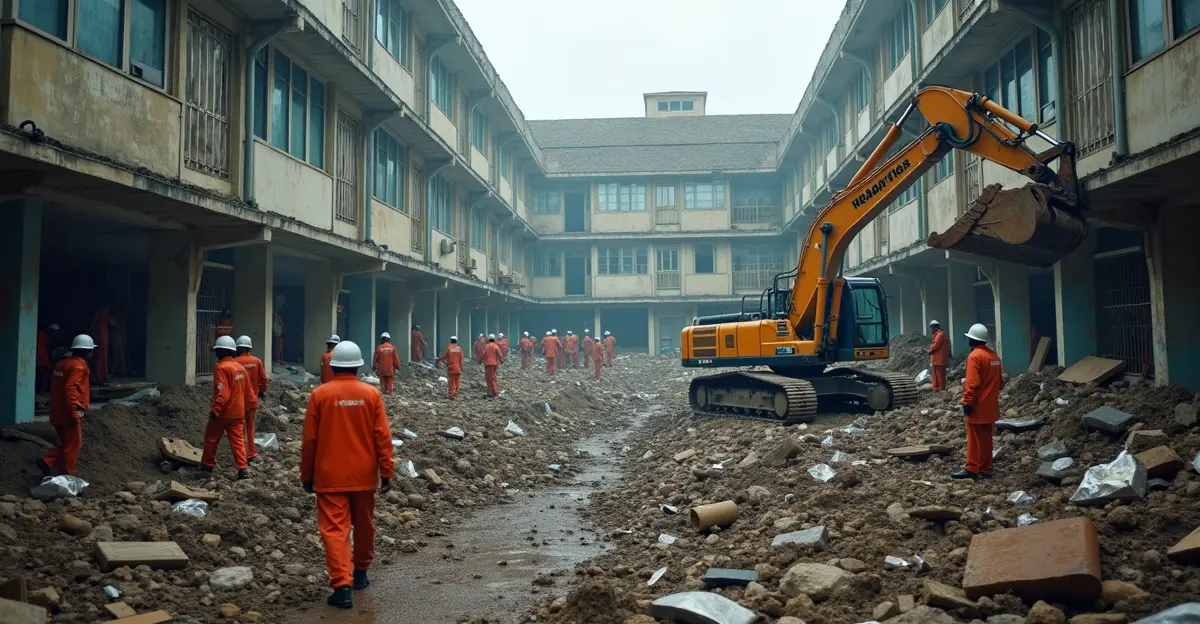
In the valley village of Trishuli, residents sit on the roadside watching excavators slowly clear mud and debris. They cannot yet reach their homes to search for belongings. Aid worker Lieuwe Siebe de Jong of the Dutch NGO ZOA, travelling by motorbike to reach cut-off communities, said: "We came across people who had been waiting in vain for evacuation for days. What was once a bustling town is now completely washed away by mud and stones."
Sari: 'The river feels like a stranger'
Sari, a Hindu woman who has worshipped the Trishuli since childhood, sits outside her home wearing red bracelets and a red bindi. "The river no longer feels like a friend, but like a stranger," she said. "I see the water still rising. Actually, I want to leave here." She stays only because she is afraid to abandon her furniture shop.
Prabin Dhunge: escape in minutes
Prabin Dhunge points to a roofless building with missing outer walls. "That is my house, and my shop was here with five storage rooms, but everything was swept away in a few minutes." His father, a successful businessman, left only after police warned that the water was rising. "The warning was too vague; we did not realise what disaster awaited us. Luckily my family is safe now, but my friends and neighbours were all swept away."
Lali Maya, 65: 'I have lost everything'
Sixty-five-year-old Lali Maya sits in a shop doorway, weeping. "I have lost everything. I do not even have clothes to wear." She has experienced floods before but never on this scale. "All night I am afraid, because people say a new flood wave is coming. I am old, and it does not matter to me anymore whether I die."
Why did the Trishuli flood happen?
Authorities and scientists point to a high-altitude glacial collapse rather than monsoon rainfall. A magnitude 5.2 seismic signal recorded near the border was later reclassified by the USGS as the glacier collapse itself, not a tectonic earthquake. As climate change in the Himalayas accelerates permafrost thaw and glacier instability, experts warn such events may become more frequent. Early warning systems failed partly because upstream monitoring stations were swept away before alerts could trigger; SMS warnings reached 679,295 residents only after the flood had already entered the Trishuli River.
Impact and response
Damage in Nepal is estimated at more than US$1.3 billion. Entire settlements have been buried under grey mud, and excavators are still recovering bodies. International aid groups and the Nepali government are delivering food and hygiene products to Nuwakot and beyond where roads allow. However, the humanitarian response in Nepal remains hampered by destroyed roads and ongoing landslide risk.
Frequently Asked Questions
How many people died in the 2026 Nepal flood?
At least 682 people have been confirmed dead, with more than 2,980 still missing as of late August 2026.
What caused the Trishuli River flood?
A glacier collapse near Langtang Lirung triggered a debris flow and flash flood, likely linked to climate-driven permafrost weakening.
Which districts were affected?
Seven districts: Rasuwa, Nuwakot, Dhading, Gorkha, Tanahun, Nawalparasi and Chitwan.
Why did early warnings fail?
Upstream monitoring stations were destroyed before alerts could be issued, and SMS warnings arrived after the flood had already entered the river corridor.




Follow Discussion