


 Deutsch
 English
 Español
 Français
 Nederlands
 Português


 Share
Share




The 2026 global food crisis has pushed acute hunger to its worst level this century, with two simultaneous famines confirmed in Gaza and Sudan for the first time in recorded history. The World Food Programme's Global Report on Food Crises 2026, published on 2 July 2026, documents 266 million people facing acute food insecurity across 47 countries in 2025—and projections suggest that number could climb to 318 million in 2026 as conflict, climate shocks, and trade fragmentation converge.
A Historic Convergence of Crises
For the first time in the report's 10-year history, two famines were confirmed in the same year: parts of the Gaza Strip and Sudan. The GRFC 2026 warns that famine risk persists for Gaza, Sudan, and South Sudan in 2026. This dual famine marks a grim milestone, reflecting the intersection of armed conflict, blockades, and collapsing agricultural systems. The report also highlights that 35.5 million children were acutely malnourished in 23 countries. IPC famine classification remains the gold standard for determining such emergencies.
The Triple Threat Behind the Crisis
Climate-Driven Crop Failures
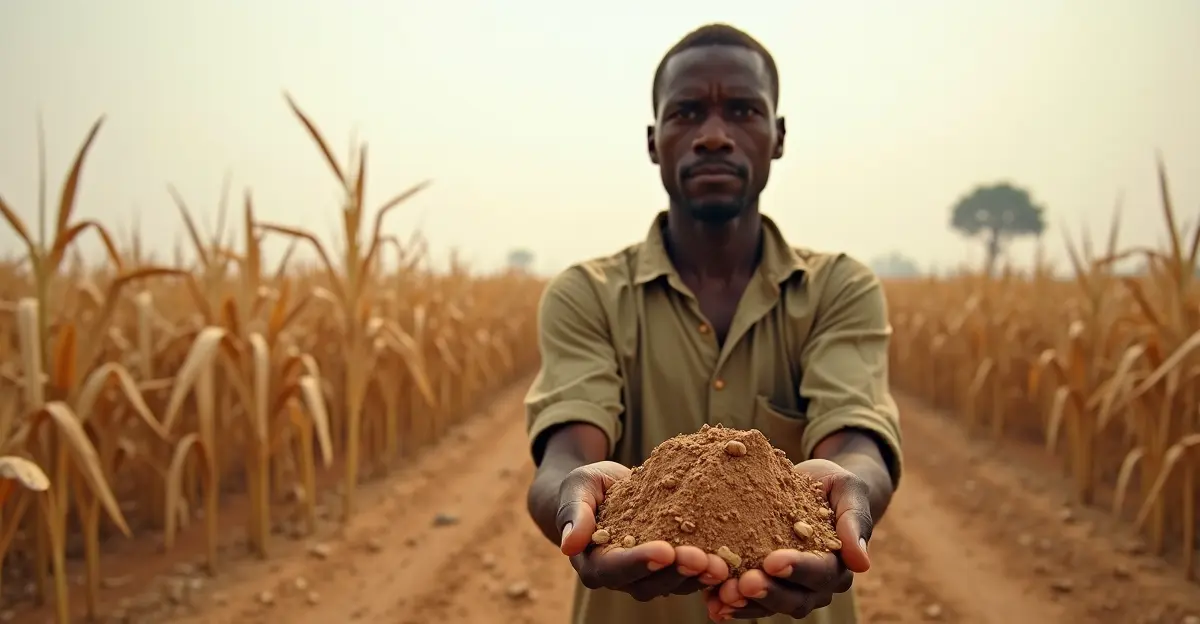
Weather extremes have become a dominant driver. The GRFC 2026 shows the number of people affected by climate shocks in food crises rose from 15.7 million in 2020 to 87.5 million in 2025, fueled by a record El Niño that devastated Southern Africa. El Niño weather patterns are expected to disrupt planting and harvest cycles across Asia, Latin America, and North America in 2026.
Fertilizer Shortages and Energy Disruption
Fertilizer prices have doubled for some producers, according to industry reports, as conflicts in the Middle East and Ukraine disrupt natural gas supplies critical for nitrogen fertilizer production. The Strait of Hormuz blockade has further strained energy markets. The World Bank's April 2026 Commodity Markets Outlook projects a 2.5% increase in global food commodity prices this year, with risks tilted to the upside. global fertilizer supply chain remains a critical vulnerability.
Fragmentation of Grain Trade Corridors
Export restrictions and shipping disruptions are fragmenting grain trade. The World Bank warns that successive export bans on grains and edible oils could amplify price spikes, as seen in 2008 and 2022. Black Sea trade routes remain volatile, while tariffs add pressure. grain export restrictions have already been imposed by several major producers, raising fears of a repeat of past food crises.
Strategic Implications: Food as Geopolitical Leverage
Beyond humanitarian concerns, food inflation is fueling political unrest in import-dependent nations. Analysts project global food inflation will rise from 2.8% in the first half of 2026 to roughly 5% in the first half of 2027, with cumulative price increases of 15.8% by 2028. In this environment, major powers are increasingly weaponizing food exports. The GRFC 2026 explicitly warns that hunger is 'used as a weapon of war.' food inflation and political instability have historically triggered protests and regime change, and 2026 is proving no exception.
Expert Perspectives
'For the first time in the report's history, two famines were confirmed in the same year—in parts of the Gaza Strip and Sudan. The risk of famine persists for the Gaza Strip, Sudan, and South Sudan in 2026.' — GRFC 2026, FAO/WFP.
World Bank analysts add: 'With energy costs, fertilizer prices, and weather-related shocks all posing simultaneous risks, the threat of renewed trade restrictions is particularly acute.'
What This Means for 2026 and Beyond
The structural nature of this crisis—driven by overlapping climate, conflict, and trade shocks—demands coordinated international action. Without de-escalation, humanitarian access, and investment in resilient food systems, the number of people facing acute hunger could rise sharply. food security risk assessment tools must incorporate these converging threats to inform policy.
Frequently Asked Questions
What is the 2026 Global Food Crisis?
The 2026 global food crisis refers to the historic convergence of conflict, climate shocks, and trade fragmentation driving acute food insecurity to record levels, including two simultaneous famines in Gaza and Sudan.
How many people are affected?
In 2025, 266 million people across 47 countries faced acute food insecurity, and projections suggest this could reach 318 million in 2026.
Why are fertilizer prices rising?
Fertilizer prices are rising due to disrupted natural gas supplies from conflict zones, energy market volatility, and shipping disruptions near the Strait of Hormuz.
How is trade fragmentation worsening hunger?
Export bans, tariffs, and disrupted grain corridors amplify price spikes and reduce food availability in import-dependent countries, mirroring the 2008 and 2022 food price crises.
What are the strategic implications?
Food inflation is fueling political unrest, and major powers are using food exports as geopolitical leverage, reshaping global alliances.
Follow Discussion