


 Deutsch
 English
 Español
 Français
 Nederlands
 Português


 Share
Share




Man Arrested After Climbing Eiffel Tower and Displaying American Flag on Independence Day
Paris authorities arrested a man on July 4, 2026, after he climbed the Eiffel Tower and hung a large American flag between the second and third levels of the iconic monument. The incident occurred on the 250th anniversary of the United States' Declaration of Independence, drawing widespread attention and prompting an evacuation of the forecourt and upper levels. The man, whose identity and nationality have not been officially released, was taken into custody when he reached the third floor. He faces charges of "endangering the lives of others," according to the Paris police. The climber gave no explanation for his motives, and the flag was removed by authorities after his arrest.
Timing and Symbolism of the Stunt
The climb took place at approximately 3:45 PM local time on Saturday, July 4, 2026 — a date of profound significance for the United States, which was celebrating the 250th anniversary of the signing of the Declaration of Independence in 1776. The choice of date and the use of the American flag strongly suggest a political or patriotic statement, though investigators have not confirmed any specific affiliation or motive. The Eiffel Tower, a global symbol of France and one of the most visited paid monuments in the world, draws nearly seven million visitors annually. The incident forced the temporary closure of the monument's forecourt, second floor, and third floor, causing disruptions for hundreds of tourists.
This event comes just days after a similar high-profile climbing incident in New York City, where a Russian couple scaled the spire of the Empire State Building on July 1, 2026, unfurling a peace banner in an elaborate marriage proposal. That couple, identified as Ivan Kuznetsov (also known as Ivan Beerkus) and Angelina Nikolau, were arrested and face felony charges. The rise in high-profile monument climbing stunts has raised concerns among security officials about the vulnerability of iconic landmarks.
Security Response and Investigation
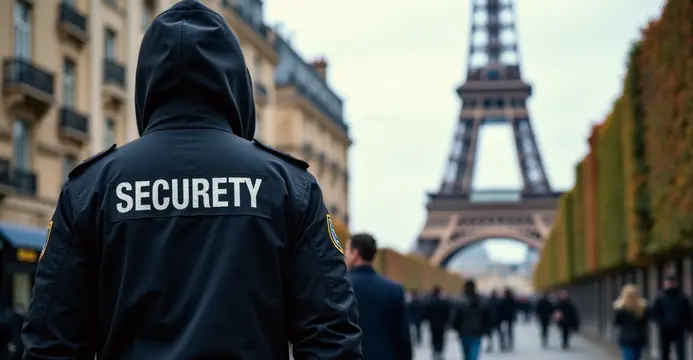
Paris police responded swiftly to the incident. Witnesses reported seeing the man climbing the lattice structure between the second and third floors, approximately 115 meters (377 feet) above ground. The Eiffel Tower's security team immediately evacuated the affected areas and alerted emergency services. The man was apprehended without incident when he reached the third-floor observation deck. He is currently in custody and being questioned. The investigation is ongoing, with authorities examining his background, travel history, and any potential connections to organized groups. The charge of "endangering the lives of others" reflects the serious risk posed by unauthorized climbing, which could have resulted in falls or injuries to the climber or bystanders below.
Security at the Eiffel Tower has been a recurring concern. In 2023, a similar incident occurred when a climber scaled the tower, prompting a full evacuation. The monument has since implemented additional surveillance measures, but the 324-meter (1,063-foot) structure remains difficult to fully secure due to its open lattice design. Eiffel Tower security measures and challenges continue to be a topic of debate among French officials.
Comparison with Recent Landmark Climbs
The Paris incident is the latest in a series of unauthorized climbs at major landmarks worldwide. The table below compares recent high-profile cases:
| Date | Location | Climber(s) | Action | Outcome |
|---|---|---|---|---|
| July 4, 2026 | Eiffel Tower, Paris | Unidentified man | Hung US flag (250th Independence Day) | Arrested, charged with endangerment |
| July 1, 2026 | Empire State Building, NYC | Ivan Kuznetsov & Angelina Nikolau | Unfurled peace banner, marriage proposal | Arrested, felony charges |
| May 2025 | London's The Shard | Two climate activists | Protest against fossil fuels | Arrested, charged with trespassing |
These stunts often share a common thread: a desire for symbolic expression combined with a disregard for security protocols. Social media has amplified the reach of such acts, encouraging copycat behavior. Legal consequences for landmark climbing vary by jurisdiction but can include imprisonment, fines, and deportation for foreign nationals.
Impact on Tourism and Public Safety
The Eiffel Tower reopened to the public later that evening after security sweeps confirmed no further threats. However, the incident has reignited discussions about balancing public access with security at high-profile tourist destinations. The monument's management may consider additional barriers, increased surveillance, or restricted access to certain areas. Tourism experts note that while such incidents cause temporary disruption, they rarely have a lasting impact on visitor numbers. The Eiffel Tower remains a must-see destination for millions traveling to Paris each year.
FAQ
Who was the man who climbed the Eiffel Tower?
Authorities have not released the man's name, nationality, or age. He is in custody and being questioned.
Why did he hang an American flag on the Eiffel Tower?
His motives remain unclear, but the act occurred on July 4, 2026, the 250th anniversary of US independence, suggesting a political or patriotic statement.
Was anyone hurt during the climb?
No injuries were reported. The man was arrested safely, and the area was evacuated as a precaution.
What charges does the climber face?
He is suspected of "endangering the lives of others," a charge that reflects the serious risk of his unauthorized climb.
Has this happened before at the Eiffel Tower?
Yes, similar incidents have occurred in the past, including a 2023 climb. The tower's open design makes it challenging to secure completely.



Follow Discussion