


 Deutsch
 English
 Español
 Français
 Nederlands
 Português


 Share
Share




China's stranglehold on the global rare earth and critical minerals market has emerged as the defining geoeconomic flashpoint of 2026, with Beijing's escalating export controls triggering sixfold price spikes and approval rates below 25% for European license applications. The World Economic Forum's 2026 Global Risks Report ranks geoeconomic confrontation as the top global threat, and nowhere is this more evident than in the battle over rare earth elements (REEs), where China controls approximately 90% of global processing capacity. As a 12-month pause on expanded export controls nears its November 2026 expiry, the United States, European Union, and allied nations face a narrowing window to address a structural vulnerability that experts warn could take decades to resolve.
China's Strategic Calculus: Weaponizing Control, Not Scarcity
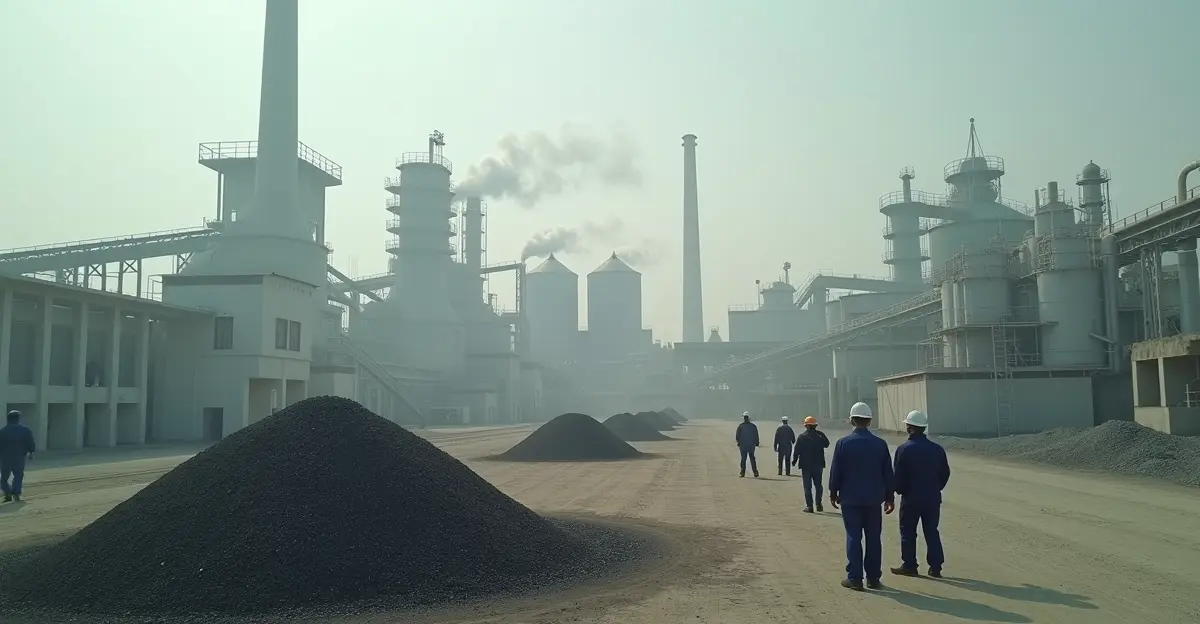
China's dominance in critical minerals is not accidental. The country controls roughly 90% of rare earth processing, 80% of tungsten, and 60% of antimony — materials essential for defense systems, electric vehicles, wind turbines, and consumer electronics. According to a multi-institutional analysis published in early 2026, Beijing has refined its approach through legal instruments like the Export Control Law (2020), enabling calibrated economic pressure that is often linked to Taiwan-related messaging and broader US-China trade tensions.
The key insight from policy analysts is that China weaponizes control rather than scarcity. By using temporary, reversible restrictions, Beijing maintains pricing power and extracts strategic concessions while simultaneously discouraging large-scale Western investment in alternative supply chains. Over 80% of European firms depend on Chinese supply chains for minerals critical to defense, EVs, and renewable energy. The US-China trade war escalation in 2025 saw China impose export restrictions on gallium, germanium, antimony, and super-hard materials, causing immediate global disruptions.
The 2025-2026 Export Control Wave
In December 2024 and October 2025, China imposed sweeping export controls on rare earth elements, lithium battery materials, processing technologies, and critical minerals including gallium, germanium, antimony, and synthetic diamonds. The impact was immediate: prices for key rare earth oxides surged up to sixfold, while licensing approval rates for European firms fell below 25%. The controls were partially suspended in November 2025 following a summit between Presidents Xi Jinping and Donald Trump in Busan, South Korea, but the suspension is a temporary truce set to expire on November 10, 2026.
China's 15th Five-Year Plan, expected to be finalized in 2026, will signal its continued dominance. Projections indicate China will supply over 60% of refined lithium and cobalt, and approximately 80% of battery-grade graphite and rare earths by 2035. The critical minerals supply chain diversification efforts by Western nations face an uphill battle against this entrenched advantage.
The Western Response: Bilateral Deals and Domestic Production
The United States and European Union have launched ambitious initiatives to reduce dependence on Chinese critical minerals, but the scale of the challenge is immense. Rebuilding independent supply chains could take 20-30 years, far exceeding the current geopolitical window of 12-18 months for decisive action.
US Critical Minerals Ministerial and FORGE Initiative
On February 4, 2026, the US Department of State hosted the 2026 Critical Minerals Ministerial, led by Secretary of State Marco Rubio and joined by Vice President JD Vance. Representatives from 54 countries and the European Commission attended. Key outcomes included signing 11 new bilateral critical minerals frameworks with countries such as Argentina, Morocco, the UAE, and the Philippines. Secretary Rubio announced FORGE (Forum on Resource Geostrategic Engagement) as the successor to the Minerals Security Partnership, chaired by the Republic of Korea.
The US mobilized over $30 billion in financing for critical mineral supply chain projects, including the Export-Import Bank's $10 billion Project Vault to establish a US Strategic Critical Minerals Reserve. The US critical minerals strategy 2026 emphasizes public-private partnerships, including the Pax Silica initiative for semiconductor materials.
EU Critical Raw Materials Act and Strategic Projects
The European Union's Critical Raw Materials Act (CRMA) designated 47 Strategic Projects in March 2025, with a second call for applications closing on January 15, 2026. The EU aims to boost domestic extraction, processing, and recycling capacity while diversifying supplies from third countries. The CRMA cuts permitting timelines from 10 years to 27 months for extraction and 15 months for processing.
However, only 5 of the 47 projects are fully funded, and 25 remain in pilot or demonstration phases. The EU faces significant challenges in scaling up financing to meet diversification goals and rising demand. The EU Critical Raw Materials Act strategic projects are essential for the green and digital transitions, as well as defense and aerospace resilience.
Impact and Implications: A Narrowing Window
The next 12-18 months represent a critical juncture for Western nations. The ODI's 2026 analysis identifies four key dynamics: the US shift toward bilateral partnerships and equity stakes; the EU's financing challenges; China's continued dominance signaled in its 15th Five-Year Plan; and the entry of new actors like the UAE and Saudi Arabia into the critical minerals market.
The WEF's 2026 Global Risks Report warns that geoeconomic confrontation could escalate into full-scale economic war, destabilizing businesses and societies. Half of respondents expect 2026 to be "turbulent" or "stormy," while 68% believe the global political environment will become more fragmented over the next decade. The geoeconomic confrontation global risks 2026 ranking underscores the urgency of addressing critical minerals vulnerabilities.
As the November 2026 expiry of China's export control pause approaches, the world faces three potential paths: accept managed dependence on Chinese supply chains, pursue costly independence through domestic production and recycling, or adopt a hybrid resilience model that combines strategic stockpiles with diversified international partnerships. Each path carries significant economic and geopolitical trade-offs.
Expert Perspectives
"China has refined its arsenal of trade controls to serve as geo-economic tools for retaliation, negotiation leverage, and market control," notes a policy brief from the Center for Security Studies at ETH Zurich. "The US and EU de-risking strategies face significant challenges and are no panacea given the deep dependencies on Chinese critical mineral supply chains."
"We are witnessing a fundamental redrawing of global supply chains," states the multi-institutional analysis from RareEarthExchanges.com. "China is not seeking to cut off supply entirely — that would destroy its own industry. Instead, it uses reversible restrictions to maintain pricing power and extract strategic concessions while discouraging large-scale Western alternative investment."
FAQ
What are rare earth elements and why are they critical?
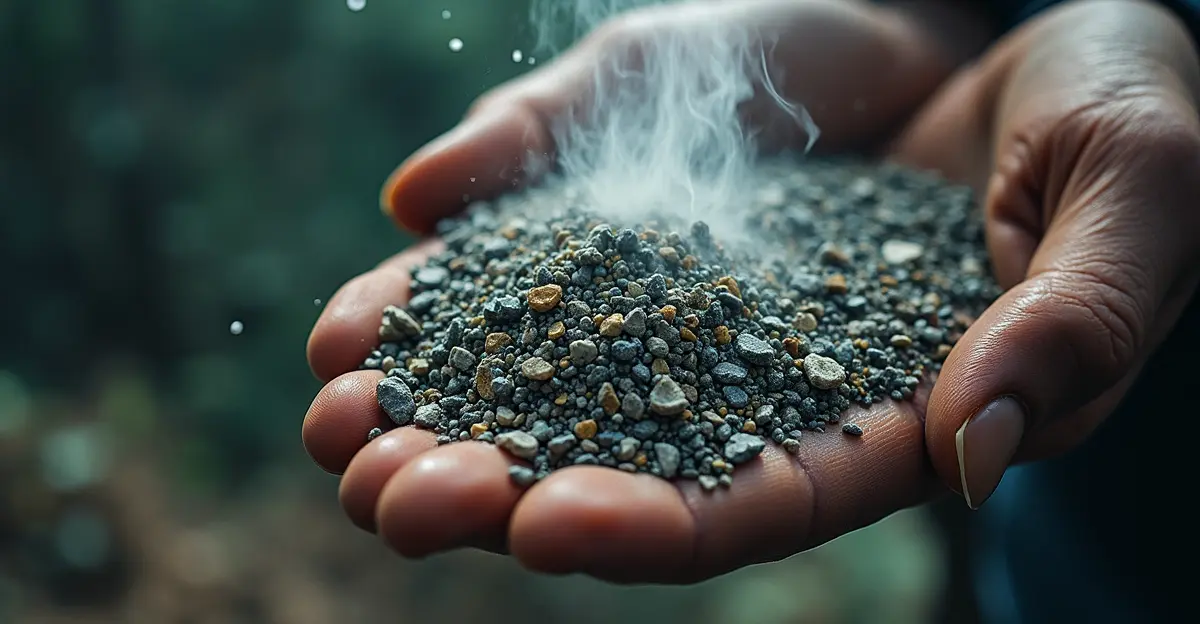
Rare earth elements (REEs) are a set of 17 metals essential for permanent magnets, electric vehicle motors, wind turbines, defense systems, and consumer electronics. Despite their name, they are not geologically rare but are difficult and costly to process, giving China its dominant position.
How much control does China have over rare earth processing?
China controls approximately 90% of global rare earth processing capacity, 80% of tungsten, and 60% of antimony. Over 80% of European firms depend on Chinese supply chains for these critical minerals.
What triggered China's export controls in 2025-2026?
The controls were imposed as retaliation for US semiconductor restrictions and broader trade war escalation. China enacted export restrictions on rare earths, gallium, germanium, antimony, and processing technologies, causing sixfold price spikes and approval rates below 25% for European firms.
What is the US and EU doing to reduce dependence on China?
The US hosted the 2026 Critical Minerals Ministerial, signed 11 bilateral frameworks, and mobilized over $30 billion in financing. The EU designated 60 Strategic Projects under its Critical Raw Materials Act, cutting permitting timelines and aiming to boost domestic production and recycling.
When does China's export control pause expire?
The 12-month suspension of expanded rare earth export controls, agreed in November 2025, is set to expire on November 10, 2026. This deadline creates a narrowing window for Western nations to accelerate supply chain diversification.
Conclusion: The Race Against Time
The critical minerals landscape in 2026 represents a structural vulnerability that could define global security for decades. With China's pause on expanded export controls expiring in November 2026, the next 12-18 months are a make-or-break period for Western supply chain diversification. The US Critical Minerals Ministerial and EU Strategic Projects demonstrate political will, but the gap between ambition and execution remains vast. As the WEF warns, geoeconomic confrontation is now the top global risk — and critical minerals are its primary battlefield.

Follow Discussion