


 Deutsch
 English
 Español
 Français
 Nederlands
 Português


 Share
Share




What Is the Triple-Redundancy Economy?
In 2026, multinational corporations are abandoning the decades-old just-in-time (JIT) efficiency model in favor of a 'triple-redundancy' strategy — maintaining parallel production capacity across North America, Europe, and Asia at a 15–25% higher cost. This structural shift, driven by escalating geoeconomic confrontation, is fundamentally rewiring global trade flows. According to the World Economic Forum's Global Risks Report 2026, geoeconomic confrontation is now the top global risk, selected by 18% of surveyed experts as the most likely trigger of a global crisis this year.
The catalyst for this transformation is a trio of policy developments: the advancement of the U.S. MATCH Act through committee in April 2026, the full entry into force of the EU's Carbon Border Adjustment Mechanism (CBAM) in January 2026, and the WEF's stark warning that weaponized trade and technology are reshaping supply chains. Together, these forces are pushing companies to build resilient supply chain strategies that prioritize redundancy over cost optimization.
The MATCH Act and Semiconductor Export Controls
The Multilateral Alignment of Technology Controls on Hardware (MATCH) Act, introduced by Senators Risch, Ricketts, and Kim and advanced by the House Foreign Affairs Committee on April 22, 2026, represents the toughest semiconductor export controls yet. The legislation targets 'chokepoint' semiconductor manufacturing equipment that China cannot produce domestically, imposing a country-wide prohibition on sales to countries of concern. It also sets a 150-day diplomatic deadline for allies to align with U.S. controls or face unilateral application of the Foreign Direct Product Rule.
This aggressive stance is closing loopholes where allied companies backfilled tools that U.S. firms were prohibited from selling. The impact on global semiconductor supply chains is profound: companies like TSMC, Samsung, and Intel are now compelled to maintain separate fabrication networks for different geopolitical blocs, directly fueling the triple-redundancy trend. The semiconductor supply chain resilience debate has moved from boardrooms to congressional hearings.
EU CBAM and the Carbon Cost of Trade
On January 1, 2026, the EU's CBAM entered its definitive phase, shifting from transitional reporting to financially binding compliance. Importers of carbon-intensive goods — steel, aluminum, cement, fertilizers, electricity, and hydrogen — must now purchase CBAM certificates at a price linked to EU Emissions Trading System allowances. The regime expanded to cover 180 additional tariff lines, including downstream products like automotive parts and machinery.
For multinationals operating across three continents, CBAM adds a carbon cost layer to each regional supply chain. A factory in Mexico serving the European market faces different compliance costs than one in Vietnam or India. This complexity reinforces the need for triple redundancy: companies must optimize not just for tariffs and labor costs, but for carbon pricing regimes that vary by region. The EU carbon border tax impact is particularly acute for automotive and heavy manufacturing sectors.
Trade Flow Rewiring: Winners and Losers
The efficiency-to-resilience pivot is dramatically reshaping global trade patterns. US-China bilateral trade has fallen roughly 30% from peak levels, with McKinsey reporting that the decline reduced global trade growth by about 10% in 2025 alone. Reduced US imports from China accounted for approximately 85% of that decrease, forcing firms to seek new suppliers and buyers.
Three countries have emerged as the primary nearshoring winners:
- Vietnam: The top destination for electronics and textiles, attracting $36 billion in FDI in 2025. However, industrial occupancy rates of 85–95% signal capacity constraints.
- India: Offers the lowest labor costs (30–40% cheaper than Vietnam) and massive scale for pharmaceuticals and chemicals, though port congestion and GST compliance remain hurdles.
- Mexico: The preferred hub for North American markets via USMCA tariff-free access, with 4–8 day road transit to US hubs. Ideal for automotive and aerospace, but wages are higher than Southeast Asia.
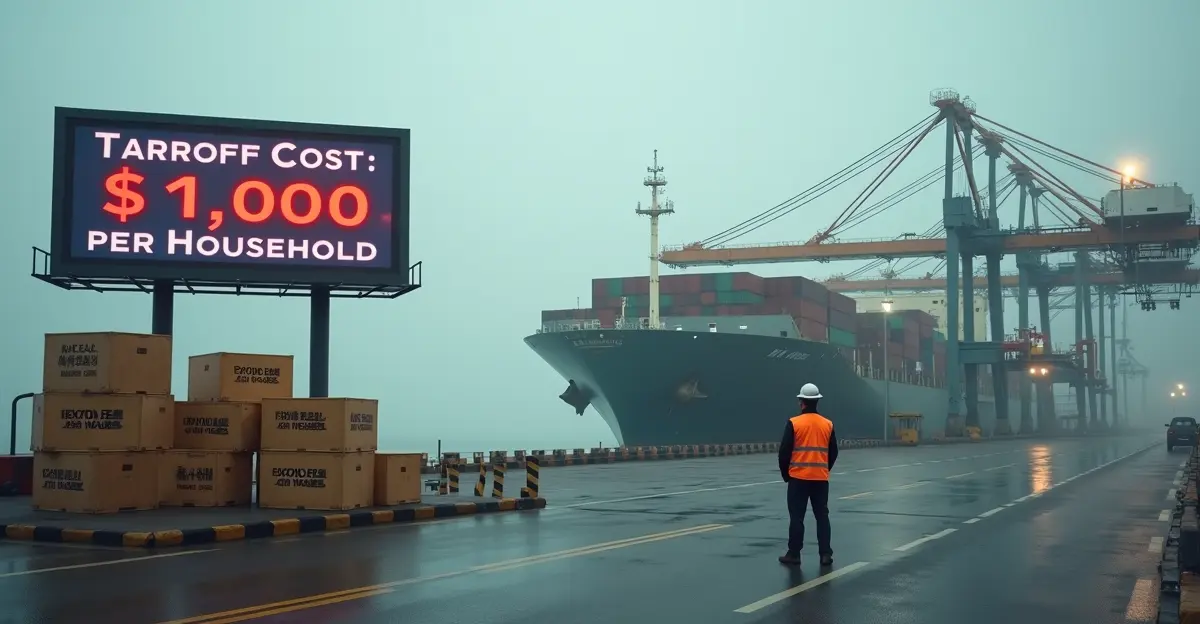
The KPMG 2026 Tariff Survey found that 78% of large US firms report higher costs due to tariff escalation, and 26% are actively planning reshoring. Meanwhile, 76% of trade professionals view new tariffs as permanent, suggesting the shift is structural rather than cyclical. The nearshoring to Mexico trends are accelerating as companies seek proximity to end markets.
Sustainability of the Triple-Redundancy Model
The fundamental question is whether the 15–25% cost increase of triple redundancy is sustainable. BCG research indicates that US tariffs could put 20–30% of EBIT margins at risk across manufacturing sectors, with automakers particularly exposed. However, companies investing 3–5% of annual supply chain spend on resilience achieve risk-adjusted ROI of 150–300% over three years, according to recent analysis.
Technology adoption is accelerating to offset costs: 40% of trade departments are now exploring AI or blockchain for supply chain management. Predictive analytics, digital twins, and multi-echelon inventory optimization are helping companies balance the cost-resilience trade-off. The cost of supply chain resilience is increasingly seen as a necessary insurance premium against geopolitical disruption.
Expert Perspectives
The shift from efficiency to resilience is not a temporary adjustment but a permanent restructuring of global production. Companies that fail to build redundancy into their supply chains will find themselves exposed to the next geopolitical shock, said a senior trade analyst at a leading consulting firm. The WEF report underscores this urgency: nearly 60% of global leaders predict instability for at least a decade, and 70% expect a fragmented or multipolar global order.
Frequently Asked Questions
What is the triple-redundancy economy?
The triple-redundancy economy refers to a supply chain strategy where multinational corporations maintain parallel production capacity across three major regions — North America, Europe, and Asia — to mitigate geopolitical and trade disruption risks, typically at a 15–25% cost premium over single-region sourcing.
How does the MATCH Act affect global trade?
The MATCH Act tightens U.S. semiconductor export controls by prohibiting sales of chokepoint manufacturing equipment to countries of concern like China, and pressures allies to align within 150 days or face unilateral restrictions. This forces semiconductor companies to maintain separate supply chains for different geopolitical blocs.
Which countries benefit most from supply chain fragmentation?
Vietnam, India, and Mexico are the primary beneficiaries, attracting nearshoring and 'China Plus One' investments. Vietnam leads in electronics, India in pharmaceuticals and chemicals, and Mexico in automotive and aerospace for the North American market.
Is the 15–25% cost increase of triple redundancy sustainable?
While the cost increase is significant, companies investing 3–5% of supply chain spend on resilience achieve risk-adjusted ROI of 150–300% over three years. The cost is increasingly viewed as a necessary insurance premium against geopolitical disruption.
What role does the EU CBAM play in supply chain restructuring?
The EU's Carbon Border Adjustment Mechanism, in full effect from January 2026, adds a carbon cost layer to imports, requiring companies to factor in emissions pricing when designing regional supply chains. This further incentivizes regionalization and redundancy.
Conclusion: A New Global Economic Order
The triple-redundancy economy represents a fundamental break from the globalization model that defined the past three decades. With geoeconomic confrontation topping the WEF risk rankings, the MATCH Act advancing through Congress, and CBAM reshaping transatlantic trade, the efficiency-to-resilience pivot appears structural and long-lasting. Through 2027, inflation may face upward pressure from higher supply chain costs, but the alternative — vulnerability to geopolitical disruption — is increasingly unacceptable for corporate boards and national security planners alike. The future of global trade 2026 will be defined by redundancy, regionalization, and resilience.
Sources
- World Economic Forum, Global Risks Report 2026, January 2026
- U.S. Senate Foreign Relations Committee, MATCH Act Press Release, April 8, 2026
- House Foreign Affairs Committee, MATCH Act Markup, April 22, 2026
- European Commission, CBAM Definitive Regime, January 1, 2026
- McKinsey Global Institute, Geopolitics and the Geometry of Global Trade, 2026 Update
- KPMG, 2026 Tariff Survey
- BCG, Cost and Resilience: The New Supply Chain Challenge, 2025




Follow Discussion