Nederlands
 English
 Deutsch
 Français
 Español
 Português





Sweden's Controversial Move to Prosecute 13-Year-Olds
In a dramatic shift in juvenile justice policy, Sweden's government has proposed lowering the age of criminal responsibility from 15 to 13 for serious offenses including murder, attempted murder, aggravated bombings, weapons offenses, and aggravated rape. Justice Minister Gunnar Strömmer described the situation as an 'emergency' requiring urgent action.
The Growing Crisis of Child Recruitment
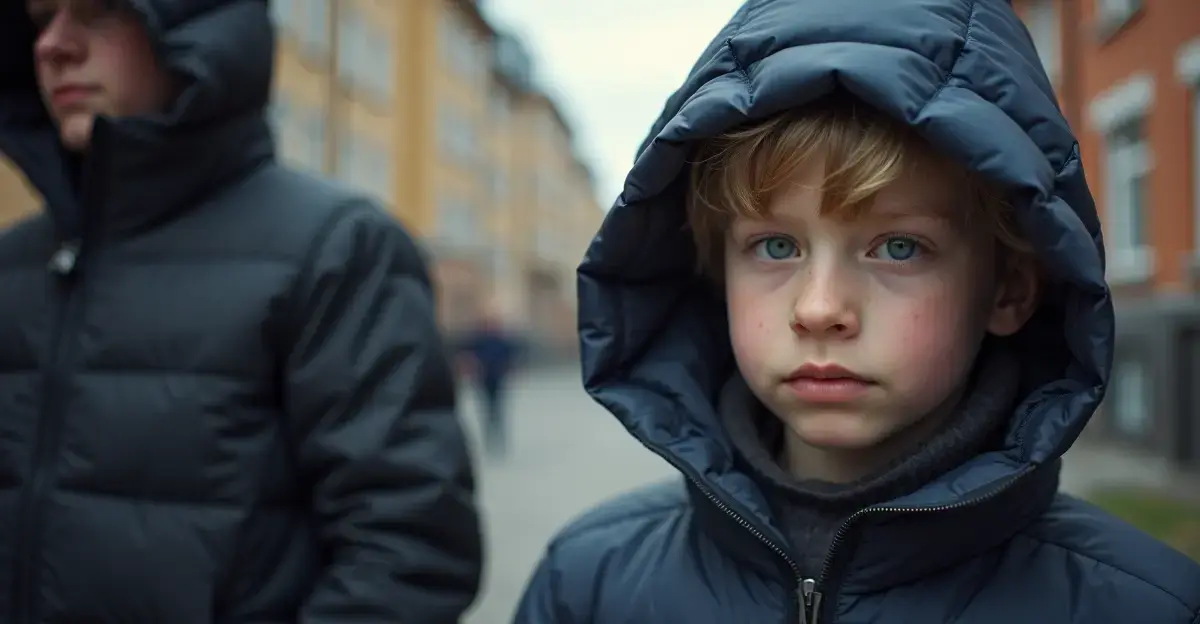
Criminal gangs in Sweden have been systematically recruiting children as young as 10-12 years old to commit violent crimes, knowing they face minimal legal consequences. According to Humanium's 2024 report, approximately 1,700 children under 18 were identified as active members of criminal networks, representing 13% of Sweden's organized crime actors.
The problem has reached alarming proportions. Data from Sweden's National Council for Crime Prevention shows that offenses involving suspects under 15 have doubled over the past decade. In 2024 alone, 176 children under 15 were suspected of murder, attempted murder, or complicity - a dramatic increase from 53 cases the previous year.
Key Provisions of the Proposed Legislation
The comprehensive proposal, presented to parliament on January 26, 2026, includes several significant changes:
- Lowering the age of criminal responsibility from 15 to 13 for crimes carrying minimum sentences of four years
- Abolishing sentence reductions for 15- to 18-year-olds
- Treating 17- and 18-year-olds as adults for sentencing purposes
- Increasing maximum juvenile prison sentences from 14 to 18 years
- Phasing out youth care for adults except in exceptional cases
Justice Minister Strömmer emphasized that the changes target only the most serious crimes. 'This is not a general lowering of the age of criminal responsibility,' he stated. 'We are specifically addressing situations where criminal networks exploit children to commit the most violent offenses.'
Strong Opposition from Child Rights Advocates
The proposal has faced immediate criticism from multiple organizations. UNICEF Sweden has expressed serious concerns about children's rights violations. The Swedish police have warned that lowering the age could lead to 'significantly younger children' being drawn into criminal networks.
Social scientist Anna Karlsson told SVT: 'The available studies in this area are clear. The only reasonable approach is that children receive care rather than punishment.'
Prison officials and prosecutors have also raised concerns about Sweden's prison system being ill-equipped to handle such young detainees. Many argue that incarceration could violate children's rights and potentially expose them to further criminal influence.
The 'Child Soldier' Phenomenon
Sweden's gang violence problem has evolved into what authorities describe as a 'child soldier' crisis. Criminal networks use social media platforms and encrypted messaging apps to recruit and assign violent tasks to children. As reported by Al Jazeera, gangs operate on a calculated business model that exploits legal protections for minors.
Justice Minister Strömmer acknowledged the criticism but maintained the urgency of the situation: 'These are concerns we take very seriously. But according to our joint assessment, the risks of continuing with the current system are even greater.'
Next Steps and Implementation Timeline
The proposal has been sent to Sweden's Council on Legislation for review of its legal feasibility. Following their advice, the bill will be presented to parliament. If passed, the law could take effect as early as summer 2026, initially as a temporary five-year measure.
This controversial move comes as Sweden grapples with one of Europe's highest rates of deadly gun violence, with near-daily gang attacks creating fear in communities across Stockholm, Gothenburg, and Uppsala. The government's approach represents a fundamental shift from rehabilitation-focused juvenile justice to a more punitive model for serious offenses.