


 Deutsch
 English
 Español
 Français
 Nederlands
 Português


 Share
Share




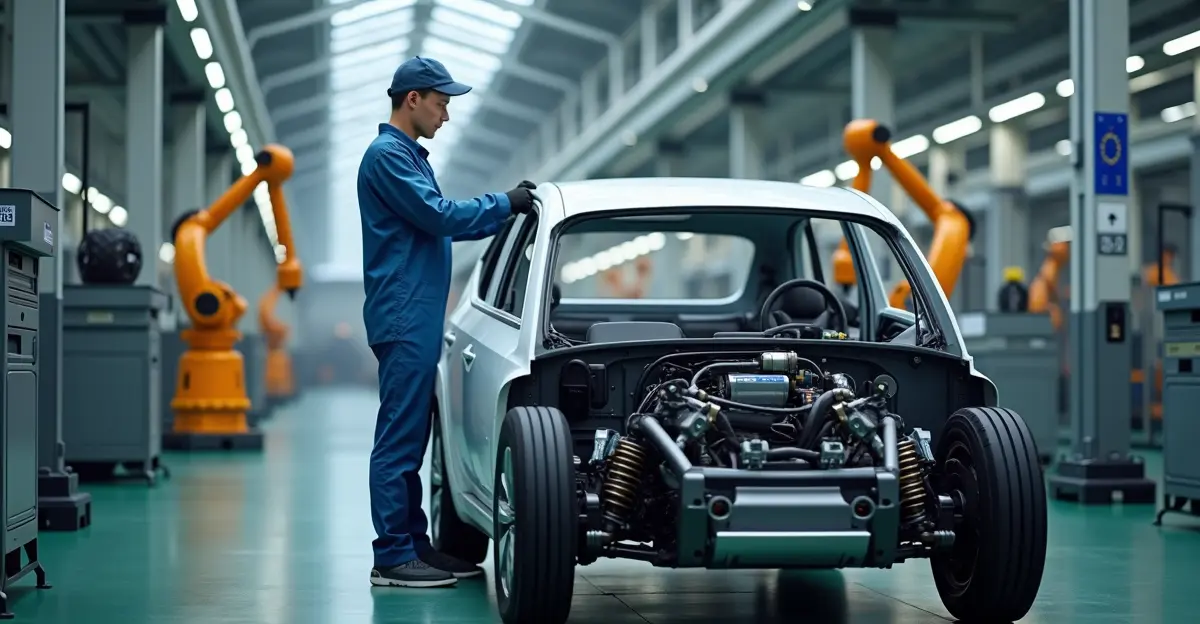
The European auto industry’s deepening crisis has pushed France and Germany into a high-stakes political bargain that could reshape the continent’s green mobility ambitions. With BMW cutting 8,000 jobs this week—5 percent of its global workforce—and Chinese competitors flooding global markets, Berlin and Paris have agreed to trade a relaxation of the EU’s planned 2035 combustion engine ban for tougher ‘Made in Europe’ manufacturing rules. The deal, first reported by Politico, marks a pivotal shift in Brussels’ climate policy and signals that job preservation is now taking precedence over ambitious electrification timelines.
Background: The EU’s Combustion Engine Ban
The European Union had intended to prohibit the sale of new petrol and diesel cars from 2035, a cornerstone of the bloc’s Green Deal climate strategy. However, the plan drew fierce opposition from carmaking nations, especially Germany and Italy. “The government is saying you must drive electric, but the public isn’t ready for that,” said Meindert Schut, host of the Nationale Autoshow. He likened the policy to a shoe factory ordered to produce only Crocs: “I’d rather walk barefoot. That’s what’s happening—Brussels is mandating a product consumers don’t want.” In December 2025, the European Commission already signaled it would water down the ban, and the phase-out of fossil fuel vehicles timeline has since been under constant revision.
The Franco-German Political Bargain
Two weeks ago, during a joint Franco-German ministerial council, the two largest EU economies hammered out a quid pro quo. Paris, initially a staunch supporter of the 2035 ban, agreed to back its relaxation in exchange for Berlin’s endorsement of stricter ‘Made in Europe’ procurement rules—measures designed to boost domestic production and shield European industry from Chinese dumping. “The Germans and French realized they needed each other: Berlin can’t afford to lose its automotive backbone, and Paris wants to fortify European industrial sovereignty,” explained EU correspondent Michal van der Toorn.
Germany’s Push to Save Its Auto Industry
German automakers have been hit hardest by the collapse of their once-lucrative Chinese market, where homegrown brands like BYD and Leapmotor have surged with state-subsidized models. Although Stellantis owns 51% of Leapmotor, the competitive pressure is mounting. A recent German study also found that young Europeans still strongly prefer combustion-engine cars from domestic manufacturers, reinforcing Berlin’s reluctance to abandon the technology.
France’s Demand for ‘Made in Europe’ Rules
France has long advocated for European industrial policy protection to counter China’s export machine. The new ‘Made in Europe’ framework would encourage—and in some cases require—public and private buyers to favor EU-produced goods. This aligns with Paris’s traditional economic patriotism and is expected to garner support from Italy, which has also lobbied against the engine ban.
Implications for the European Auto Sector
The Franco-German entente is likely to sway other member states. “Italy has been just as vocal against the ban, and many smaller economies welcome any shield for their industries,” van der Toorn noted. However, the deal remains fragile. The rise of the AfD in Germany and Marine Le Pen’s National Rally in France could upend current government plans before the accord is finalized. Diplomats on both sides of the Rhine are still negotiating details, and further concessions are expected.
Schut also pointed to a pragmatic counter-trend: Chinese automakers are already building factories in Europe, creating local jobs. “Politicians must realize that voters vote with their wallets and their accelerator pedals. If people don’t want EVs, you have to find other ways to save jobs,” he said. The deal thus walks a tightrope between protecting legacy manufacturing and adapting to a rapidly shifting global electric vehicle market.
FAQ
What is the EU’s 2035 engine ban?
It is a proposed regulation that would prohibit the sale of new cars with internal combustion engines in the European Union from 2035, effectively forcing a transition to electric vehicles.
Why are France and Germany renegotiating the ban?
Mounting job losses and intense competition from Chinese automakers have made the original timeline politically untenable. Both countries are now seeking a compromise that preserves employment while still advancing green goals.
What are ‘Made in Europe’ rules?
These are procurement and regulatory measures designed to favor products manufactured within the EU, aiming to boost domestic industry and reduce reliance on foreign—especially Chinese—supply chains.
How will the deal affect European car buyers?
If the ban is relaxed, consumers may continue to purchase new petrol and diesel cars beyond 2035. However, the push for ‘Made in Europe’ could limit the availability of cheaper Chinese electric vehicles, potentially keeping prices higher.
Is the deal final?
No. The agreement is still being negotiated by diplomats, and political changes in France and Germany could derail it before it becomes EU law.
Sources
This article is based on reporting by Politico and interviews conducted by BNR Nieuwsradio with Meindert Schut and Michal van der Toorn.
Follow Discussion