


 Deutsch
 English
 Español
 Français
 Nederlands
 Português


 Share
Share




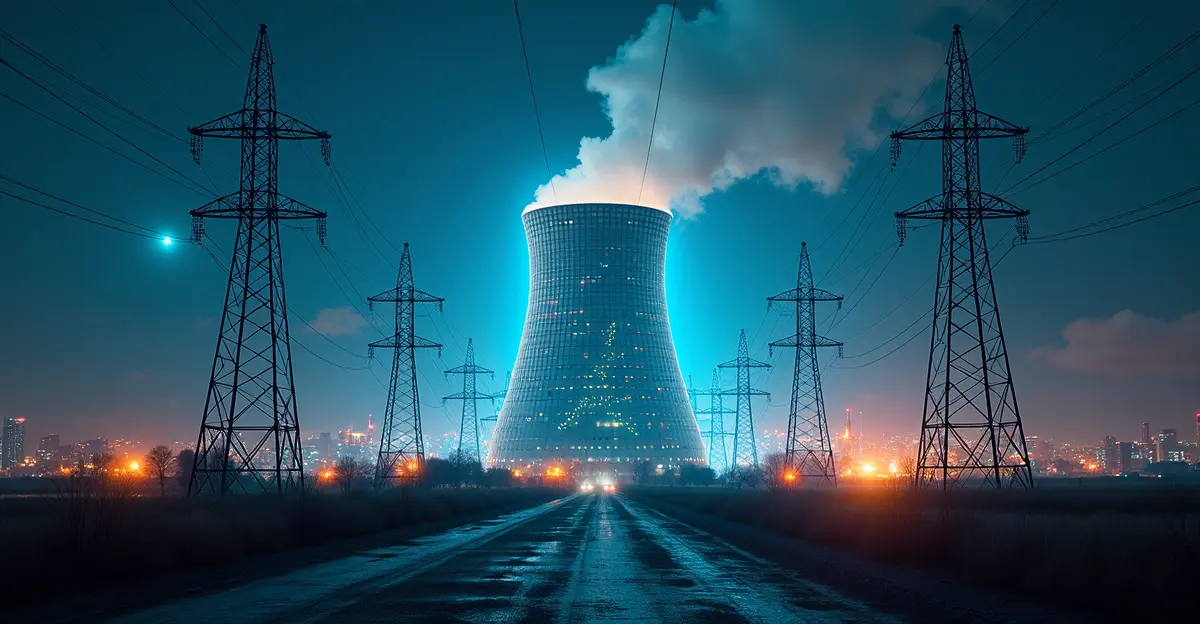
By 2026, the AI nuclear pivot has become the defining story of global energy markets, as hyperscalers race to secure power for data centers projected to consume over 1,000 TWh annually. Microsoft, Amazon, Google, and Meta have collectively committed more than 9.8 GW of nuclear capacity across 13 deals, triggering a fundamental re-evaluation of electricity grids, climate goals, and residential costs.
The Energy Crisis Behind the Pivot
Data center electricity demand has doubled since 2024 and is set to surpass 1,000 TWh in 2026—more than Japan's entire grid, according to the International Energy Agency (IEA). The bottleneck is physical: U.S. interconnection queues average five years and transformer lead times exceed three years, delaying nearly half of planned AI capacity. “Electricity, not chips, is now AI's binding constraint,” analysts at Informed Clearly note. Power availability has overtaken land and tax incentives as the top site-selection factor for new facilities.
Hyperscaler Nuclear Deals: A Breakdown
In response, the four largest hyperscalers have moved aggressively into nuclear power, bypassing traditional utilities to lock in 24/7 carbon-free electricity. Key commitments include:
- Microsoft: $16 billion, 20-year power purchase agreement to restart Three Mile Island Unit 1 (835 MW) by 2027.
- Amazon: $700 million investment in X-energy for up to 12 small modular reactors (960 MW) plus expanded Susquehanna co-location (1,920 MW).
- Google: 500 MW from Kairos Power's KP-FHR, the first corporate SMR deal.
- Meta: Up to 6.6 GW across TerraPower, Oklo, Vistra, and Constellation.
These 13 deals total 9.8 GW—enough to power roughly 7 million homes—but SMR economics remain unproven, with levelized costs estimated at $100–$180/MWh, according to Nexi Fund.
NRC Part 53: The Regulatory Turning Point
On March 25, 2026, the U.S. Nuclear Regulatory Commission finalized 10 CFR Part 53, the first new reactor licensing framework in decades. NRC Chairman Ho Nieh called it a “historic milestone” that will allow advanced reactor approvals in 18 months or less, potentially halving application costs. The rule takes effect April 3, 2026, joining Parts 50 and 52 with a technology-inclusive, risk-informed approach. This advanced nuclear reactor licensing reform arrives precisely as hyperscaler capital commitments peak, making 2026 the inflection point where regulation and investment align.
Impact on Grids, Prices, and Climate Goals
The AI-nuclear alliance is not without controversy. PJM's December 2025 capacity auction cleared at its $333.44/MW-day price cap but still failed to secure enough capacity, with prices up ninefold since 2023. U.S. residential rates have risen 42% since 2019, and AEP Ohio's data-center rider added about $7.90 per month to households. Despite the nuclear push, fossil fuels still supply over 60% of AI power, and natural gas will fill the gap until SMRs scale—undermining net-zero climate targets and shifting costs to ratepayers.
FAQ
How much electricity will AI data centers use in 2026?
Over 1,000 TWh, roughly equal to Japan's annual consumption.
Why are hyperscalers turning to nuclear power?
Grid infrastructure cannot deliver power fast enough; nuclear offers 24/7 carbon-free electricity and long-term price stability.
What is the NRC Part 53 rule?
A new technology-inclusive licensing framework for advanced reactors, finalized March 2026, designed to cut approval times to 18 months or less.
Will nuclear solve AI's energy problem by 2030?
No—less than 10% of committed SMR capacity is expected online by 2030; natural gas will bridge the gap.
Are residential electricity prices rising because of AI data centers?
Yes, ratepayer advocates cite a 42% increase since 2019 and PJM capacity price spikes as evidence.
Conclusion
The AI nuclear pivot is reshaping global energy policy at a critical inflection point. As the NRC's Part 53 streamlines licensing and hyperscalers pour billions into reactors, the next decade will test whether nuclear can truly become the backbone of AI infrastructure—or whether grid constraints and fossil fuel reliance will force a slower, more contested transition.
Follow Discussion