


 Deutsch
 English
 Español
 Français
 Nederlands
 Português


 Share
Share




What Are Small Modular Reactors (SMRs)?
Small Modular Reactors (SMRs) represent a transformative approach to nuclear energy, offering compact, factory-built nuclear power units with electrical outputs of 300 megawatts or less. The European Commission's newly unveiled strategy positions these innovative reactors as a potential 'industrial breakthrough' for Europe's energy landscape, with the first European SMR projects targeted to come online by the early 2030s. This strategic push comes as the EU seeks to reduce dependence on fossil fuel imports, particularly from Russia, while advancing toward climate neutrality goals.
The EU's SMR Strategy: A Comprehensive Framework
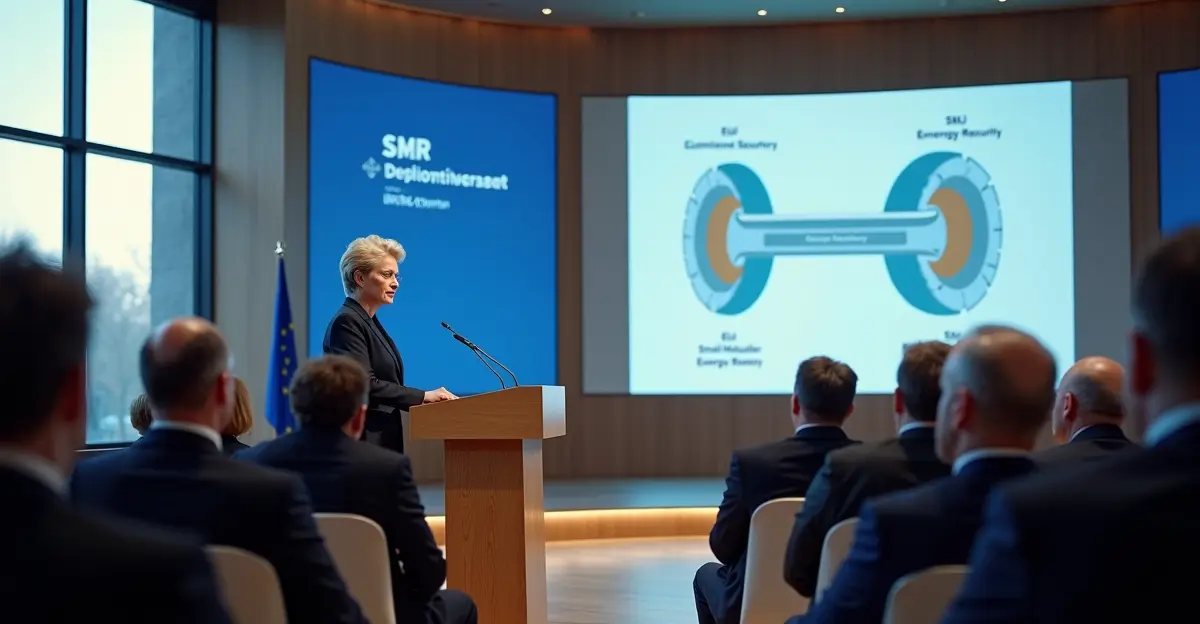
The European Commission's comprehensive strategy, announced in March 2026, outlines a unified approach to accelerate SMR development across member states. The plan emphasizes fleet-based industrial deployment, strengthened European supply chains, and regulatory cooperation through 'sandboxes' to streamline approval processes. According to Commission projections, SMR capacity in the EU could reach 17-53 gigawatts by 2050, requiring total nuclear investments estimated at €241 billion to support both existing reactors and new facilities.
Key Funding and Support Mechanisms
The EU is committing €200 million from the European Innovation Fund specifically for companies working on nuclear energy technologies, including SMR development. Dutch Eurocommissioner Wopke Hoekstra (Climate) emphasized that 'the financing will work as a guarantee and is expected to attract a multiple of private investments.' He added, 'It gives a powerful signal to companies and to the market: Europe invests in the clean energy of the future.' Startups focusing on nuclear energy can also access EU startup funding pots, creating a comprehensive support ecosystem similar to the EU carbon border tax implementation framework.
SMR Advantages vs. Traditional Nuclear Plants
Small modular reactors offer several distinct advantages over conventional large-scale nuclear plants:
- Faster Construction: Factory fabrication of modular components reduces on-site construction time by 30-50%
- Lower Capital Costs: Smaller scale and standardized designs lower initial investment requirements
- Enhanced Safety: Passive safety systems operate without external power or human intervention
- Flexible Deployment: Suitable for remote locations, industrial sites, and areas with weaker electrical grids
- Scalability: Multiple units can be 'stacked' to increase power output as needed
These benefits position SMRs as particularly valuable for industrial applications requiring high-temperature heat without carbon emissions, similar to innovations in renewable energy storage technologies.
Current Global SMR Landscape
As of 2026, only three SMRs are operational worldwide: Russia's Akademik Lomonosov floating nuclear plant (operational since 2020), China's demonstration reactor (since 2021), and Japan's test reactor (since 2024). The United States has approved NuScale Power's SMR design through Nuclear Regulatory Commission certification in 2022, with additional approvals in 2025. The accumulated capital expenditure on SMR construction is projected to reach over $320 billion between 2025-2040 globally.
Netherlands' Nuclear Ambitions
The Netherlands has emerged as a key player in Europe's nuclear resurgence, with the newly formed coalition government announcing plans to strengthen the nuclear industry and proceed with construction of four new nuclear reactors. Dutch startups like Allseas and Thorizon are developing SMR technologies specifically for industrial sites and maritime applications. This approach complements the country's existing energy infrastructure, much like developments in North Sea wind energy projects.
Challenges and Implementation Timeline
Despite the promising outlook, SMR deployment faces significant challenges:
- Regulatory Hurdles: Current regulatory processes were developed for large commercial reactors, making approval lengthy and costly
- Economic Viability: Benefits require large-scale production of multiple units to achieve lower costs
- Public Acceptance: Nuclear energy continues to face skepticism despite improved safety features
- Supply Chain Development: Establishing robust European supply chains for specialized components
The EU strategy addresses these challenges through 'SMR Valleys' to promote business collaboration and regulatory 'sandboxes' for testing innovative approaches. The Commission emphasizes that successful implementation requires 'sufficient money, manpower, a strong supply chain, and rapid permit issuance.'
Energy Security and Climate Implications
The development of more nuclear energy through SMRs will make the EU less dependent on fossil fuel imports, particularly from Russia, while contributing to climate goals. SMRs offer a reliable baseload power source that complements intermittent renewable energy sources. According to Commission estimates, widespread SMR deployment could reduce CO2 emissions by millions of tons annually while stabilizing energy prices through diversified energy sources.
Frequently Asked Questions
What exactly are Small Modular Reactors?
SMRs are nuclear reactors with electrical outputs of 300 megawatts or less, designed for factory fabrication and modular assembly. They represent a more flexible, scalable approach to nuclear power compared to traditional large-scale plants.
When will the first European SMRs be operational?
The European Commission's strategy targets the early 2030s for the first European SMR projects to come online, with significant deployment expected throughout the 2030s and 2040s.
How much funding is the EU providing for SMR development?
The EU is committing €200 million from the European Innovation Fund specifically for nuclear energy companies, with additional support available through startup funding programs and expected to attract significant private investment.
Which countries are leading SMR development in Europe?
The Netherlands, France, and several Eastern European countries have shown strong interest, with the Netherlands planning four new reactors and supporting SMR startups through research institutions like TU Delft.
Are SMRs safer than traditional nuclear plants?
Yes, SMRs incorporate passive safety systems that operate without external power or human intervention, and their smaller size reduces potential consequences in the unlikely event of an incident.


Follow Discussion