


 Deutsch
 English
 Español
 Français
 Nederlands
 Português


 Share
Share




Nuclear Energy Guide: Von der Leyen Calls EU Retreat a Strategic Mistake
European Commission President Ursula von der Leyen has declared that Europe's retreat from nuclear energy was a 'strategic mistake' that must be reversed, marking a significant policy shift as the EU seeks to reduce its dangerous dependence on volatile fossil fuel imports. Speaking at the Nuclear Energy Summit in Paris on March 10, 2026, von der Leyen announced a €200 million investment guarantee to accelerate development of small modular reactors (SMRs) and outlined a comprehensive strategy to bring Europe's first SMR projects online by the early 2030s.
What is the EU's Nuclear Energy Strategy?
The European Commission's new nuclear strategy represents a fundamental policy reversal after decades of declining nuclear investment across Europe. According to Eurostat data, the EU imported 57% of its energy in 2024, with petroleum products dominating the energy mix at 38% and natural gas at 21%. This dangerous dependence has been exposed by both the Middle East energy crisis and the earlier energy crisis following Russia's invasion of Ukraine, when energy prices skyrocketed across Europe.
'For fossil fuels, we are completely dependent on expensive and volatile imports,' von der Leyen stated at the Paris summit. 'This gives us a structural disadvantage compared to other regions. The current crisis in the Middle East shows once again how vulnerable this makes us.'
Why Small Modular Reactors (SMRs)?
What Are SMRs?
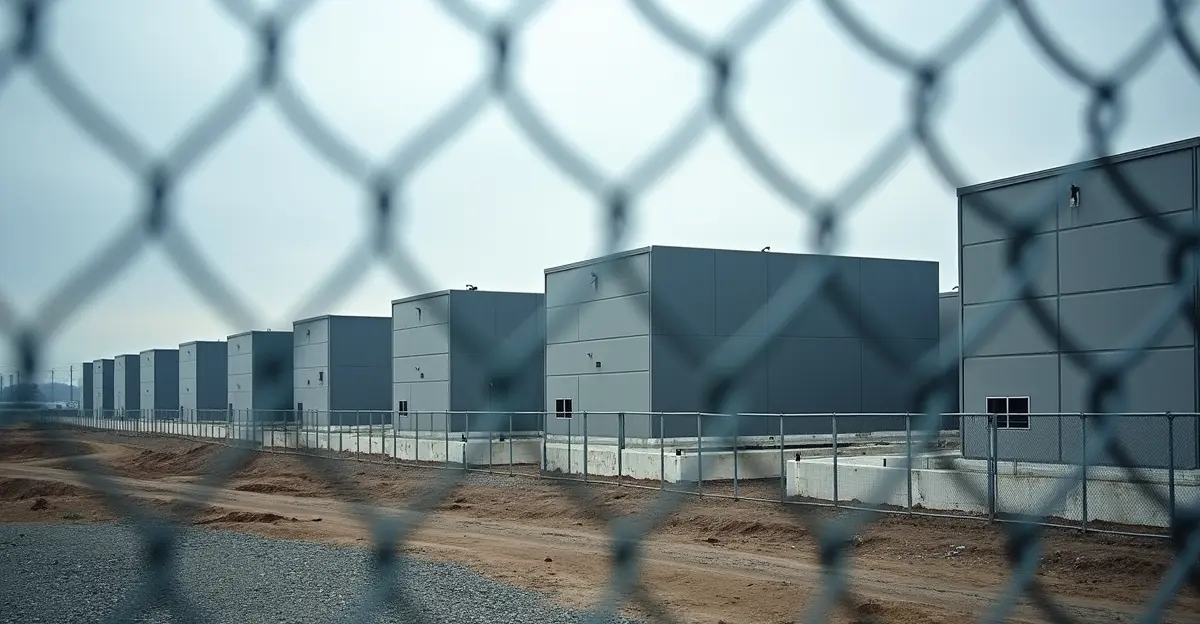
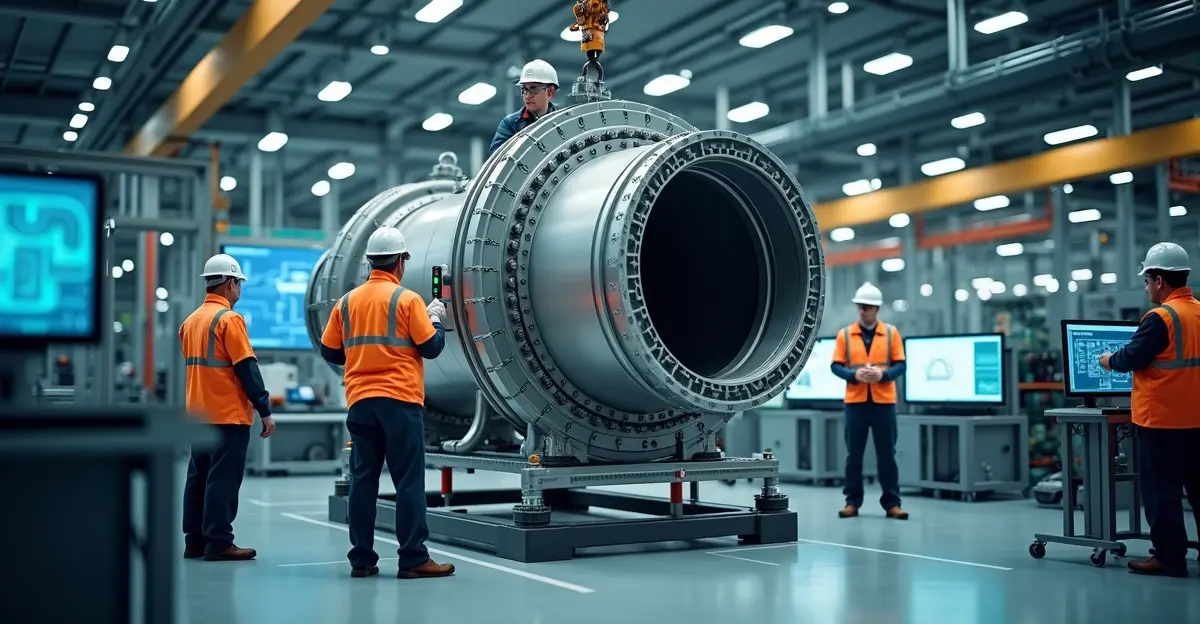
Small modular reactors are nuclear fission reactors with electrical power output of 300 megawatts or less, designed to be factory-fabricated and transported as prefabricated modules. Unlike traditional large-scale nuclear plants that can take decades to build, SMRs offer several advantages:
- Factory Production: Modules can be mass-produced in factories, reducing construction time from 10+ years to 3-5 years
- Scalability: Utilities can add modules incrementally as energy demand grows
- Enhanced Safety: Many designs incorporate passive safety systems that operate without external power
- Versatility: Can provide power for heavy industry, data centers, district heating, and hydrogen production
- Weather Independence: Unlike solar and wind, nuclear provides consistent, reliable power regardless of weather conditions
The EU's SMR Deployment Plan
The European Commission's strategy focuses on three main pillars to accelerate SMR development:
- Simplified Regulation: Creating cross-border regulatory sandboxes to streamline approval processes
- Investment Mobilization: Using the €200 million guarantee to attract private capital
- Coordinated Cooperation: Aligning member states on permitting, skills development, and supply chains
The Commission projects that SMR capacity could reach 17-53 gigawatts by 2050, representing a significant portion of Europe's future energy mix. This ambitious plan requires €241 billion in nuclear investment by 2050 to meet the EU's net-zero targets.
The Historical Context: Nuclear's Decline in Europe
Nuclear energy's share in the EU electricity mix has plummeted from one-third in 1990 to just 15% today, a decline driven by several factors:
| Year | Nuclear Share | Key Events |
|---|---|---|
| 1990 | 33% | Nuclear at peak popularity |
| 2011 | 27% | Fukushima disaster triggers phase-outs |
| 2024 | 15% | Continued decline despite energy crises |
| 2030 Target | 20-25% | With SMR deployment |
This decline occurred even as Europe's energy import dependency reached 62.5% in 2022, creating what von der Leyen called a 'structural disadvantage' compared to regions like North America. The EU energy security strategy has struggled to address this vulnerability despite increased renewable energy production.
Political Reactions and Challenges
The Commission's nuclear pivot has received mixed reactions across Europe. Europarliamentarian Mohammed Chahim (GroenLinks-PvdA) offered cautious support: 'We must not act as if this is the holy grail of the energy transition. For now, it's really a theoretical reality.'
Jeannette Baljeu (VVD) was more enthusiastic: 'You really have to work with this technology on a larger scale. It's good that the EU is now focusing on new techniques. Otherwise, all that technology will soon be in China and America and then we'll be dependent on them again.'
However, significant challenges remain:
- Technical Hurdles: No SMRs currently operate in Western countries, with only China and Russia having operational units
- Cost Concerns: SMR development is expensive and complex, with critics questioning economic viability
- Political Divisions: Austria and Spain remain skeptical of nuclear energy, while Germany only recently acknowledged its phase-out as a mistake
- Timeline Questions: Whether SMRs can realistically be operational by the early 2030s remains uncertain
Impact on European Energy Security
The Commission's nuclear strategy represents more than just an energy policy shift—it's a fundamental rethinking of European sovereignty and competitiveness. With energy prices structurally higher in the EU than in the United States, European industry faces a competitive disadvantage that affects everything from manufacturing costs to consumer prices.
The strategy aims to create a 'virtuous cycle' where European SMR technology becomes a high-value export, similar to how the European renewable energy sector has developed world-leading expertise. By establishing 'SMR Valleys' for business collaboration and strengthening European supply chains, the Commission hopes to position Europe at the forefront of next-generation nuclear technology.
FAQ: EU Nuclear Energy Strategy Explained
What did von der Leyen say about nuclear energy?
European Commission President Ursula von der Leyen declared that Europe's retreat from nuclear power was a 'strategic mistake' that must be reversed to improve energy security and competitiveness.
How much is the EU investing in SMRs?
The EU is providing a €200 million investment guarantee funded through the EU emissions trading system to accelerate development of small modular reactors.
When will SMRs be operational in Europe?
The Commission aims to have the first European SMR projects online by the early 2030s, though technical and regulatory challenges could affect this timeline.
What percentage of EU energy comes from nuclear?
Nuclear energy currently provides about 15% of EU electricity, down from 33% in 1990. The Commission wants to increase this share significantly.
Why is the EU focusing on SMRs instead of traditional nuclear?
SMRs offer faster deployment, factory production, enhanced safety features, and greater flexibility than traditional large-scale nuclear plants.
Follow Discussion