


 Deutsch
 English
 Español
 Français
 Nederlands
 Português


 Share
Share




A New Era of Safer Nuclear Power
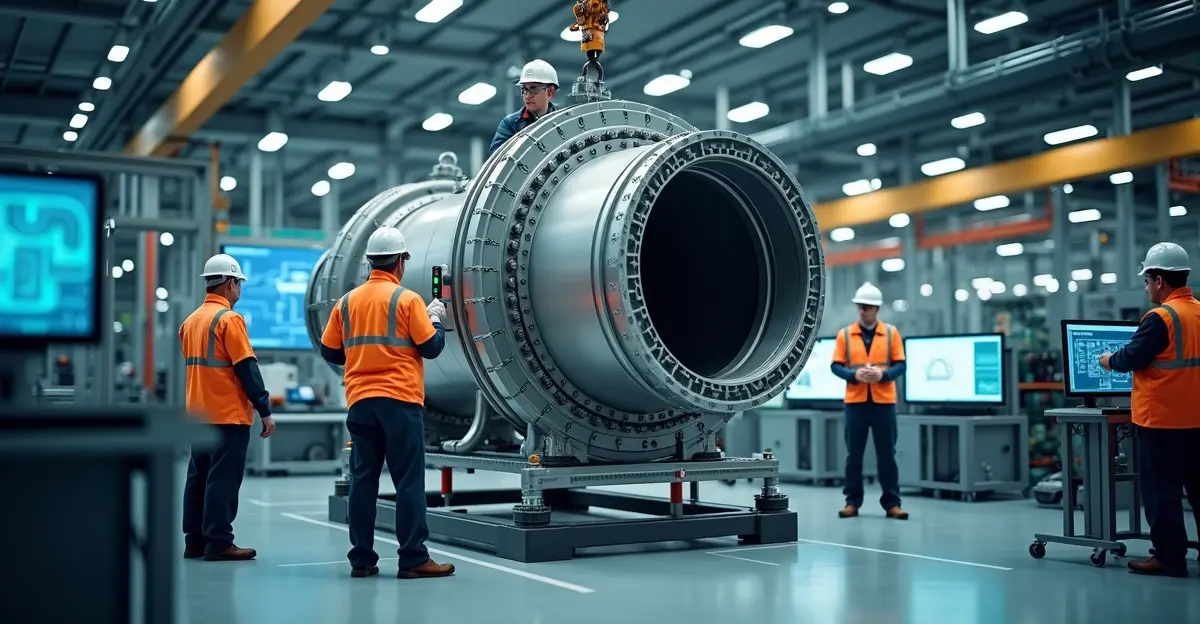
Groundbreaking safety trials for next-generation nuclear reactors have concluded successfully, signaling a major leap toward safer and more efficient atomic energy. These advanced reactor designs—including Small Modular Reactors (SMRs), molten salt reactors, and high-temperature gas-cooled models—feature passive safety systems that automatically prevent meltdowns without human intervention or external power. Recent tests at facilities like Argonne National Laboratory simulated extreme accident scenarios, proving these systems can maintain safety even during complete power failures.
Compact Designs, Massive Potential
Unlike traditional reactors, Gen IV designs are smaller, factory-built, and use innovative fuels like TRISO particles that can withstand temperatures over 1,600°C without releasing radiation. NuScale's VOYGR SMR leads the pack with NRC certification, while China's HTR-PM became the world's first operational Gen IV reactor in 2023. The compact size allows flexible deployment—from replacing coal plants to powering data centers—with Microsoft already negotiating to revive Pennsylvania's Three Mile Island site for SMR deployment.
Global Momentum Builds
2025 marks a tipping point:
- Türkiye's Akkuyu plant starts operations using Russian VVER-1200 reactors
- India advances Bharat Small Reactors (BSRs) based on PHWR tech
- Ghana commissions Africa's first Regional Clean Energy Training Centre
- Poland prepares for first concrete pour at its inaugural nuclear site
Accident Tolerant Fuels (ATFs) are now entering commercial trials, while High-Assay Low-Enriched Uranium (HALEU) production ramps up to fuel next-gen reactors.
Challenges and Opportunities
Despite progress, regulatory hurdles and public perception remain barriers. However, 14 major banks—including Bank of America and Morgan Stanley—recently pledged support, aligning with COP28's goal to triple nuclear capacity by 2050. With the IEA projecting 3% annual nuclear growth through 2026, these safer, efficient reactors could soon provide 30% of global clean energy.


Follow Discussion