


 Deutsch
 English
 Español
 Français
 Nederlands
 Português


 Share
Share




ASML Raises 2026 Revenue Forecast as AI Chip Demand Outpaces Supply
Dutch semiconductor equipment giant ASML Holding N.V. has significantly raised its 2026 revenue forecast, projecting total net sales between €36 billion and €40 billion, up from previous guidance of €34-39 billion. This upward revision comes as global chip demand continues to outstrip supply, driven primarily by massive investments in artificial intelligence infrastructure and datacenters worldwide. The global semiconductor shortage shows no signs of abating, with ASML CEO Christophe Fouquet stating that 'the outlook for the semiconductor industry remains strong' due to ongoing AI-related investments.
What is ASML and Why Does It Matter?
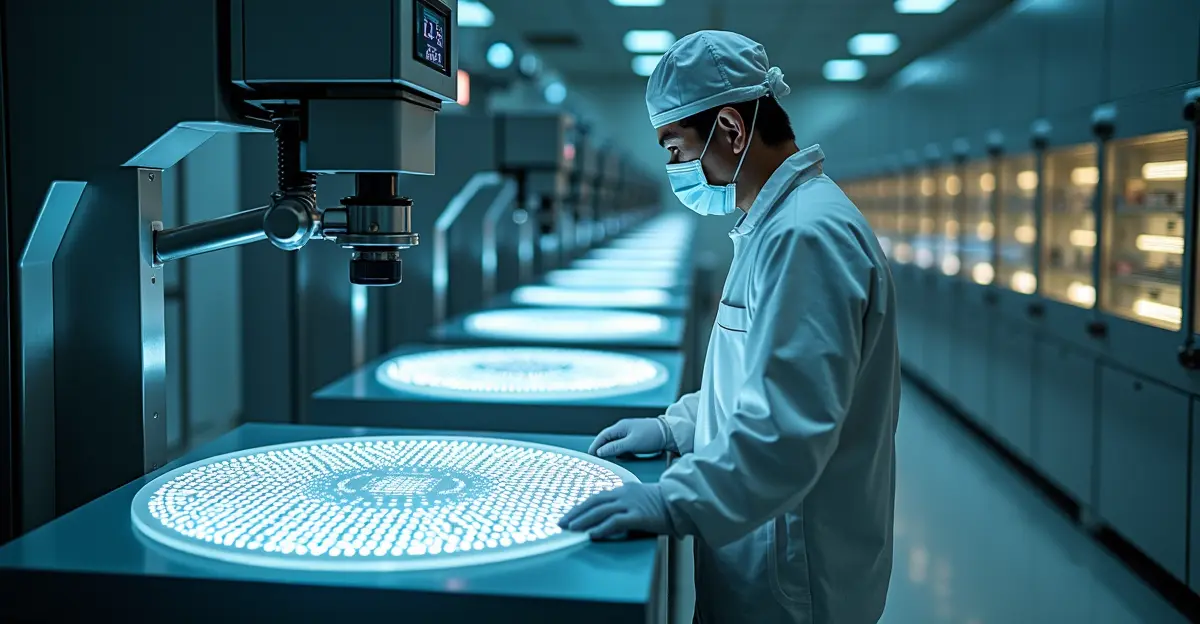
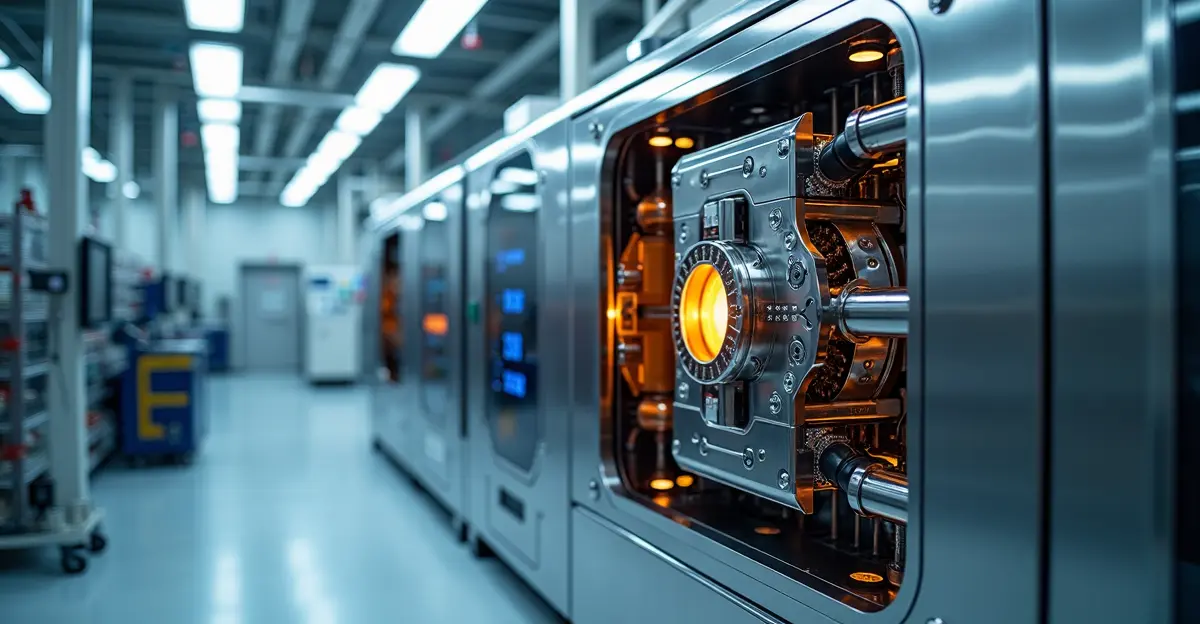
ASML (Advanced Semiconductor Materials Lithography) is a Dutch multinational corporation that develops and manufactures photolithography machines essential for producing integrated circuits. As the world's largest supplier of semiconductor manufacturing equipment and the only producer of extreme ultraviolet (EUV) lithography machines, ASML holds a near-monopoly position in advanced chipmaking technology. With a market capitalization exceeding $527 billion as of January 2026, ASML is Europe's largest technology company and a critical player in the global semiconductor supply chain.
Q1 2026 Financial Performance Highlights
ASML reported impressive first-quarter 2026 results that exceeded analyst expectations:
- Total net sales: €8.8 billion (up from €7.7 billion in Q1 2025)
- Net income: €2.8 billion (17% year-over-year increase)
- Gross margin: 53.0%
- 67 new lithography systems sold
- 12 used systems sold
For the second quarter of 2026, ASML expects similar performance with projected net sales between €8.4 billion and €9.0 billion and a gross margin of 51-52%. The company also announced a 17% dividend increase to €7.50 per share for 2025 and purchased €1.1 billion worth of shares under its buyback program.
AI Revolution Drives Unprecedented Chip Demand
The primary driver behind ASML's optimistic outlook is the artificial intelligence boom that's creating unprecedented demand for high-performance semiconductors. 'These dynamics underscore our expectation that 2026 will be another growth year for us,' said CEO Christophe Fouquet during the earnings presentation. The surge in AI development requires specialized chips for training and inference, with companies like NVIDIA, AMD, and Intel racing to develop increasingly powerful processors.
Analyst Jordy Beuving of De Aandeelhouder commented: 'The figures confirm what we've been seeing for some time. Business is booming, both on the memory chip side and the computing chip side. And ASML is feeling that.'
The AI infrastructure build-out has created a ripple effect throughout the semiconductor ecosystem:
| Segment | Impact | Growth Driver |
|---|---|---|
| Memory Chips | 51% of Q1 tool sales | AI training requires massive memory capacity |
| Logic Chips | Advanced node production | AI inference and processing |
| Datacenter Infrastructure | Capacity expansion | Cloud providers scaling AI services |
Geopolitical Challenges: Export Restrictions and China Concerns
Despite strong demand, ASML faces significant geopolitical headwinds, particularly regarding export restrictions to China. The company has already stopped exporting its most advanced EUV machines to China, and now faces potential restrictions on its deep ultraviolet (DUV) systems as well. U.S. lawmakers have proposed the MATCH Act, which would impose further semiconductor export restrictions targeting ASML's DUV lithography machines that Chinese chipmakers like SMIC currently rely on.
The bandwidth of €36-40 billion in ASML's forecast reflects these political uncertainties, according to CEO Fouquet. China sales dropped to 19% of overall sales in Q1 2026 from 36% in the previous quarter, and analysts estimate further restrictions could affect 5% of ASML's overall sales. This situation highlights the complex interplay between global trade policies and technological advancement in the semiconductor industry.
ASML's Strategic Position in the Semiconductor Ecosystem
ASML's unique position as the 'picks and shovels' provider for the AI revolution makes it a critical infrastructure company. Investors are increasingly viewing ASML as the essential equipment supplier for semiconductor manufacturing, similar to how equipment suppliers profited during historical gold rushes by selling essential mining tools rather than mining gold themselves.
Key competitive advantages include:
- Monopoly on EUV Technology: ASML is the only company capable of producing extreme ultraviolet lithography machines needed for the most advanced chips
- Extensive Supplier Network: Over 5,000 tier 1 suppliers supporting complex manufacturing
- Long Lead Times: Delivery times up to 18 months create significant barriers to entry
- R&D Investment: Continuous innovation in next-generation lithography
The company's backlog of €38.8 billion entering 2026 provides strong visibility into future revenue, though ASML has stopped disclosing new orders per quarter due to volatility in timing.
Industry Implications and Future Outlook
The sustained chip demand-supply imbalance has several important implications for the global economy and technology sector. Major chip manufacturers like Taiwan's TSMC are accelerating capacity expansion plans, requiring more ASML machines to meet production targets. This creates a virtuous cycle for ASML but also highlights potential bottlenecks in the semiconductor supply chain.
Looking ahead to 2026 and beyond, several trends will shape the semiconductor landscape:
- Continued AI Investment: Cloud providers and tech giants will maintain heavy spending on AI infrastructure
- Geopolitical Fragmentation: Export restrictions may accelerate development of alternative supply chains
- Technological Advancement: Next-generation chip architectures will require even more advanced manufacturing equipment
- Sustainability Concerns: Energy consumption of AI datacenters and chip manufacturing will become increasingly important
As the semiconductor manufacturing equipment market continues to evolve, ASML's role as a technological enabler positions it for sustained growth, though geopolitical factors remain a significant wild card.
Frequently Asked Questions
What is ASML's revised 2026 revenue forecast?
ASML now expects 2026 total net sales between €36 billion and €40 billion, up from previous guidance of €34-39 billion.
Why is ASML raising its revenue forecast?
The primary driver is strong and sustained demand for AI chips, with massive investments in datacenter infrastructure creating unprecedented demand for semiconductor manufacturing equipment.
What are the main challenges facing ASML?
Key challenges include export restrictions to China, geopolitical tensions affecting global trade, and the complexity of maintaining its technological leadership in advanced lithography.
How does ASML's technology enable AI development?
ASML's EUV and DUV lithography machines are essential for manufacturing the advanced chips that power AI systems, making the company a critical infrastructure provider for the AI revolution.
What percentage of ASML's sales come from China?
China sales dropped to 19% of overall sales in Q1 2026 from 36% in the previous quarter, reflecting the impact of existing export restrictions.

Follow Discussion