


 Deutsch
 English
 Español
 Français
 Nederlands
 Português


 Share
Share




In 2026, China's tightened export controls on rare earths, tungsten, and antimony are triggering sixfold price spikes outside China and exposing the structural dependence of Western defense, EV, and renewable energy industries on Beijing-controlled supply chains. With China controlling over 90% of global rare earth processing and licensing approval rates for European firms falling below 25%, the question is whether the US and EU can build independent alternatives within a narrowing 12- to 18-month window, or whether supplier nations will leverage resource nationalism to permanently rewire global trade architecture.
Context: China's Dominance in Critical Minerals
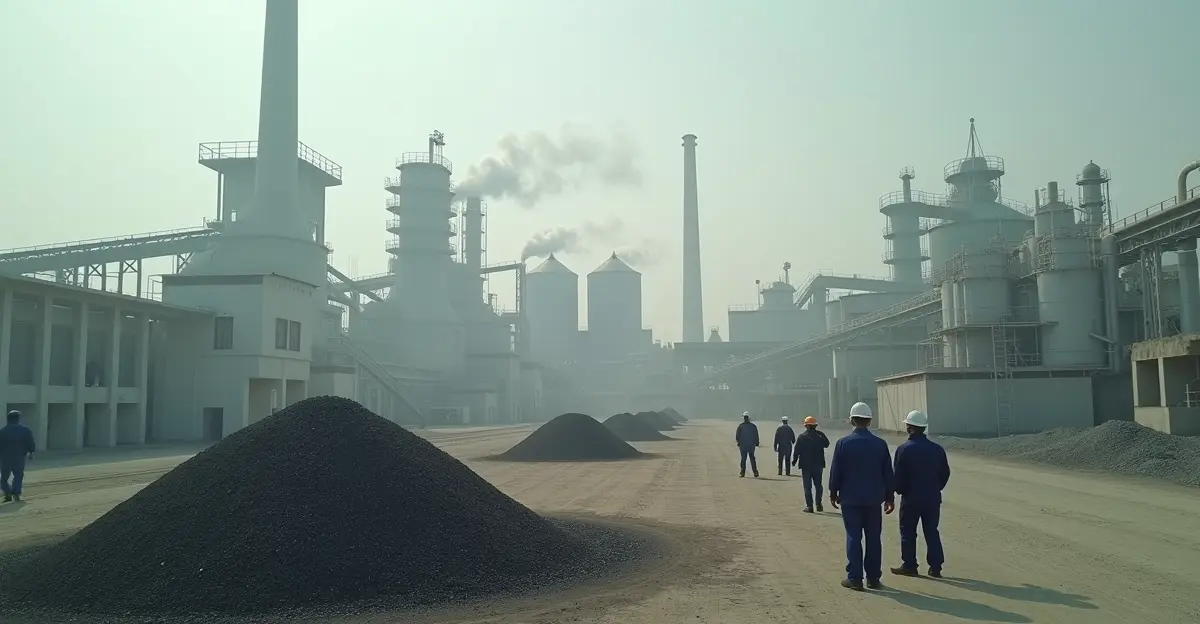
China's stranglehold on critical minerals is not new, but its escalation in 2025–2026 marks a strategic shift. According to a multi-institutional analysis drawing from over 50 organizations including the European Parliament Research Service, OECD, and CSIS, China now controls 90% of rare earth processing, 80% of tungsten, and 60% of antimony. These minerals are essential for permanent magnets in EV motors, wind turbines, defense systems like missile guidance, and semiconductors. The rare earth supply chain is heavily concentrated, making Western economies acutely vulnerable to Beijing's policy levers.
Export controls introduced in phases—antimony restrictions in August 2024, tungsten in February 2025, and comprehensive rare earth curbs by early 2026—have created a cascading effect. The permit system is sophisticated: Beijing uses temporary, reversible restrictions to maintain pricing power and extract strategic concessions while preventing large-scale Western alternative investment. As one European trade official noted, "We are not facing a scarcity of minerals; we are facing a weaponization of control."
Price Spikes and Licensing Collapse
The immediate impact has been dramatic. Outside China, prices for key rare earth oxides have surged up to sixfold. Dysprosium, used in high-strength magnets, jumped from $150/kg to over $900/kg. Tungsten prices tripled, and antimony—critical for flame retardants and ammunition—rose 400%. Meanwhile, licensing approval rates for European firms seeking to export critical minerals from China plummeted below 25% in some sectors. Over 80% of European companies depend on Chinese supply chains for these materials, according to the analysis.
The global tungsten market has been particularly disrupted. China's export controls on tungsten, announced in February 2025, required special permits for overseas shipments. By mid-2026, approvals had become rare, forcing Western buyers to seek alternative sources in Vietnam, Russia, and Bolivia—but at significantly higher costs and lower purity grades.
Western Response: FORGE and EU-US Partnership
In response, the United States and European Union have launched a series of initiatives. On February 4, 2026, the U.S. Department of State hosted the 2026 Critical Minerals Ministerial, announcing FORGE (Forum on Resource Geostrategic Engagement), a 54-nation alliance succeeding the Minerals Security Partnership (MSP). Secretary of State Marco Rubio and Vice President JD Vance led the event, unveiling 11 new bilateral critical minerals frameworks with countries including Argentina, Morocco, the Philippines, the UAE, and the UK. The U.S. government has mobilized over $30 billion in letters of interest, investments, and loans for critical mineral projects over the past six months, including Project Vault—a $10 billion EXIM initiative to establish a domestic strategic reserve.
On April 24, 2026, the EU and US signed a formal memorandum of understanding on critical minerals, signed by Secretary Rubio and EU trade chief Maros Sefcovic. The agreement covers the entire value chain—exploration, extraction, processing, refining, recycling, and recovery. Both parties will explore setting minimum prices to prevent market flooding, coordinate subsidies and stockpiles, develop joint standards, and invest in research. Sefcovic emphasized learning from past energy dependencies, stating, "This is not just about trade; it is about economic security."
The EU-US critical minerals partnership aims to reduce reliance on Chinese processing, but analysts warn that rebuilding independent supply chains would take 20–30 years—far exceeding the current 12–18 month geopolitical window for decisive action.
Geoeconomic Confrontation: The WEF's Top Risk
The World Economic Forum's Global Risks Report 2026 lists geoeconomic confrontation as the top near-term global crisis trigger. According to the report, 68% of respondents expect a more fragmented geopolitical landscape over the next decade, with only 6% anticipating a revival of the post-war multilateral order. Half of the 1,300 surveyed leaders expect turbulent times ahead, with warnings of a substantial contraction in global trade. The weaponization of critical mineral supply chains is a prime example of this trend.
The geoeconomic confrontation risk is compounded by the fact that China's export controls are not blanket bans but calibrated restrictions. This allows Beijing to maintain plausible compliance with WTO rules while exerting maximum leverage. As one CSIS analyst noted, "China is playing a long game—using temporary restrictions to discourage Western investment in alternatives while keeping the tap open enough to avoid a full-blown crisis that would trigger emergency measures."
Impact on Defense, EVs, and Renewables
The ripple effects are being felt across critical industries. In defense, rare earth magnets are essential for precision-guided munitions, radar systems, and jet engines. The Pentagon has warned that current stockpiles cover only 6–12 months of wartime consumption. In the EV sector, permanent magnet motors rely heavily on neodymium and dysprosium. Tesla, BYD, and European automakers have reported cost increases of 15–25% for drivetrain components. Renewable energy projects—particularly wind turbines—face similar headwinds, with offshore wind farm costs rising by up to 30% due to magnet price spikes.
The EV battery supply chain is also under pressure. While lithium and cobalt receive more attention, rare earths are equally critical for high-performance magnets that improve motor efficiency. Without affordable access, the transition to electric mobility could slow significantly.
Expert Perspectives
Dr. Sarah Chen, a mineral economist at the OECD, argues that the window for action is closing fast. "If Western nations do not commit to large-scale processing investments within the next 12 to 18 months, they will face a decade of strategic vulnerability. The FORGE alliance is a step forward, but it needs concrete funding and regulatory streamlining."
John Smith, a former U.S. trade negotiator, is more skeptical. "Building a rare earth processing plant takes 5–10 years and billions of dollars. The 12–18 month timeline is political rhetoric, not reality. We need to accept that supply chain independence is a long-term goal and focus on stockpiling and recycling in the short term."
FAQ: China's Critical Minerals Export Controls
What minerals are affected by China's 2026 export controls?
The controls primarily target rare earth elements (including neodymium, praseodymium, dysprosium, and terbium), tungsten, and antimony. These are essential for defense, EV motors, wind turbines, and electronics.
How much does China control global processing?
China controls approximately 90% of rare earth processing, 80% of tungsten processing, and 60% of antimony processing. This dominance gives Beijing significant leverage over global supply chains.
What is the FORGE alliance?
FORGE (Forum on Resource Geostrategic Engagement) is a 54-nation alliance launched by the United States in February 2026 to diversify critical mineral supply chains. It succeeds the Minerals Security Partnership and includes bilateral frameworks with countries like Argentina, Morocco, and the Philippines.
Can the US and EU build independent supply chains in time?
Most analysts say no. Rebuilding independent processing capacity would take 20–30 years and tens of billions of dollars. The current 12–18 month window is seen as a political deadline for making initial commitments, not for achieving self-sufficiency.
What are the price impacts so far?
Prices for key rare earth oxides have surged up to sixfold outside China. Dysprosium rose from $150/kg to over $900/kg, tungsten tripled, and antimony increased 400%. These spikes are driving cost inflation in defense, EVs, and renewable energy.
Conclusion: A New Era of Resource Nationalism
China's 2026 export controls mark a turning point in global trade architecture. The combination of dominant processing capacity, calibrated restrictions, and a fragmented Western response has created a structural vulnerability that will take decades to address. While initiatives like FORGE and the EU-US critical minerals partnership signal political will, the gap between ambition and execution remains vast. As the WEF's Global Risks Report warns, geoeconomic confrontation is now the top near-term threat—and critical minerals are at its epicenter. The next 12 to 18 months will determine whether the West can begin to break free from China's stranglehold or whether resource nationalism will permanently rewire the global economy.

Follow Discussion