


 Deutsch
 English
 Español
 Français
 Nederlands
 Português


 Share
Share




In May 2026, G7 trade ministers gathered in Paris to confront a stark reality: China controls roughly 90% of global rare earth processing capacity, giving Beijing near-total leverage over the critical minerals essential for electric vehicles, defense systems, and renewable energy. Yet the meeting produced no binding commitments to build alternative supply chains. Simultaneously, the United States escalated automotive tariffs on the European Union to 25% under Section 232 authority, fracturing the very diplomatic unity needed to counter Chinese dominance. This is the critical minerals paradox — transatlantic trade conflicts are systematically undermining Western efforts to decouple from Chinese supply chains at the moment when strategic action is most urgent.
The Scale of Chinese Dominance
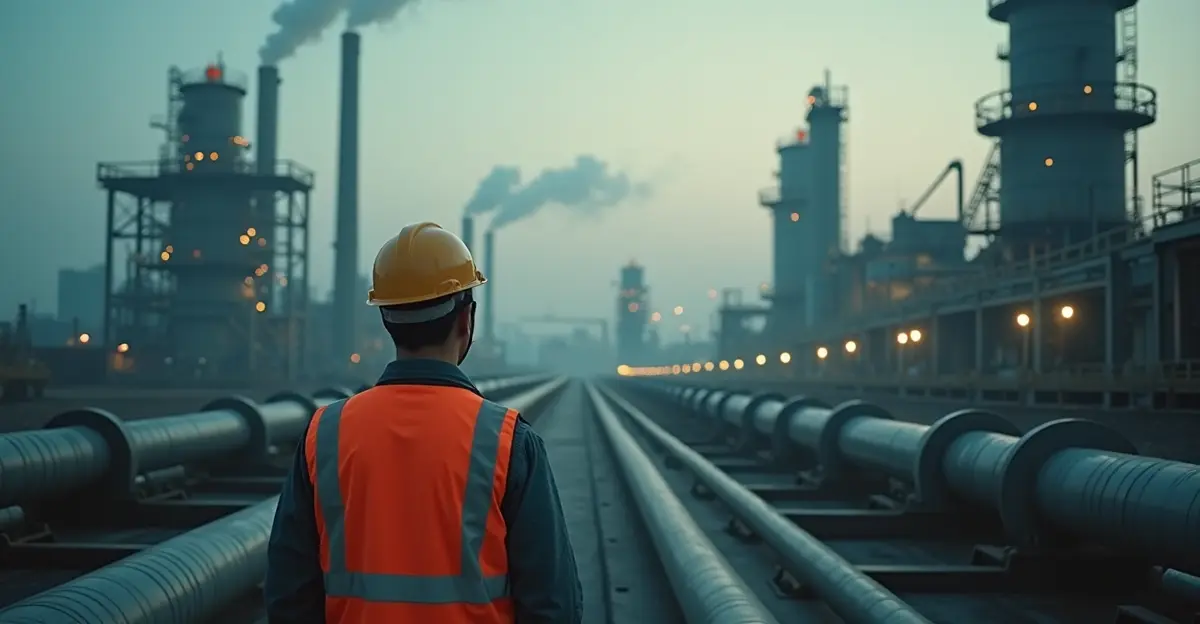
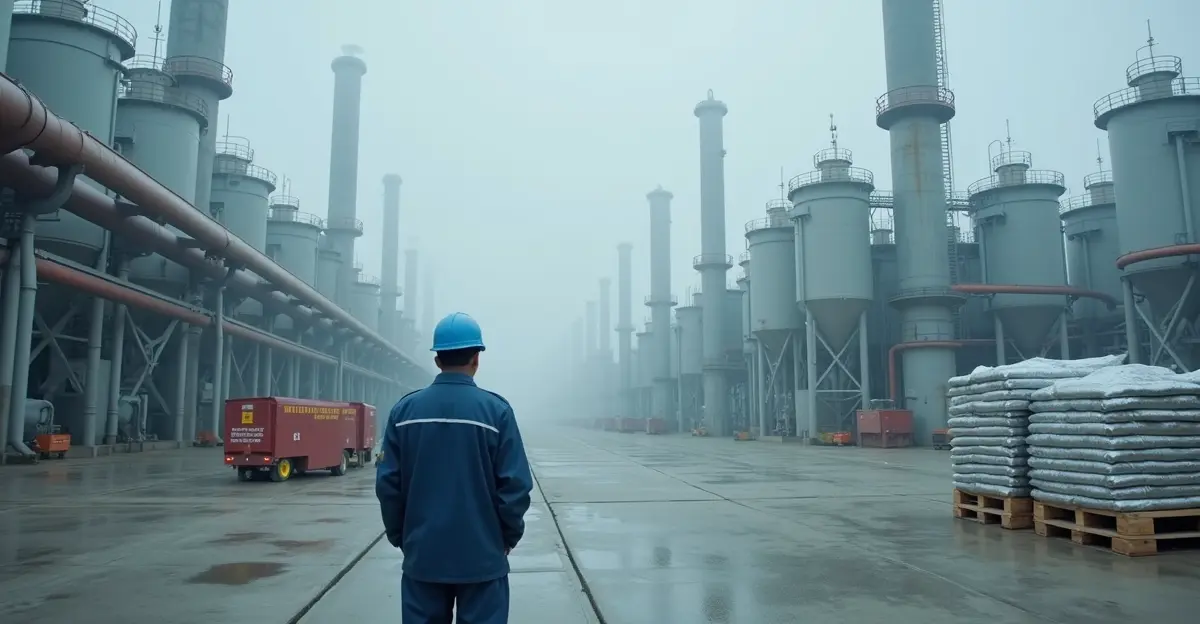
China's grip on critical mineral processing is not accidental but the result of a deliberate, decades-long strategy. According to a 2026 Griffith Asia Institute study, while China mines approximately 70% of global rare earths, its true leverage lies downstream: controlling roughly 90% of refining and 94% of permanent magnet production. The International Energy Agency confirms that China accounts for about 90% of global rare earth processing. This concentration extends beyond rare earths — China also dominates processing of lithium, cobalt, and graphite, materials vital for the green transition.
Beijing has increasingly weaponized this control. In 2025 and 2026, China introduced sweeping export controls on rare earths and critical minerals, triggering price spikes of up to sixfold. Licensing approvals for European firms fell below 25%. The EU's Critical Raw Materials Act, which entered into force in May 2024, set ambitious 2030 targets: 10% domestic extraction, 40% processing, and 25% recycling. In March 2025, the European Commission selected 47 Strategic Projects under the Act, representing an estimated €22.5 billion in investment. But these efforts face a critical bottleneck: financing at scale remains elusive, and the timeline for building independent processing capacity is measured in decades, not years.
The Transatlantic Tariff Escalation
While the G7 trade ministers discussed critical minerals in Paris, the U.S. was simultaneously escalating trade hostilities with its closest allies. In May 2026, President Donald Trump announced a 25% tariff on EU automobiles and automotive parts under Section 232 of the Trade Expansion Act of 1962, citing national security grounds. The move came after the Supreme Court struck down Trump's broader "reciprocal" tariffs in February 2026, ruling that the International Emergency Economic Powers Act does not authorize presidential tariff imposition. Trump then signed an executive order imposing a new 10% global tariff under Section 122 of the Trade Act of 1974.
The automotive tariff escalation directly threatens European manufacturers including Mercedes, BMW, and Volkswagen, which import a significant share of their U.S.-sold vehicles from European plants. But the damage extends far beyond the auto sector. The US-EU trade war 2025 has eroded trust and diverted diplomatic energy away from the coordinated response needed to counter Chinese supply chain leverage. As one European trade official noted, "You cannot ask us to cooperate on critical minerals while simultaneously imposing tariffs that cripple our manufacturing base."
The EU's Anti-Coercion Instrument and Strategic Responses
The European Union has developed its own toolkit to counter economic coercion. The Anti-Coercion Instrument (ACI), which entered into force in December 2023, provides a framework for EU action when a third country seeks to pressure the Union or its member states through trade restrictions. Calls are intensifying for Brussels to trigger the ACI in response to both Chinese export controls and U.S. tariff actions. However, the instrument has yet to be deployed, reflecting the political sensitivity of escalating trade disputes on multiple fronts.
In April 2026, the EU and U.S. launched a critical minerals partnership through a Memorandum of Understanding and an Action Plan. The framework covers the full minerals value chain — exploration, extraction, processing, recycling, and substitution — and targets strategic sectors including batteries, EVs, semiconductors, and defense technologies. Key economic mechanisms under consideration include reference-price systems, border-adjusted price floors, price-gap subsidies, and long-term offtake agreements. The partnership aims to build a plurilateral minerals bloc with trusted partners like Japan, Canada, and Australia, creating a standards-based club that reduces Chinese leverage.
Yet the partnership's effectiveness is undermined by the simultaneous tariff war. As the ODI critical minerals analysis 2026 notes, the second Trump administration has prioritized critical raw materials for U.S. economic and national security, introducing $2 billion for the National Defense Stockpile and $5 billion for supply chain investments. But these efforts are fragmented. The U.S. has pursued bilateral partnership agreements with Australia, Japan, and Ukraine, while the EU focuses on its own Strategic Projects. Without a unified transatlantic approach, Western efforts risk duplication and inefficiency.
The Strategic Window Is Closing
China's 15th Five-Year Plan, covering 2026-2030, will further entrench its dominance. The ODI projects that by 2035, China will supply over 60% of refined lithium and cobalt, and approximately 80% of battery-grade graphite and rare earths. A sweeping multi-institutional analysis warns that Western nations face a narrowing 12-18 month window to act decisively. Three strategic paths exist: accept managed dependence, pursue costly independence, or adopt a hybrid model balancing resilience and realism.
The G7 leaders' summit scheduled for June 15-17, 2026 in Évian-les-Bains, France, represents a critical inflection point. The summit agenda includes economic security, trade, and critical minerals supply chains. Leaders will need to reconcile the US-EU critical minerals partnership with the reality of ongoing tariff disputes. The question is whether they can move beyond communiqués to binding commitments with enforcement mechanisms — something the May 2026 trade ministers' meeting conspicuously failed to achieve.
Expert Perspectives
Analysts are divided on the prospects for transatlantic cooperation. Some argue that the shared threat of Chinese dominance will eventually force unity. Others warn that the trust deficit created by tariff wars is too deep to be repaired quickly. As one senior European diplomat put it, "We are fighting a fire while setting our own house ablaze. The Chinese are watching and they know exactly what they are doing."
The Griffith Asia Institute study concludes that effective Western response requires allied coordination, systematic support across the entire processing value chain, permitting reform, and workforce development. However, America's fragmented governance may only enable such fundamental changes under severe crisis conditions, as incrementalism tends to prevail even when the strategic calculus is already clear.
Frequently Asked Questions
What percentage of global rare earth processing does China control?
China controls approximately 90% of global rare earth refining and processing capacity, according to the International Energy Agency and multiple academic studies from 2025-2026.
What are the US-EU auto tariffs in 2026?
In May 2026, the U.S. raised tariffs on EU automobiles and automotive parts to 25% under Section 232 authority, citing national security. The EU had previously faced 15% tariffs on auto imports from the U.S.
What is the EU's Anti-Coercion Instrument?
The Anti-Coercion Instrument (ACI), effective since December 2023, is an EU framework allowing retaliatory measures against third countries that use economic pressure to influence EU policy. It has not yet been triggered as of May 2026.
What is the G7 doing about critical minerals?
The G7 trade ministers met in Paris in May 2026 and discussed critical minerals supply chains, diversification requirements, and trade instruments. However, no binding commitments were made. The G7 leaders' summit in June 2026 is expected to address the issue further.
How long would it take to build alternative rare earth processing capacity?
Experts estimate it could take 10-30 years for Western nations to build competitive rare earth processing industries independent of China, given the complexity of separation technology, permitting challenges, and capital requirements.
Conclusion: A Race Against Time
The critical minerals paradox encapsulates the central strategic challenge of 2026: transatlantic trade conflicts are undermining the very cooperation needed to counter Chinese supply chain dominance. The June 2026 G7 summit in Évian offers a potential turning point, but the track record of unenforceable communiqués and escalating tariff wars does not inspire confidence. As the China rare earth export controls 2026 continue to tighten, the West faces a narrowing window to build resilient supply chains. Whether leaders can reconcile regulatory and market-incentive approaches before that window closes will determine not just the future of critical minerals, but the broader balance of economic power in the 21st century.

Follow Discussion