


 Deutsch
 English
 Español
 Français
 Nederlands
 Português


 Share





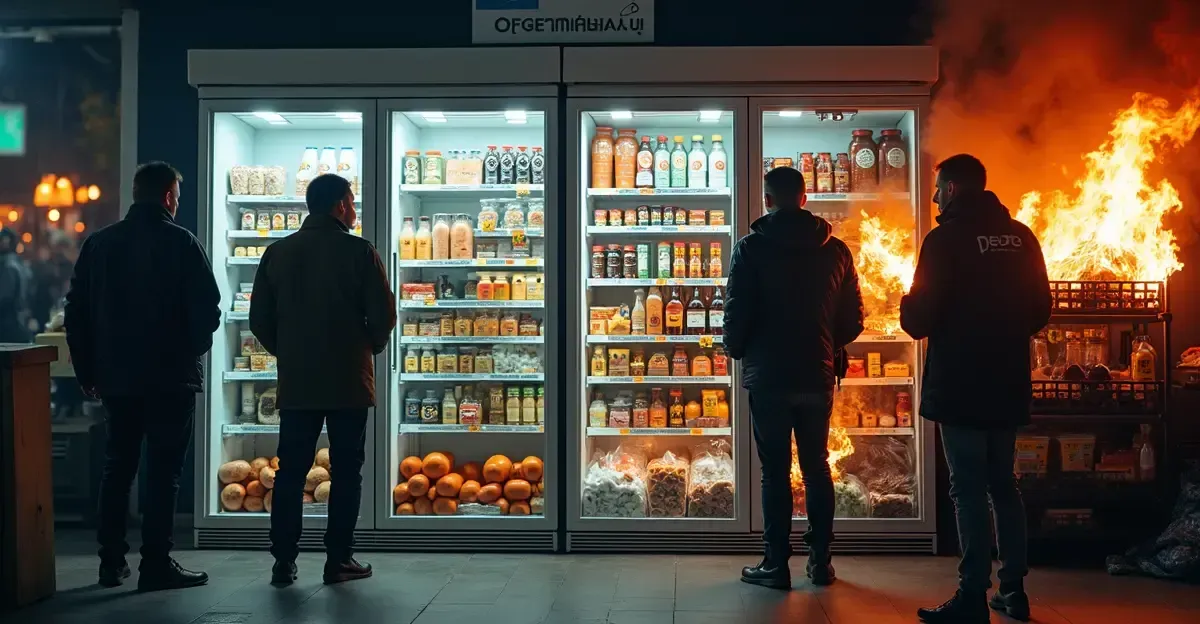
A wave of suspected cyberattacks has hit supermarket refrigeration systems across Belgium, Luxembourg and Sweden, forcing dozens of stores to discard spoiled food after freezer temperatures spiked overnight on Monday, 2 November 2026. The supermarket refrigeration hack follows a similar attack in France three weeks earlier and is now raising alarms across Europe's grocery sector.
What happened?
Belgian retailer Delhaize confirmed an "IT incident" affecting cooling equipment in dozens of outlets in both Flanders and Wallonia, as well as in Luxembourg. Carrefour Belgium reported 15 affected stores. In Sweden, ICA and Coop supermarkets also reported overnight tampering with freezers and refrigerators. Some store managers described temperatures rising to 50°C, with one ICA branch reportedly setting freezers to 122°F.
This comes weeks after hackers overrode cooling settings at up to 700 supermarkets in France, pushing temperatures from -27°C to above 50°C and causing losses of up to €130,000 per store.
How the refrigeration hack works
Most cold aisles are internet-connected for remote maintenance. Attackers appear to manipulate the defrost mechanism, which normally lets in a small amount of warm air to prevent ice build-up. In this attack, the system kept feeding warm air without switching back to cooling. Werner Muylle, operations team leader at Belgian butcher De Laet & Van Haver, told NOS: "Around 3 a.m. some settings of the cooling units were adjusted from outside. Normally a little warm air comes in against ice formation, then the system should cool again. That didn't happen now. Only warm air kept coming into the coolers."
Muylle said the affected units run on Copeland systems, while other stores using Danfoss systems appeared unaffected so far. In France, the October attack reportedly targeted Danfoss refrigeration units. The spread of cyberattacks on critical infrastructure has raised alarm across Europe.
Response and damage control
Delhaize said cooling systems were immediately disconnected from the internet. "Quick action was taken so the stores can remain operational," a spokesperson said. Managers were alerted by text message around 4 a.m., and some stores deployed refrigerated trucks to save stock. Others discarded entire fridge and freezer contents.
At De Laet & Van Haver, staff shut down the equipment after detecting the hack, which stopped the heating. Some products were saved thanks to residual cold air; the rest were thrown away. The company also disconnected Danfoss-based coolers as a precaution. In Sweden, Coop said unauthorized actors accessed cooling systems at seven of its 800-plus stores overnight, though the situation is now contained. ICA reported a "small number" of stores affected, with its Sjöbo branch closing after freezers were set to 122°F. supermarket supply chain disruptions are being monitored by Belgium's Centre for Cybersecurity.
Key facts at a glance
- Date: 2 November 2026
- Countries affected: Belgium, Luxembourg, Sweden
- Chains hit: Delhaize, Carrefour, Spar, Shop & Go, Proxy Delhaize, ICA, Coop
- Reported temperature spike: up to 50°C (122°F)
- Previous attack: France, mid-October, up to 700 stores
Possible link to Ahold Delhaize cyberattack
Last month, Albert Heijn's parent company Ahold Delhaize suffered a cyberattack that took down websites, apps and online ordering for Albert Heijn, Etos and Gall & Gall. The company filed a police report after a call from authorities. Delhaize says it is still investigating whether the refrigeration hack is connected to that Ahold Delhaize cybersecurity incident.
FAQ
Which supermarkets were affected by the refrigeration hack?
Delhaize, Carrefour, Spar, Shop & Go and Proxy Delhaize outlets in Belgium and Luxembourg, plus ICA and Coop stores in Sweden were reported affected on 2 November 2026.
How did hackers overheat supermarket freezers?
Attackers remotely accessed internet-connected cooling controllers and manipulated defrost settings, allowing warm air to enter without returning to cooling mode.
How much food was lost?
French stores lost up to €130,000 per location in October; the current Belgium-Sweden incident is still being assessed, but multiple stores discarded stock and some closed temporarily.
Is this linked to the October France attack?
It is unconfirmed. Both incidents targeted remotely managed refrigeration equipment, but authorities have not established a direct link.

Follow Discussion