


 Deutsch
 English
 Español
 Français
 Nederlands
 Português


 Share
Share




The 2026 Quantum Computing Milestone: When Quantum Supremacy Becomes Practical Reality
In 2026, quantum computing is undergoing a fundamental transformation from theoretical research to practical commercial applications, with industry leaders like IBM predicting the first instances where quantum computers will outperform classical systems for specific real-world problems. This technological inflection point represents what experts call the transition from quantum supremacy demonstrations to verified quantum advantage—where quantum computers deliver measurable business value in fields ranging from cryptography and drug discovery to materials science and financial optimization. The IBM Quantum Roadmap 2026 outlines ambitious goals for achieving scientific quantum advantage using quantum computers working alongside High Performance Computing (HPC) systems, marking a critical milestone in the evolution of this transformative technology.
What is Quantum Advantage in 2026?
Quantum advantage, also known as quantum supremacy, refers to the point where a quantum computer can solve a problem that no classical computer can solve in any feasible amount of time. While early demonstrations focused on artificial problems, 2026 marks the shift toward practical applications with real-world impact. According to IBM's roadmap, the company plans to demonstrate the first example of scientific quantum advantage using quantum computers working alongside HPC systems, with the Nighthawk processor featuring up to 360 qubits across three 120-qubit modules capable of running 7,500 gates. This represents a significant advancement from previous quantum supremacy demonstrations that lacked practical utility.
Key Technological Breakthroughs Driving the 2026 Milestone
IBM's Nighthawk Processor and Quantum Architecture
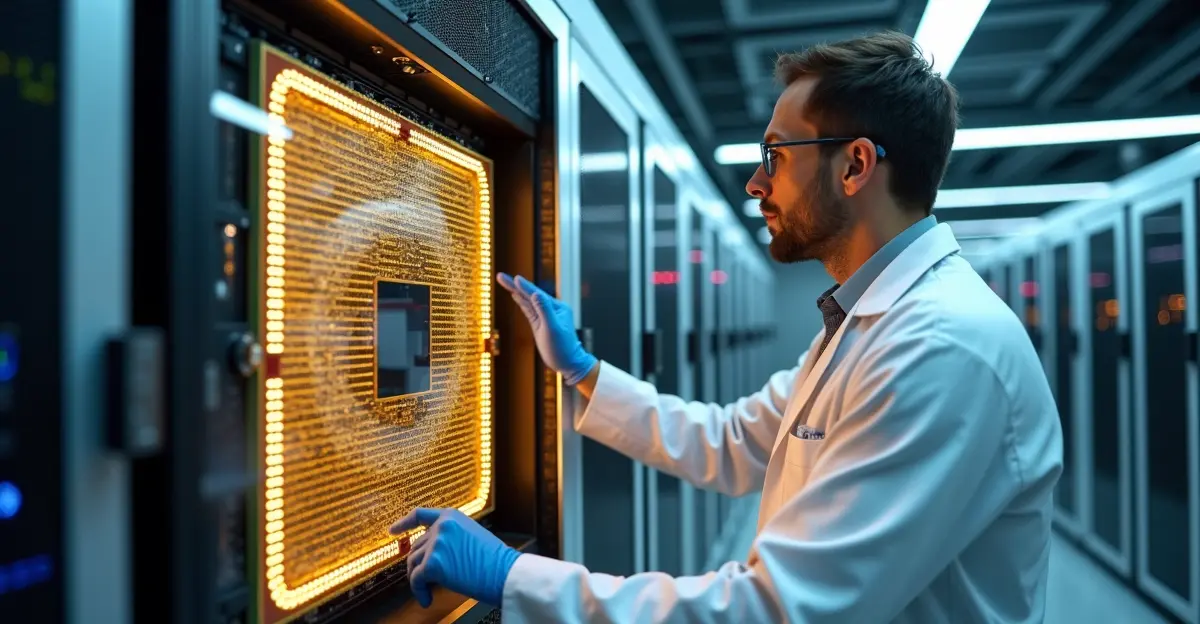
IBM's Quantum Nighthawk 120-qubit processor represents a major architectural advancement with its dense square lattice design, moving away from the previous 'heavy-hex' layout. Each qubit connects to four neighbors via tunable couplers, providing a 20% increase in inter-qubit connections over previous chips. This enhanced connectivity allows for 30% greater circuit complexity while maintaining comparable fidelity. The company has established an open 'quantum advantage tracker' for third-party validation and expects to achieve verified quantum advantage by the end of 2026. The Kookaburra project will demonstrate a single module from the Starling system consisting of a logical processing unit and quantum memory, further advancing toward fault-tolerant quantum computing.
Practical Applications Emerging in 2026
Eight key real-world applications are emerging as quantum computing transitions to practical implementation:
- Cryptography and Quantum-Safe Security: Quantum Key Distribution (QKD) and post-quantum cryptographic algorithms are becoming essential as quantum computers threaten current encryption standards.
- Drug Discovery and Molecular Simulation: Quantum computers enable faster treatment development by simulating molecular interactions at unprecedented scales.
- Materials Science Innovation: Designing new materials with specific properties for energy storage, electronics, and manufacturing.
- Financial Modeling and Risk Analysis: Portfolio optimization, fraud detection, and complex financial simulations.
- Logistics and Supply Chain Optimization: Route optimization, inventory management, and energy efficiency improvements.
- Climate Modeling and Environmental Solutions: Advanced climate simulations and carbon capture material design.
- Artificial Intelligence Enhancement: Quantum machine learning algorithms for pattern recognition and data analysis.
- Chemical Process Optimization: More efficient industrial chemical production and catalyst design.
Geopolitical Competition in Quantum Technology
The race for quantum supremacy has become a new frontier in great-power competition, with nations investing over $40 billion globally to secure strategic advantages. The United States employs a private-sector-driven approach via the National Quantum Initiative Act, leveraging companies like IBM and Google while providing $1.2 billion in federal funding. China pursues a state-led strategy with massive centralized investment, viewing quantum as critical for technological independence and national security. The European Union focuses on collaborative research through its Quantum Flagship program, emphasizing open science and ethical standards. This global quantum arms race promises economic dominance, military superiority, and the ability to shape future technological standards, with significant implications for international relations and security.
Strategic Implications for Industries and Governments
The transition to practical quantum computing in 2026 carries profound implications across multiple sectors. Financial institutions are preparing for quantum-safe cryptography as current encryption methods become vulnerable to quantum attacks. Pharmaceutical companies are investing in quantum computing partnerships to accelerate drug discovery timelines, potentially reducing development cycles by years. Governments are developing national quantum strategies to secure economic competitiveness and national security, with the US-China quantum competition intensifying as both nations recognize the strategic importance of quantum leadership. Materials science stands to benefit significantly, with quantum computers enabling the design of novel materials for energy storage, electronics, and manufacturing that could revolutionize entire industries.
Expert Perspectives on the 2026 Quantum Milestone
Industry leaders emphasize the significance of 2026 as a turning point. 'We're moving from quantum supremacy demonstrations to verified quantum advantage—where quantum computers deliver measurable business value,' explains a senior IBM quantum researcher. 'The Nighthawk processor and our 2026 roadmap represent the bridge between research and practical application.' According to experts at the National Science Foundation, quantum computing could revolutionize drug discovery, optimize supply chains, advance materials science, and secure digital communications. However, challenges remain with error rates limiting problem sizes, though measurable benefits are emerging in areas like drug discovery (faster lead optimization), logistics (cost reductions through better routing), and finance (improved risk analysis).
Frequently Asked Questions About Quantum Computing in 2026
What is quantum advantage and how is 2026 different?
Quantum advantage refers to quantum computers solving problems beyond classical computers' capabilities. While previous demonstrations used artificial problems, 2026 marks the shift to practical applications with real business value in fields like drug discovery and financial optimization.
Which industries will benefit first from quantum computing?
Finance, pharmaceuticals, logistics, cybersecurity, and energy are nearest to adoption, with early commercial uses emerging in hybrid quantum-classical workflows that integrate quantum capabilities into existing business processes.
How does IBM's 2026 quantum roadmap differ from previous plans?
IBM's 2026 roadmap focuses on verified quantum advantage—demonstrating clear superiority over classical computers for practical problems—rather than just theoretical supremacy. The Nighthawk processor with 360 qubits and the Kookaburra project represent significant hardware advancements toward this goal.
What are the main challenges facing quantum computing adoption?
Key challenges include hardware limitations, talent gaps, integration hurdles with existing systems, ROI uncertainty, and error rates that currently limit problem sizes. Companies are advised to start with clear KPIs and hybrid architectures.
How is the geopolitical landscape affecting quantum development?
The US-China quantum competition has intensified, with both nations investing billions and implementing export controls. China's state-directed approach contrasts with America's private-sector ecosystem, creating friction in scientific exchange while accelerating development on both sides.
Conclusion: The Future of Quantum Computing Beyond 2026
As 2026 unfolds, quantum computing is transitioning from laboratory curiosity to practical tool, with IBM targeting fault-tolerant quantum computing by 2029. The strategic implications extend beyond technological advancement to encompass economic competitiveness, national security, and scientific discovery. Companies and governments that position themselves effectively during this inflection point will gain significant advantages in the coming quantum era. While challenges remain in error correction, scalability, and talent development, the progress toward practical quantum applications represents one of the most significant technological shifts of our time, with the potential to revolutionize industries from healthcare to finance and reshape global power dynamics in the process.





Follow Discussion