Nederlands
 English
 Deutsch
 Français
 Español
 Português





Desert Winter Games Dream Deferred
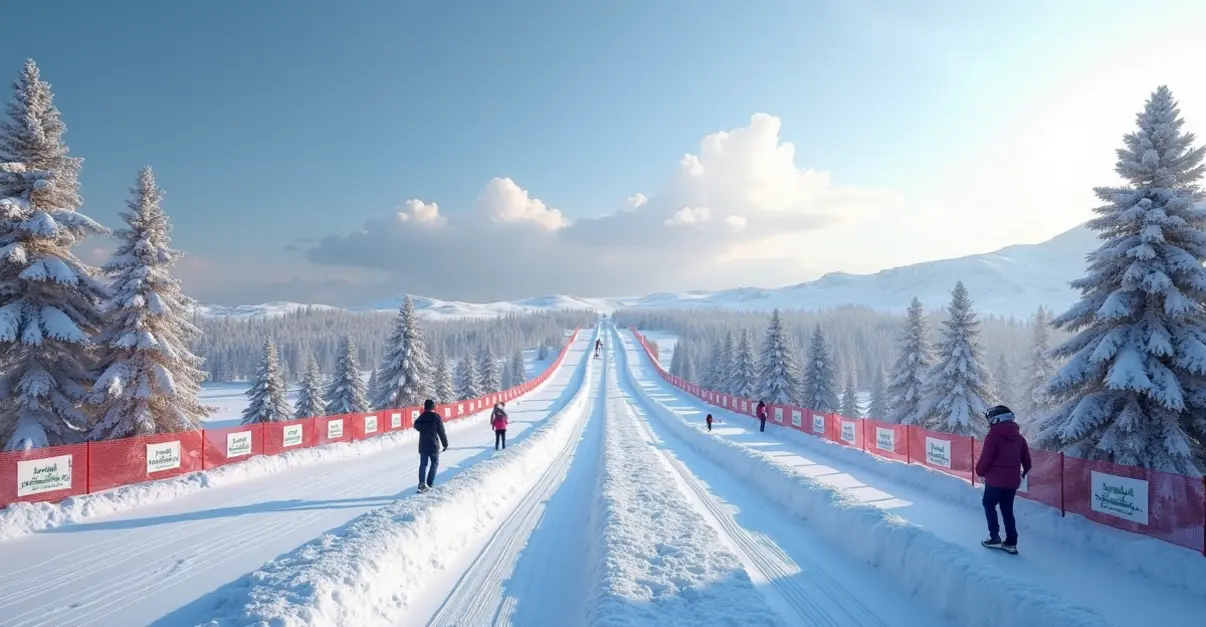
Saudi Arabia's ambitious plan to host the 2029 Asian Winter Games in the middle of the desert has been officially postponed. The joint announcement from the Saudi Olympic and Paralympic Committee and the Olympic Council of Asia confirmed that the event, originally scheduled for the futuristic Trojena ski resort within the $500 billion NEOM megacity project, will not proceed as planned.
The decision represents a significant setback for Crown Prince Mohammed bin Salman's Vision 2030 initiative, which aims to transform Saudi Arabia into a global sports and tourism hub. 'This postponement allows us to focus on delivering world-class winter sports infrastructure that will benefit athletes and visitors for decades to come,' said a spokesperson for the Saudi Olympic Committee.
Technical Challenges in the Desert
The technical hurdles facing the Trojena project are substantial. Located in the Tabuk Province mountains at altitudes between 1,500-2,600 meters, the resort was designed to create artificial snow using water pumped from the Gulf of Aqaba over 200 kilometers away. This water would then need to be elevated 2 kilometers to reach holding basins for snow production.
According to construction experts, 'The scale of engineering required to create sustainable winter sports conditions in a desert environment is unprecedented. While test snowmaking has been successful on a 400-meter test slope, scaling this to competition standards presents enormous challenges.'
The project's water management system alone represents a monumental engineering feat. Water must be desalinated, transported hundreds of kilometers, and pumped to high altitudes—all while maintaining environmental sustainability standards.
NEOM's Broader Vision
Trojena is just one component of the massive NEOM development, which includes plans for The Line—a 170-kilometer long linear city designed to house 9 million residents. The entire NEOM project is central to Saudi Arabia's economic diversification away from oil dependence.
Despite the postponement, Saudi officials remain committed to winter sports development. 'We will host a series of winter sports events in the coming years to build momentum and expertise,' confirmed the Olympic Council of Asia in their statement. South Korea and China have emerged as potential alternative hosts for the 2029 Games, both having recent Winter Olympics hosting experience.
Global Sports Strategy Continues
The postponement doesn't signal an end to Saudi Arabia's global sports ambitions. The Kingdom continues to pursue major events including the 2034 FIFA World Cup bid and hosts Formula 1 races. According to sports analysts, 'Saudi Arabia's sports strategy is about long-term transformation, not just individual events. While this postponement is disappointing, it reflects practical realities of delivering complex infrastructure projects.'
The Asian Winter Games, first held in Sapporo, Japan in 1986, have grown to include over 30 participating nations. Saudi Arabia would have been the first Middle Eastern country to host the event, marking a historic milestone for winter sports in the region.
Construction at Trojena continues despite the Games postponement, with the resort still targeting a 2026 opening for general tourism. The project includes luxury residences, wellness retreats, and plans to attract 700,000 visitors annually by 2030.