
 Deutsch
 English
 Español
 Français
 Nederlands
 Português

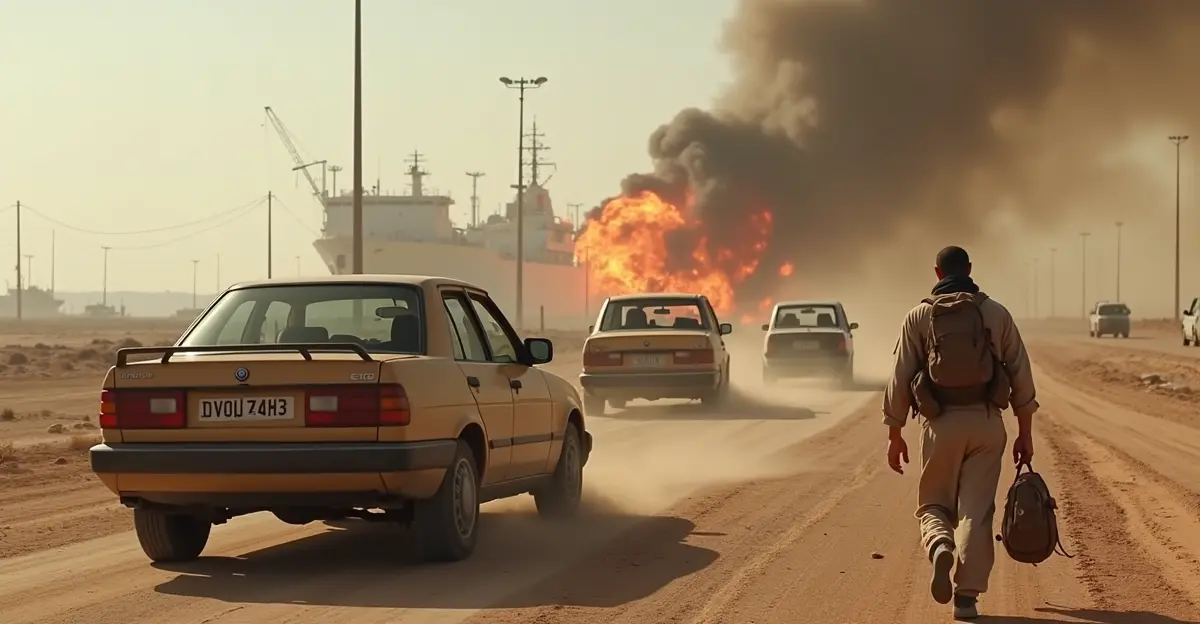





Saudi Airstrikes Target Mukalla Port in Major Escalation
In a dramatic escalation of tensions in Yemen's decade-long civil war, Saudi Arabia conducted airstrikes on the strategic port city of Mukalla on December 30, 2025, targeting what it claims were weapons shipments from the United Arab Emirates destined for separatist forces. The attack represents the most serious rift between the two Gulf allies in decades and threatens to open a new front in the conflict that has already killed over 150,000 people.
The Attack and Immediate Aftermath
The Saudi-led coalition stated that the strike targeted weapons and military vehicles unloaded from two vessels that arrived from Fujairah in the UAE. According to military statements released through the Saudi Press Agency, the attack was conducted at night to 'avoid collateral damage' and followed warnings to civilians to seek safety. 'Because Southern Transitional Council forces have been advancing steadily toward the northern border region with Saudi Arabia in recent weeks, Riyad has now drawn a line in the sand by bombing weapons shipments from the Emirates,' explained David Poort, NOS foreign editor.
Yemen's internationally recognized government responded by declaring a state of emergency, closing all border crossings in areas under its control, and ordering all UAE troops to leave Yemeni territory within 24 hours. The government also suspended cooperation with the UAE in fighting Houthi rebels.
Growing Tensions Between Gulf Allies
The confrontation highlights the complex and shifting alliances within Yemen's conflict. Saudi Arabia and the UAE have been coalition partners since 2015 when they intervened against Houthi rebels, but their interests have increasingly diverged. The UAE backs the Southern Transitional Council (STC), a separatist group seeking independence for southern Yemen, while Saudi Arabia supports the internationally recognized government.
'The UAE's actions are extremely dangerous,' stated the Saudi Foreign Ministry, adding that any threat to Saudi national security represents a 'red line.' The UAE expressed disappointment with Saudi Arabia's position and claimed the ships contained only supplies for Emirati troops, not weapons. However, the UAE subsequently announced it would withdraw its remaining forces from Yemen.
Strategic Importance of Hadramaut Province
The northern part of Hadramaut province, where Mukalla is located, borders Saudi Arabia's desert heartland and holds significant historical and cultural importance for the kingdom. Many prominent Saudis trace their origins to this region. The STC's recent advances in Hadramaut toward the Saudi border appear to have triggered Riyad's decisive response.
The STC, formed in 2017 with UAE backing, controls territories of former South Yemen and joined Yemen's Presidential Leadership Council in 2022. However, tensions have simmered as the group continues its campaign for southern independence while officially being part of the government.
Humanitarian Crisis Deepens
The escalation comes amid what the United Nations calls one of the world's worst humanitarian crises. According to UN reports, Yemen is now the world's third most food-insecure country, with 18.1 million people facing acute hunger and 17 million struggling to eat daily. The conflict has devastated infrastructure, healthcare, and basic services, with millions internally displaced.
'Yemen's conflict is both a mirror and magnifier of regional volatility,' UN Special Envoy Hans Grundberg recently told the Security Council, warning that dangerous escalations threaten a return to full-scale war.
Regional Implications and International Response
The Saudi-UAE rift has significant implications for regional stability and the broader Middle East conflict landscape. Both countries are key members of the Gulf Cooperation Council and have traditionally presented a united front against Iranian influence in the region. The United States has expressed concern and called for diplomacy and restraint.
The incident underscores how Yemen's civil war has evolved from a simple proxy conflict between Saudi Arabia and Iran into a multi-layered struggle with competing interests among former allies. As CNN reported, this represents 'the most serious rift between Saudi Arabia and the UAE in decades.'
The coming days will reveal whether this escalation leads to broader conflict between the Gulf powers or if diplomatic channels can repair the damaged alliance. What remains certain is that Yemen's suffering population continues to bear the heaviest burden of these geopolitical tensions.






Follow Discussion