


 Deutsch
 English
 Español
 Français
 Nederlands
 Português


 Share
Share




China's state-backed satellite internet company SpaceSail is rapidly emerging as the most credible challenger to Elon Musk's Starlink, leveraging government funding and a targeted market strategy to compete in the global low Earth orbit (LEO) broadband race. As of June 2026, SpaceSail has deployed just over 200 satellites in orbit, compared to Starlink's fleet of more than 10,400, but the Chinese upstart is already negotiating with roughly 30 countries and has secured its first major commercial contracts. This article examines what SpaceSail is, how it compares to Starlink, and whether it can replicate China's success in other industries.
What is SpaceSail?
SpaceSail — officially known as the Qianfan (Thousand Sails) Constellation and also referred to as the G60 Starlink — is a Chinese satellite internet megaconstellation developed by Shanghai Spacecom Satellite Technology (SSST). The company was founded in 2023 with initial funding of 6.7 billion Chinese yuan (approximately $943 million) from the Shanghai Municipal Government and the Chinese Academy of Sciences. SpaceSail aims to deploy over 15,000 LEO satellites to deliver high-speed broadband internet globally, with a particular focus on underserved and politically sensitive markets.
The project launched its first batch of 18 satellites in August 2024 aboard a Long March 6A rocket from Taiyuan. By June 2026, four more launches had brought the total to 200 operational satellites. Phase 1 targets 1,296 satellites, with 648 expected to be active by the end of 2026. The constellation is designed to operate in Ku, Q, and V frequency bands and is intended to support not only consumer internet but also maritime trade, overseas infrastructure projects, and diplomatic missions, according to Chinese state media.
SpaceSail vs. Starlink: A Head-to-Head Comparison
The gap between SpaceSail and Starlink remains enormous, but the Chinese challenger is closing in on specific strategic fronts. Below is a comparison of key metrics as of mid-2026.
| Metric | SpaceSail | Starlink |
|---|---|---|
| Active satellites | ~200 | ~10,400 |
| Target constellation size | 15,000+ | 42,000 |
| Active users | Pre-commercial | 12 million+ |
| Countries served | Negotiating with ~30 | 160+ |
| Initial funding | $943 million (government) | $75 billion (IPO, 2026) |
| Reusable rocket | Testing (June 2026) | Falcon 9 (operational) |
| Key partnerships | Airbus, Telebras, Measat | Google, T-Mobile, airlines |
While Starlink's user base has grown to 12 million across 160 countries — adding 4.6 million subscribers in 2025 alone — SpaceSail has yet to launch commercial services. However, the company is strategically targeting countries where Starlink has encountered political friction, regulatory hurdles, or service dissatisfaction. This mirrors the approach taken by Chinese electric vehicle maker BYD, which leveraged state support to overtake Tesla in global sales.
SpaceSail's Market Strategy: Targeting Starlink's Weak Spots
Rather than competing head-on with Starlink's massive existing footprint, SpaceSail is deliberately focusing on markets where the American provider faces headwinds. This strategy has already yielded concrete results.
Brazil: A Major Beachhead
In December 2025, Brazil's telecom regulator Anatel authorized SpaceSail to begin commercial operations using 324 LEO satellites, with a license valid through July 2031. The company signed a memorandum of understanding with state-owned Telebras to provide broadband connectivity to remote areas, including schools and hospitals in the Amazon region. The deal came after relations between the Brazilian government and Elon Musk deteriorated over content moderation disputes. SpaceSail's entry into Brazil — Latin America's largest economy — represents its most significant international breakthrough to date.
Airbus Partnership for In-Flight Wi-Fi
European aerospace giant Airbus has agreed to offer SpaceSail's network as a Wi-Fi solution for airline passengers, giving the Chinese company a foothold in the lucrative aviation connectivity market. This partnership bypasses Starlink's existing dominance in the sector and provides SpaceSail with a credible commercial reference.
Expanding into Asia and Africa
SpaceSail has also signed agreements with Malaysia's Measat satellite operator and Thailand's state telecom provider. The company is in advanced talks with Kazakhstan, South Africa, and several other nations across Asia and Africa. Analysts note that SpaceSail's pitch — a sovereign, non-U.S. alternative backed by the Chinese government — resonates with countries seeking to reduce dependence on American technology.
The global satellite internet market is becoming a new arena for US-China technological competition, and SpaceSail's state-backed model gives it patient capital that private competitors lack.
Challenges Ahead: Can SpaceSail Catch Up?
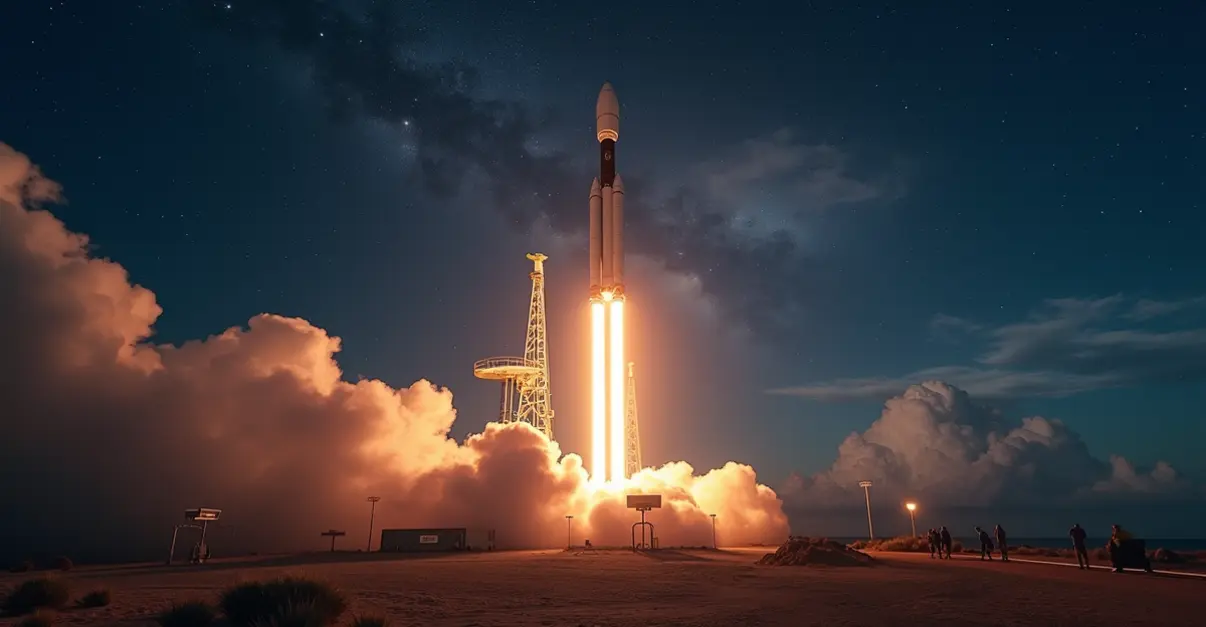
Despite its rapid progress, SpaceSail faces formidable obstacles. The most significant is launch capacity. While SpaceX's Falcon 9 rocket is fully reusable and launches multiple times per week, China has yet to field an operational reusable orbital rocket. SpaceSail conducted its first test launch of a reusable rocket on June 1, 2026, but analysts say it will take years to match SpaceX's cadence. This constraint directly limits how quickly SpaceSail can deploy its constellation.
Domestic competition also poses a challenge. SpaceSail must contend with SatNet (China Satellite Network Group), another state-owned enterprise that holds a national mandate for satellite internet infrastructure. Both companies compete for limited rocket launch slots and government subsidies, potentially slowing deployment timelines.
Moreover, Starlink is not standing still. The company plans to launch third-generation V3 satellites via Starship, each offering over 1 terabit per second downlink capacity — a tenfold improvement over current satellites. Starlink's SpaceX IPO in 2026 raised approximately $75 billion, giving it immense financial firepower to continue expanding.
Implications for the Global Satellite Internet Market
The emergence of SpaceSail as a viable alternative to Starlink has significant geopolitical and economic implications. For countries in the Global South, the competition could drive down prices and improve service quality. For the United States and China, satellite internet has become another front in the broader technological rivalry, alongside 5G, AI, and semiconductors.
"SpaceSail is following the BYD playbook: use state backing to enter markets where the incumbent is weak, then scale rapidly," said one industry analyst cited by The Guardian. "But space is harder than cars. You can't just build a factory — you need rockets, spectrum rights, and global ground infrastructure."
If SpaceSail meets its targets of 648 satellites by end of 2026 and 10,000 by 2030, it could become a genuine competitor in the LEO broadband market. For now, however, Starlink's first-mover advantage, technological lead, and financial resources make it the clear market leader. The Chinese space industry ambitions suggest that SpaceSail is playing a long game, one that could reshape global internet access over the next decade.
Frequently Asked Questions
What is SpaceSail?
SpaceSail (also called Qianfan or Thousand Sails) is a Chinese state-backed satellite internet constellation developed by Shanghai Spacecom Satellite Technology. It aims to deploy over 15,000 LEO satellites to provide global broadband internet, competing directly with SpaceX's Starlink.
How many satellites does SpaceSail have compared to Starlink?
As of June 2026, SpaceSail has approximately 200 satellites in orbit. Starlink has over 10,400 active satellites. SpaceSail plans to reach 648 by end of 2026 and 15,000+ by 2030.
Where is SpaceSail available?
SpaceSail has not yet launched commercial services but has signed agreements or is in negotiations with roughly 30 countries, including Brazil, Malaysia, Thailand, Kazakhstan, and South Africa. Brazil is expected to be its first commercial market in 2026.
Who owns SpaceSail?
SpaceSail is owned by Shanghai Spacecom Satellite Technology (SSST), a company backed by the Shanghai Municipal Government and the Chinese Academy of Sciences. It is fully funded by Chinese state sources.
Can SpaceSail beat Starlink?
Most analysts believe SpaceSail cannot overtake Starlink in the near term due to Starlink's massive lead in satellites, users, and launch capability. However, SpaceSail's state backing and focus on underserved markets could make it a significant regional competitor, particularly in countries seeking a non-U.S. alternative.





Follow Discussion