


 Deutsch
 English
 Español
 Français
 Nederlands
 Português


 Share
Share




NASA's Curiosity Rover Overcomes Unprecedented Obstacle on Mars
NASA's Mars rover Curiosity has been successfully freed after spending six days with a large rock stuck to its drill — the first such incident in the rover's 15-year mission on the Red Planet. The rock, nicknamed Atacama, became lodged around the drill sleeve on April 25, 2026, after Curiosity drilled into it on the slopes of Mount Sharp in Gale Crater.
According to NASA, the rock measured approximately 1.5 feet (0.5 meters) in diameter, 6 inches (15 centimeters) thick, and weighed about 28.6 pounds (13 kilograms). When Curiosity retracted its robotic arm after drilling, the entire slab lifted out of the ground, suspended by the fixed sleeve surrounding the rotating drill bit — a situation never before encountered in the mission's long history.
"The team had to devise a plan to free the drill bit from the rock," NASA wrote in a mission blog. "Unlike its twin rover Perseverance, Curiosity does not collect samples for return to Earth."
How Engineers Freed the Stuck Rover
The incident began on April 25, 2026, when Curiosity drilled into a target rock named Atacama in the Gale Crater exploration zone. As the rover withdrew its arm, the entire rock remained attached to the drill sleeve. Engineers at NASA's Jet Propulsion Laboratory (JPL) immediately began troubleshooting.
Initial Attempts: Vibration and Reorientation
The first attempt involved vibrating the drill to shake the rock loose. When that failed, the team commanded Curiosity to reorient its arm and try again. Cameras on the rover captured the process in real-time, with engineers on Earth watching closely. "Some sand fell off Atacama, but the rock remained stuck to the rover," NASA reported.
The Successful Maneuver
On May 1, 2026 — six days after the rock first became attached — NASA gave Curiosity the command to tilt its arm further, rotate the drill, vibrate it, and spin the drill bit simultaneously. The combination worked on the first attempt. Images from the rover's hazard and navigation cameras show the rock fracturing and falling to the Martian surface in pieces.
The entire sequence was captured in a series of black-and-white images by Curiosity's front hazard cameras and mast-mounted navigation cameras, providing valuable documentation of the first-of-its-kind event.
Curiosity's Long Mission on Mars
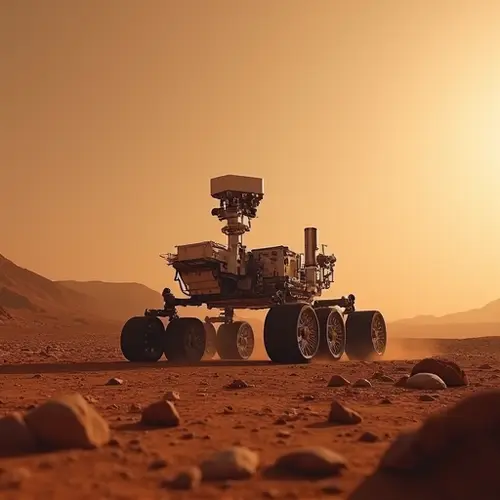
Curiosity, roughly the size of a small SUV (10 feet long, 9 feet wide, 7 feet tall), landed on Mars on August 6, 2012, in a dramatic sky-crane maneuver. Its primary mission was to determine if Mars ever had the right environmental conditions to support microbial life. Since then, the rover has traveled nearly 37 kilometers (23 miles) across the Martian surface, drilling into rocks and analyzing their composition in its onboard mobile laboratory.
Key discoveries include evidence of ancient streambeds, organic molecules preserved in 3.5-billion-year-old mudstone, and seasonal variations in methane levels. The rover continues to climb the lower reaches of Mount Sharp, studying sedimentary layers that record Mars' transition from a wet, potentially habitable world to its current cold, arid state.
Unlike the Perseverance rover sample collection mission, Curiosity does not store rock samples for future return to Earth. Instead, it analyzes powdered rock material internally using instruments like CheMin (Chemistry and Mineralogy) and SAM (Sample Analysis at Mars).
What the Atacama Rock Reveals
Although the rock caused an operational headache, its debris will not go to waste. NASA plans to analyze the material that fell from Atacama using Curiosity's CheMin instrument, comparing it with samples previously collected at the Mineral King drill site. This could provide additional data on the geological history of the region.
The incident also highlighted the robustness of Curiosity's engineering. Designed for a two-year primary mission, the rover has now operated for over 13 years — far exceeding expectations. Its rocker-bogie suspension system, nuclear power source, and redundant systems have allowed it to overcome numerous challenges, from wheel wear to computer glitches.
Impact on Future Mars Missions
The successful resolution of the Atacama incident demonstrates the value of human-in-the-loop problem-solving for deep-space missions. With communication delays of up to 20 minutes between Earth and Mars, the Curiosity team had to plan each step carefully, relying on onboard cameras to assess the situation before issuing new commands.
This experience will inform the design of future drilling systems for missions like the Mars Sample Return campaign and potential crewed missions to Mars. Engineers at JPL are already studying the incident to improve drill sleeve designs and contingency protocols.
As for Curiosity, the rover has resumed its scientific operations, continuing to monitor atmospheric dust, cloud movements, and dust devils while climbing higher on Mount Sharp. The team behind the Mars Science Laboratory mission remains optimistic about the rover's future discoveries.
Frequently Asked Questions
How did a rock get stuck to Curiosity's drill?
On April 25, 2026, Curiosity drilled into a rock nicknamed Atacama. When the rover retracted its robotic arm, the entire rock — about 1.5 feet wide and weighing 28.6 pounds — remained attached to the fixed sleeve surrounding the rotating drill bit. This was the first time in the mission that a rock had stayed attached after drilling.
How long was Curiosity stuck?
The rock remained attached for six days, from April 25 to May 1, 2026. Engineers attempted multiple techniques before successfully freeing the rover.
What technique finally freed the rover?
On May 1, engineers commanded Curiosity to tilt its arm further, rotate and vibrate the drill, and spin the drill bit simultaneously. The rock detached on the first attempt, fracturing as it hit the ground.
Will the rock be analyzed?
Yes, NASA plans to analyze debris from the Atacama rock using Curiosity's CheMin instrument and compare it with samples from the Mineral King site.
How old is the Curiosity rover?
Curiosity landed on Mars on August 6, 2012. As of May 2026, it has been operating for over 13 years and 9 months, far exceeding its original two-year mission.
Follow Discussion