


 Deutsch
 English
 Español
 Français
 Nederlands
 Português


 Share
Share




What is NASA's Artemis II Mission?
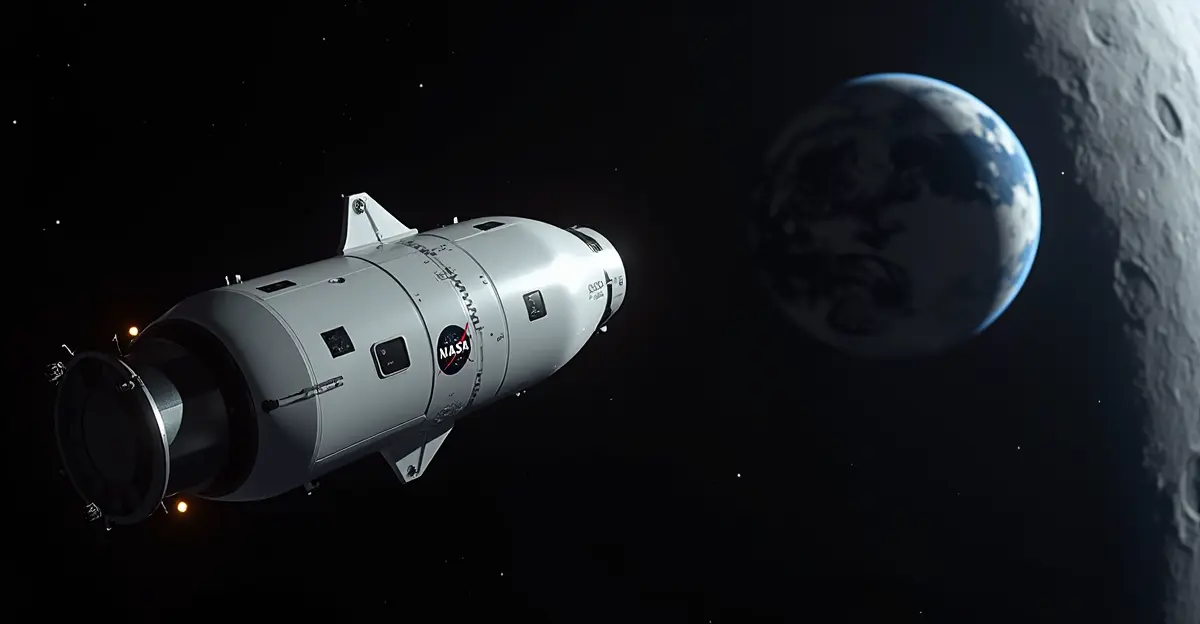
NASA's Artemis II mission represents humanity's return to lunar exploration after more than 50 years, launching on April 1, 2026, from Kennedy Space Center in Florida. This historic 10-day journey will carry four astronauts around the Moon aboard the Orion spacecraft, propelled by the powerful Space Launch System (SLS) rocket. The mission marks the first crewed lunar flight since the Apollo era and serves as a critical test of NASA's deep space exploration capabilities, paving the way for future lunar landings and eventual missions to Mars.
The Historic Crew: Breaking Barriers in Space Exploration
The Artemis II crew features four groundbreaking astronauts who will make history with this mission. Commander Reid Wiseman, a former NASA chief astronaut and Navy test pilot with 165 days of space experience, leads the team. Pilot Victor Glover will become the first person of color to travel to the Moon, bringing extensive experience from his six-month International Space Station mission. Mission Specialist Christina Koch holds the record for the longest single spaceflight by a woman at 328 days and participated in the first all-female spacewalk. Canadian Space Agency astronaut Jeremy Hansen completes the crew as the first non-U.S. astronaut to fly to the Moon, marking his inaugural space mission.
Mission Timeline and Key Milestones
The Artemis II mission follows a carefully planned 10-day schedule that will take the crew on a 685,000-mile journey. Launch is scheduled for 6:24 p.m. EDT on April 1, 2026, with weather conditions currently showing an 80% chance of favorable conditions. The timeline includes:
- Day 1: Launch and Earth orbit insertion
- Days 2-4: Outbound transit to the Moon
- Days 5-6: Lunar flyby, coming within 4,100 miles of the Moon's far side
- Days 7-10: Return journey and re-entry into Earth's atmosphere
The spacecraft will follow a lunar free-return trajectory that uses Earth's gravity to naturally pull Orion back home, with re-entry temperatures expected to reach 5,000°F before splashing down in the Pacific Ocean.
Technical Specifications: SLS Rocket and Orion Spacecraft
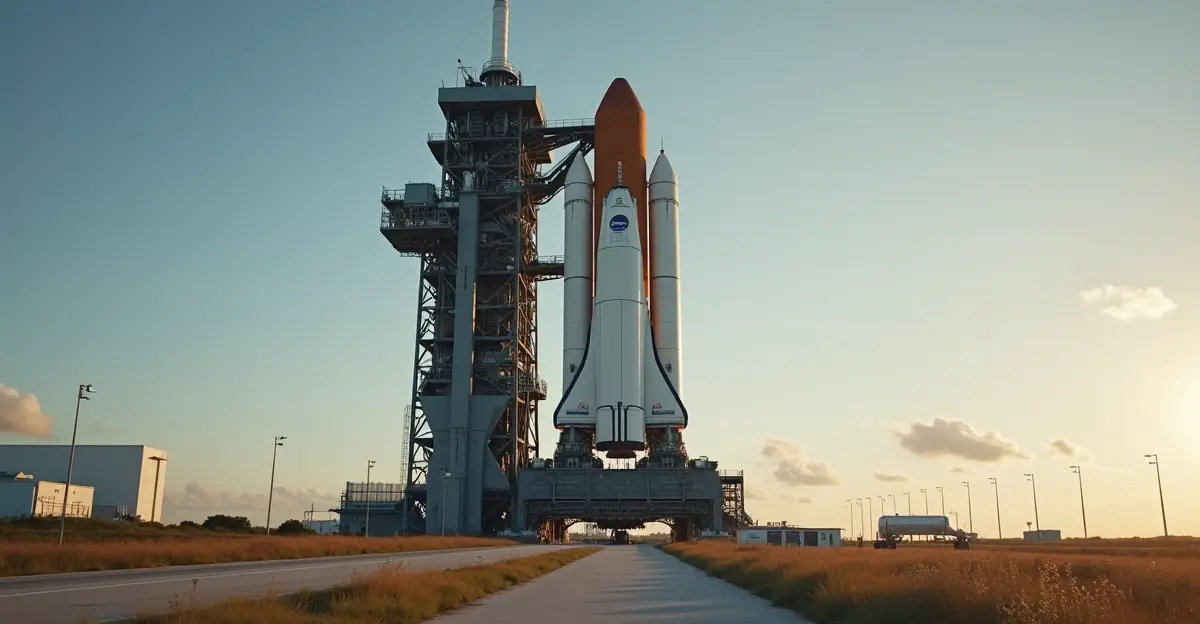
The Artemis II mission utilizes NASA's most powerful rocket ever built, the Space Launch System (SLS), standing 322 feet tall and capable of generating 8.8 million pounds of thrust at liftoff. The Orion spacecraft, named 'Integrity' for this mission, is designed to sustain crew on lunar missions and return them safely to Earth. The spacecraft features advanced life support systems, radiation protection, and emergency survival capabilities that can keep astronauts alive for up to six days in case of emergencies. The mission builds on the success of the uncrewed Artemis I test flight in 2022, which validated many of these systems in deep space conditions.
Launch Preparations and Current Status
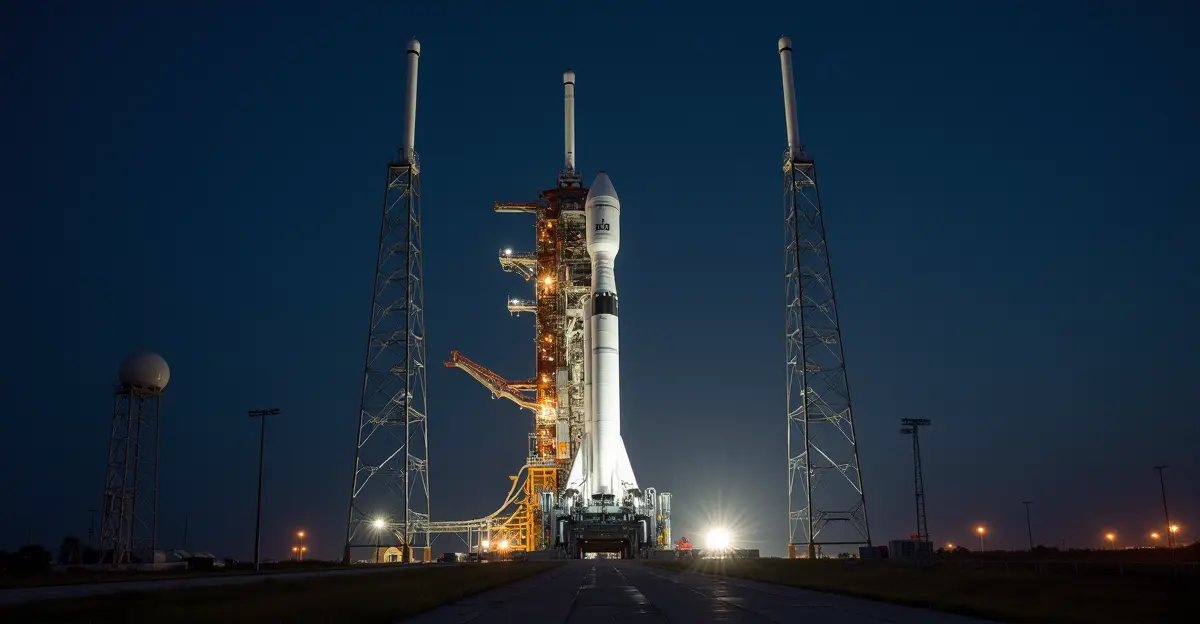
As of late March 2026, the Artemis II countdown has officially begun at Kennedy Space Center. The astronauts are currently in quarantine undergoing final medical checks and following strict health protocols. Launch teams are powering up flight hardware, checking communications systems, and preparing cryogenic systems for fueling with super-cooled liquid hydrogen and oxygen. NASA's first female launch director, Charlie Blackwell-Thompson, who previously led the successful Artemis I mission, is overseeing the launch operations. The Space Launch System rocket development has been a monumental engineering achievement, representing the culmination of years of research and testing.
Scientific Objectives and Mission Goals
Artemis II serves multiple critical objectives beyond simply returning humans to lunar vicinity. The mission will test Orion's systems with human passengers for the first time, verify spacecraft operations in deep space, and practice emergency procedures. Scientific goals include collecting data on radiation exposure during the journey, testing communication systems at lunar distances, and gathering engineering data for future missions. The crew will also conduct Earth observation activities and test new spacesuit technologies. This mission represents a crucial stepping stone toward NASA's goal of establishing a sustained human presence on the Moon, with planned lunar landings beginning with Artemis III in 2028.
Historical Context and Significance
The Artemis II mission marks the first crewed lunar flight since Apollo 17 in 1972, ending a 54-year gap in human lunar exploration. Unlike the Apollo missions that focused primarily on landing astronauts on the Moon, the Artemis program aims to establish sustainable exploration with international partnerships. The mission will break the distance record set by the Apollo program, sending the crew farther from Earth than any humans have ever traveled, surpassing even the Apollo 13 emergency trajectory. This achievement represents not just a technological milestone but also a symbolic return to the kind of ambitious space exploration that international space cooperation makes possible in the 21st century.
Impact and Future Implications
The successful completion of Artemis II will have far-reaching implications for space exploration and scientific discovery. The mission will validate critical systems needed for longer-duration lunar missions and eventual Mars expeditions. It will also demonstrate NASA's capability to conduct complex deep space operations with international partners, including the Canadian Space Agency's contribution of the Canadarm3 robotic system for future missions. The data collected will inform the design of lunar habitats, surface exploration vehicles, and life support systems for extended stays on the Moon. Perhaps most importantly, Artemis II will inspire a new generation of scientists, engineers, and explorers, much as the Apollo program did in the 1960s and 1970s.
Frequently Asked Questions (FAQ)
When is Artemis II launching?
Artemis II is scheduled to launch on April 1, 2026, at 6:24 p.m. EDT from Kennedy Space Center in Florida.
How long will the mission last?
The mission will last approximately 10 days, covering a total distance of 685,000 miles to the Moon and back.
Who are the Artemis II astronauts?
The crew consists of Commander Reid Wiseman, Pilot Victor Glover, Mission Specialist Christina Koch (NASA), and Mission Specialist Jeremy Hansen (Canadian Space Agency).
Will Artemis II land on the Moon?
No, Artemis II is a lunar flyby mission that will orbit the Moon but not land. The first lunar landing of the Artemis program is planned for Artemis III in 2028.
How can I watch the launch?
NASA will provide live coverage on NASA TV, the NASA website, and social media channels. The Kennedy Space Center Visitor Complex also offers viewing packages, though they are currently sold out.
What comes after Artemis II?
Artemis II will be followed by Artemis III, which aims to land astronauts on the lunar South Pole in 2028, and subsequent missions to establish a sustainable lunar exploration program and Gateway lunar outpost.



Follow Discussion