


 Deutsch
 English
 Español
 Français
 Nederlands
 Português


 Share
Share




Mars Habitat Testing Begins
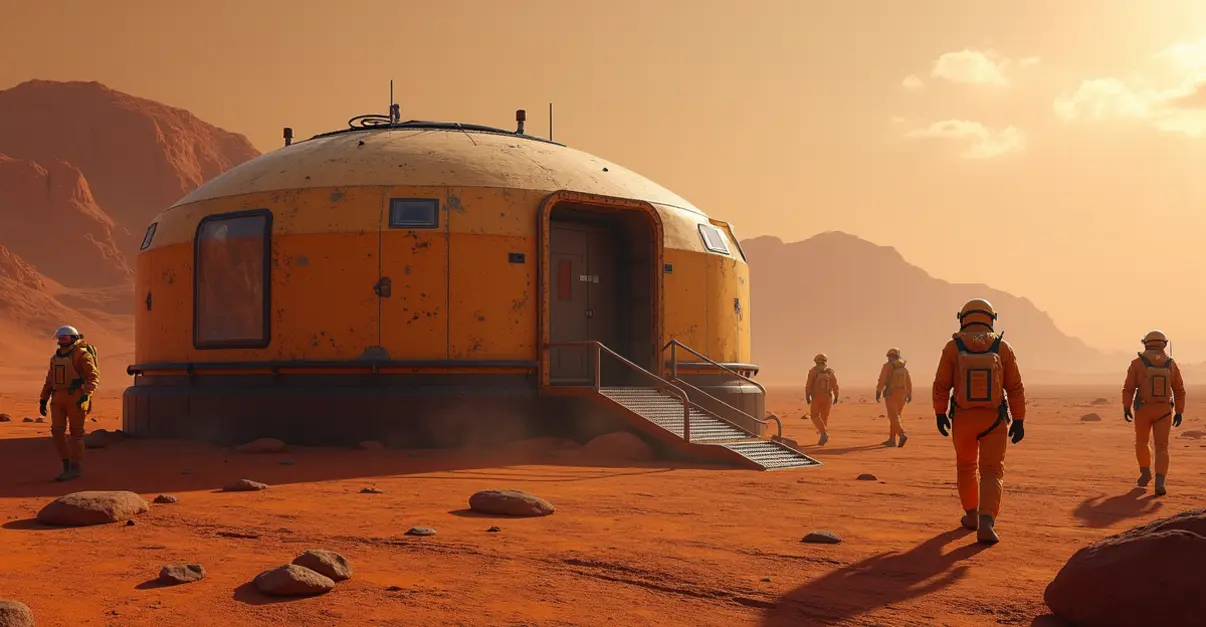
NASA has revealed its latest Mars habitat prototype designed to support future human colonization of the Red Planet. The 3D-printed structure called Mars Dune Alpha measures 1,700 square feet and simulates the challenging conditions astronauts will face during extended stays on Mars.
Inside the Simulated Mars Base
Located at Johnson Space Center in Houston, the habitat features living quarters, workspaces, medical stations, and vertical farms for growing food. During upcoming year-long simulations, volunteer crews will experience resource limitations, equipment failures, and 22-minute communication delays to Earth - mirroring actual Mars conditions.
"This prototype helps us understand how humans can thrive in isolation while performing critical tasks," said project lead Dr. Grace Douglas. Crew activities will include simulated spacewalks using VR technology, robotic operations, and maintaining life support systems.
Analog Testing Advances
The habitat builds on NASA's analog testing experience from programs like Desert RATS in Arizona and NEEMO underwater missions. These earth-based simulations have previously helped refine technologies like the Space Exploration Vehicle and suitport systems that let astronauts quickly exit habitats.
NASA's rapid prototyping approach allows iterative design improvements based on test results. Previous analog missions revealed unexpected insights, like how smaller habitat hatches functioned better than larger designs in simulated emergencies.
Path to Mars Colonization
This testing phase supports NASA's Artemis program which aims to establish sustainable lunar operations as a stepping stone to Mars. Data from these simulations will inform the design of actual Martian habitats, addressing challenges like radiation protection, psychological health during isolation, and in-situ resource utilization.
The agency is currently recruiting volunteers for the next simulated mission through its Crew Health and Performance Exploration Analog (CHAPEA) program. Successful applicants will help pioneer the techniques needed for humanity's first interplanetary colonization effort.



Follow Discussion