


 Deutsch
 English
 Español
 Français
 Nederlands
 Português


 Share
Share




What is the Chimpanzee Civil War in Uganda?
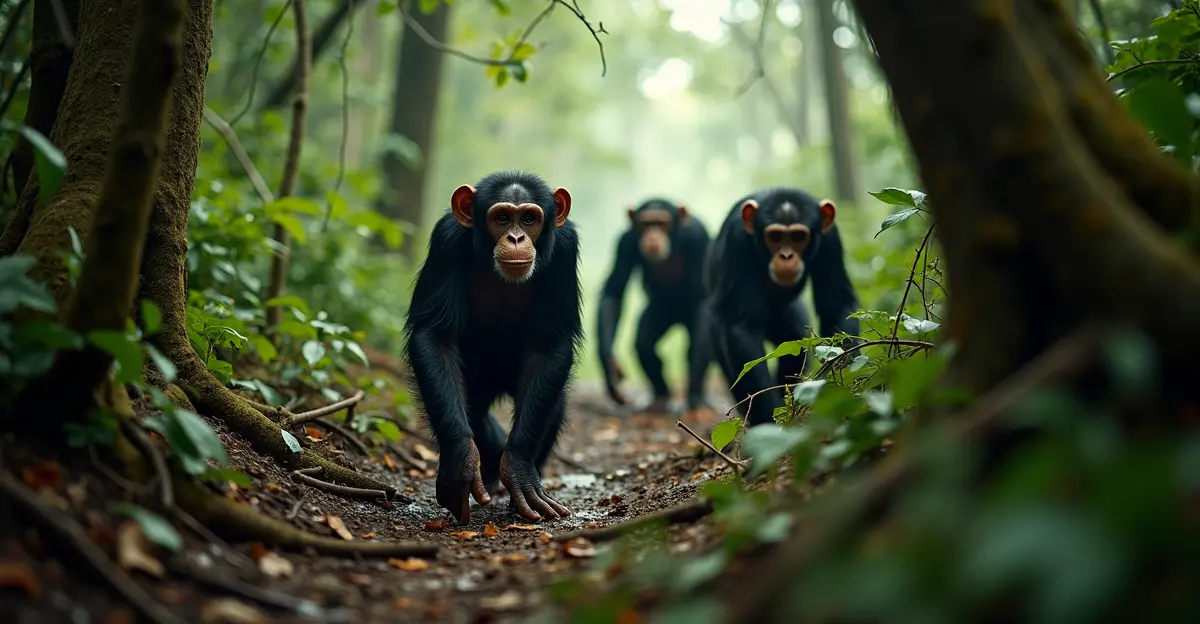
The world's largest known group of wild chimpanzees in Uganda's Kibale National Park has been engaged in a violent 'civil war' for eight years, with researchers documenting 24 killings since 2018 including 17 infants. This unprecedented conflict among the Ngogo chimpanzee community represents a rare primate schism where former allies who lived, groomed, and patrolled together for decades have turned lethal enemies based on new group affiliations.
Background: The Ngogo Chimpanzee Community
The Ngogo chimpanzee community in Uganda's Kibale National Park was once considered the world's largest cohesive wild chimpanzee group, numbering between 150-200 individuals. For over 30 years, researchers from the Ngogo Chimpanzee Project studied these primates, observing their complex social structures, grooming rituals, and cooperative behaviors. The community was divided into two main clusters - Western and Central groups - but maintained peaceful coexistence and regular interaction until 2015.
According to lead researcher Aaron Sandel of the University of Texas, 'These were chimpanzees who held each other's hands. Now they're trying to kill each other.' The sudden shift from cooperation to lethal aggression has stunned primatologists and offers unprecedented insights into primate social dynamics.
Timeline of the Conflict
2014-2015: The Beginning of Division
The first signs of trouble emerged in 2014 with the unexplained deaths of five adult males and one adult female. These key individuals served as social bridges between the Western and Central clusters. Their disappearance weakened social networks and created tension within the community.
In June 2015, researchers observed a pivotal moment. Sandel recalls: 'I can trace it back to one specific day when there was a huge change.' Western chimpansees became visibly nervous when hearing Central group members nearby. 'They started touching each other to reassure themselves, as if they were very nervous,' Sandel noted. Instead of reuniting as usual, the Western group fled and was pursued by Central chimpansees.
2016-2018: Escalation to Violence
By 2016, Western males began conducting territorial patrols specifically targeting Central group members. Initially accompanied by two Central males, these patrols soon became exclusively Western operations. The groups completely separated by 2018, marking the beginning of systematic attacks.
2018-2024: Deadly Conflict
Since 2018, researchers have documented 24 coordinated attacks by the Western group against Central chimpansees, resulting in at least seven adult male deaths and 17 infant killings. The mortality rate for Central chimpansees reached approximately 3,376 per 100,000 individuals annually - more than 30 times higher than typical chimpanzee populations.
Key Factors Behind the Conflict
Researchers have identified several contributing factors to this unprecedented chimpanzee civil war:
- Group Size: The unusually large community of nearly 200 individuals may have strained social bonds and resource competition
- Key Deaths: The loss of adult males in 2014 disrupted social networks that maintained cohesion
- Alpha Male Changes: A shift in dominance hierarchy in 2015 coincided with the initial separation
- Disease Outbreak: A 2017 respiratory epidemic killed 25 chimpansees, including crucial social connectors
- Resource Competition: Increased competition for food and mating opportunities within the large group
As Sandel explains, chimpansees are 'highly territorial' and have 'hostile interactions with chimpansees from other groups.' However, this conflict represents something unprecedented: lethal violence among individuals who were previously part of the same cohesive community.
Scientific Significance and Human Parallels
This chimpanzee civil war offers profound insights into the evolution of human conflict. The study, published in the prestigious journal Science, suggests that when chimpansees - our closest genetic relatives - engage in such violence without human constructs like religion, ethnicity, or political ideology, 'relational dynamics may play a larger causal role in human conflicts than often assumed.'
The research team notes: 'In the case of the Ngogo split, individuals who had lived together for years, eaten together, groomed each other, and patrolled together became targets of lethal attacks because of their new group affiliations.' This mirrors observations by Jane Goodall's Gombe research in the 1970s, where chimpansees similarly split into warring factions.
Anne Pusey, a primatologist who worked with Goodall in Tanzania, observed: 'It struck me how much what they described matches what we observed in Gombe.' Both researchers associated these events with civil war dynamics.
Ongoing Research and Conservation Implications
The conflict continues today, with researchers monitoring both groups to understand long-term consequences. The Ngogo Chimpanzee Project continues its vital work, providing crucial data about primate behavior, social dynamics, and conservation needs.
This research has significant implications for understanding how social networks fracture and how violence emerges in animal societies. It also highlights the importance of maintaining healthy social structures in both primate and human communities to prevent similar conflicts.
Frequently Asked Questions
How many chimpansees have died in the Uganda civil war?
Researchers have documented 24 confirmed killings since 2018, including seven adult males and 17 infants. The actual death toll is likely higher, as many disappearances remain unexplained.
Why are the chimpansees fighting each other?
Multiple factors contribute: large group size straining social bonds, competition for resources and mates, deaths of key social connectors, and changes in dominance hierarchy. Essentially, the community grew too large to maintain cohesion.
How does this compare to Jane Goodall's observations?
This represents only the second documented case of chimpanzee community splitting and civil war. Goodall observed similar events in Tanzania's Gombe National Park in the 1970s, where chimpansees who grew up together systematically killed each other.
What does this tell us about human warfare?
The research suggests that ideological differences aren't necessary for conflict - biological and social factors alone can drive violence. This challenges assumptions about what causes human wars and suggests strengthening social bonds may prevent larger conflicts.
Is this conflict still ongoing?
Yes, researchers continue to observe violence between the Western and Central groups. The conflict began in 2015 and shows no signs of resolution eight years later.



Follow Discussion