


 Deutsch
 English
 Español
 Français
 Nederlands
 Português


 Share
Share




Chimpanzee Group Split Explained: 28 Killed in Rare Ngogo Fission
For the first time in scientific history, researchers have documented the complete and permanent split of a chimpanzee community, resulting in the violent deaths of 28 animals in Uganda's Kibale National Park. The groundbreaking study, published this week in the prestigious journal Science, reveals unprecedented insights into primate social dynamics and the origins of group conflict.
What is Chimpanzee Group Fission?
Chimpanzee group fission refers to the permanent division of a cohesive chimpanzee community into two or more separate groups. This phenomenon is exceptionally rare in wild chimpanzee populations, with the Ngogo event representing only the second clearly documented case in scientific history. Unlike temporary separations or seasonal movements, group fission involves a complete breakdown of social bonds and the establishment of distinct, often hostile, communities.
The Ngogo Chimpanzee Community: World's Largest Group
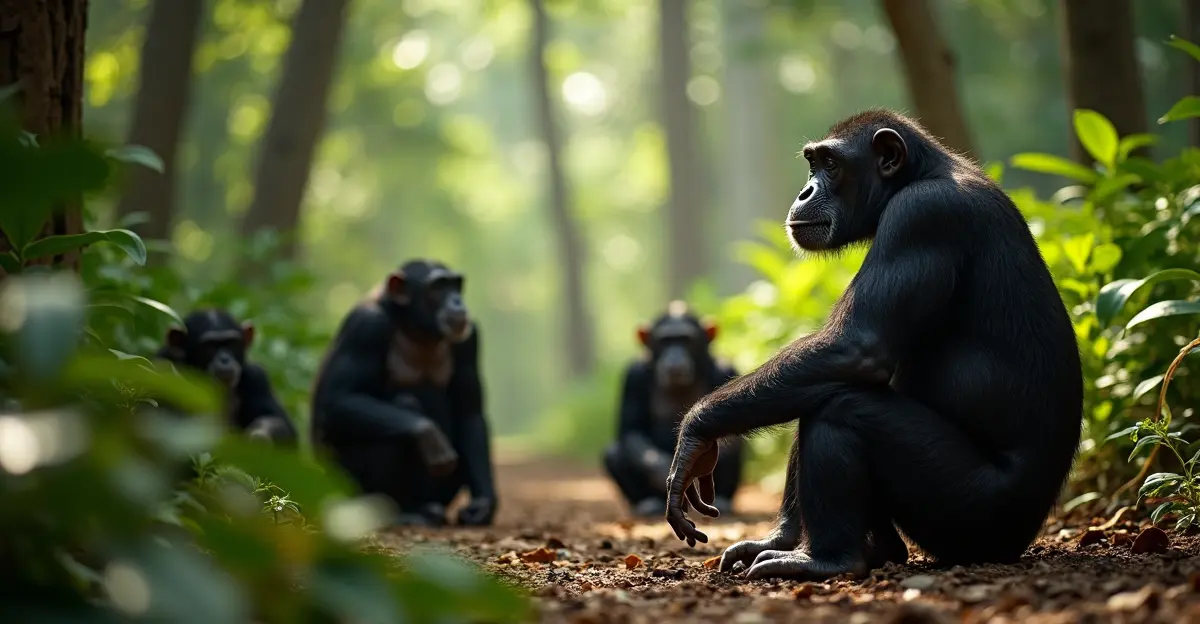
The Ngogo chimpanzee community in Uganda's Kibale National Park represents the largest known chimpanzee group in the world, with approximately 200 members at its peak. For comparison, typical chimpanzee communities average around 50 individuals. Researchers from the University of Texas at Austin and Arizona State University have been studying this group for over 20 years, providing unprecedented longitudinal data on chimpanzee social behavior.
"It's difficult to comprehend that they were friends yesterday and enemies today," said lead researcher and primatologist John Mitani. "Males in both groups grew up together, worked cooperatively, and helped each other. They benefited from these relationships. So why did they split apart?"
Timeline of the Violent Split
Phase 1: Initial Polarization (2015)
The first signs of division appeared in 2015 when the Ngogo community received a new alpha male. Around this time, members of two sub-groups began avoiding each other, marking the beginning of what researchers call the "polarization phase." This initial separation was subtle but marked a significant shift in social dynamics that had remained stable for decades.
Phase 2: Avoidance and Aggression (2016-2017)
Between 2016 and 2017, the situation escalated dramatically. In 2017, 25 chimpanzees died, primarily young animals, and months later, the new alpha male was attacked. Researchers observed increasing aggression between what would become the "Western" and "Central" groups. This period of avoidance and sporadic violence set the stage for permanent separation.
Phase 3: Permanent Split and Violence (2018-2024)
By 2018, researchers confirmed the split was permanent. The Western group, consisting of 83 chimpanzees, and the Central group, with 107 members, became distinct communities. What followed was years of coordinated attacks, primarily by the Western group against their former companions. "Biting, hitting victims with their hands, dragging them, and kicking," described primatologist and lead investigator Aaron Sandel.
Causes of the Chimpanzee Group Split
The study identifies multiple contributing factors to this unprecedented division:
- Group Size: The Ngogo community's unusually large size (200 members) likely created competition for food and mating opportunities among male chimpanzees.
- Demographic Changes: The death of seven group members in 2014, probably from disease, disrupted established social relationships and power structures.
- Leadership Transition: The arrival of a new alpha male in 2015 altered group dynamics and social hierarchies.
- Social Network Fragmentation: The loss of key males who served as social bridges between subgroups removed critical connections that maintained community cohesion.
Violence and Casualties: The Human Parallels
The post-split violence resulted in at least 28 confirmed deaths, though researchers believe the actual death toll is higher due to unexplained disappearances. The attacks followed a disturbing pattern:
| Attack Type | Number of Victims | Time Period |
|---|---|---|
| Adult Male Attacks | 7 | 2018-2024 |
| Infant Attacks | 17 | 2018-2024 |
| Total Confirmed Deaths | 28 | 2018-2024 |
This violence challenges conventional theories about primate conflict behavior, showing that even without cultural markers like ethnicity or ideology, basic social dynamics can trigger lethal conflict. The research offers profound insights into human warfare and social fragmentation, suggesting that polarization can emerge from relational changes alone.
Scientific Significance and Implications
This study represents a landmark in primatology for several reasons:
- Rarity: Group fission events occur only about once every 500 years in chimpanzee populations, making this observation scientifically invaluable.
- Documentation Quality: Unlike the only other documented case in Tanzania during the 1970s (which may have been influenced by researcher feeding), the Ngogo split occurred under natural conditions.
- Human Parallels: The research challenges theories that human warfare requires cultural differences, showing that changing social relationships alone can drive violent divisions.
- Conservation Implications: Understanding group dynamics is crucial for wildlife conservation strategies and managing chimpanzee populations in protected areas.
FAQ: Chimpanzee Group Split Questions Answered
How rare is chimpanzee group fission?
Extremely rare. Based on genetic evidence, such events occur only about once every 500 years in chimpanzee populations. The Ngogo split represents only the second clearly documented case in scientific history.
Why did the Western group attack the Central group?
Researchers believe the smaller but more cohesive Western group used targeted violence to push the larger Central group out of shared territory, reversing their numeric disadvantage through strategic aggression.
What does this tell us about human conflict?
The study suggests that basic social dynamics, rather than cultural or ideological differences alone, can drive group polarization and violence. This has implications for understanding human societal conflicts and peacebuilding strategies.
How were the chimpanzees studied?
Researchers used 20+ years of observational data, including behavioral recordings, demographic tracking, and genetic analysis. The Ngogo chimpanzees have been featured in Netflix's documentary series "Chimp Empire."
What happens to the groups now?
As of 2026, the Western and Central groups remain separate communities with ongoing territorial disputes. Researchers continue to monitor their interactions and social dynamics.




Follow Discussion