


 Deutsch
 English
 Español
 Français
 Nederlands
 Português


 Share





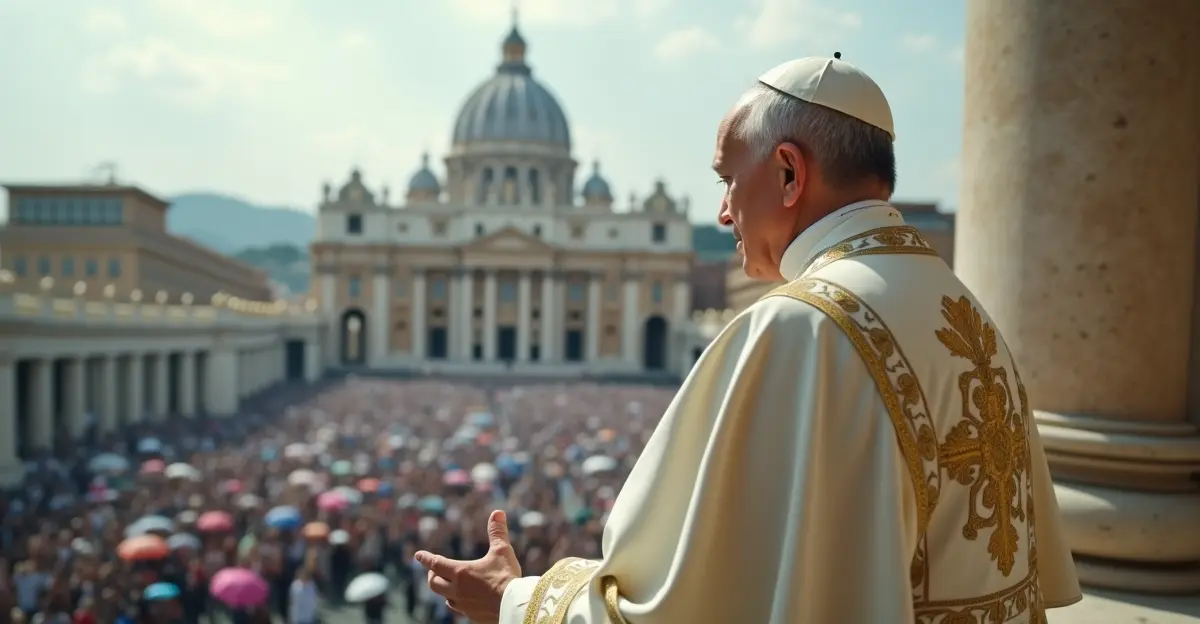
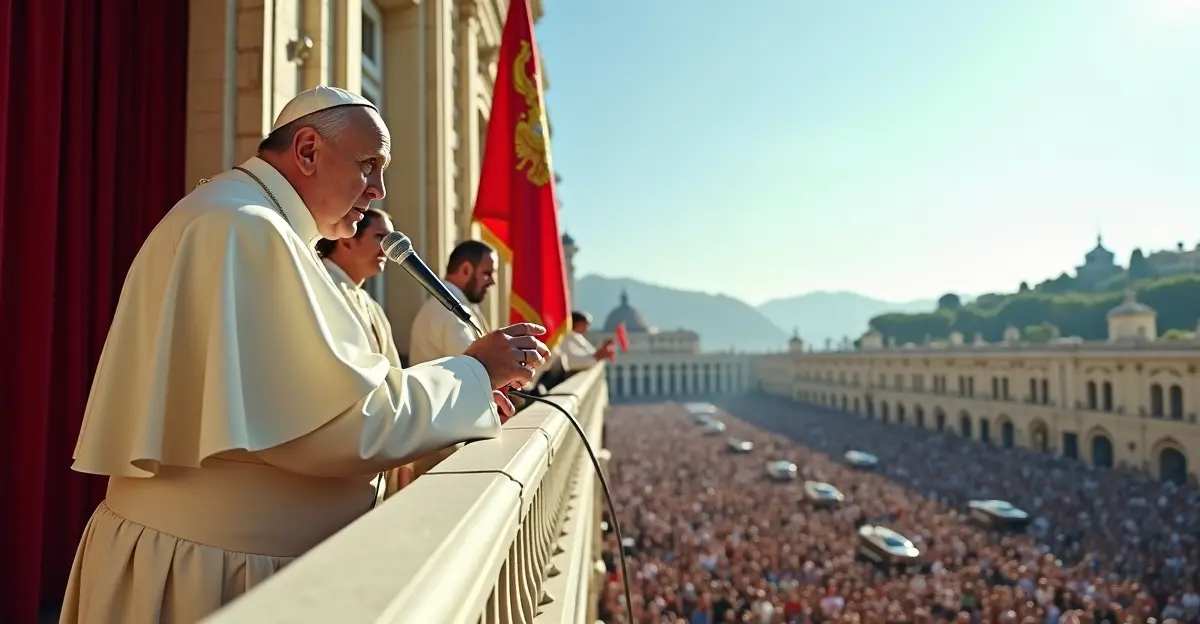
Pope Leo XIV issued a sharp rebuke to President Javier Milei’s austerity measures during a visit to Buenos Aires, declaring that “the economy must be at the service of the people, rather than people being at the service of the economy.” The BBC described the remarks as a veiled rebuke of Milei, while the Guardian reported they drew rapturous applause during the second leg of the pontiff’s Latin America tour.
The intervention places the head of the Catholic Church directly into Argentina’s intensifying debate over social protection policies, spending cuts and deregulation, at a moment when Milei’s fiscal consolidation remains the centerpiece of the country’s economic policy.
Why the Pope’s Buenos Aires Speech Matters
Pope Leo XIV, the first North American pontiff, chose his papal name to echo Leo XIII’s 19th-century concern for workers and fairness amid industrial upheaval. That framing makes his Argentine remarks a natural extension of Catholic social teaching, which insists that economic systems should prioritize human dignity over profit or fiscal targets.
The pope’s Latin America tour has already drawn international attention, but Buenos Aires carried particular symbolic weight: Milei, a libertarian economist, has made radical budget cuts the defining feature of his presidency since taking office in December 2023.
What Did Pope Leo XIV Say in Buenos Aires?
Speaking before an audience in the Argentine capital, the pontiff did not mention Milei by name. However, the context was unmistakable. “The economy must be at the service of the people, rather than people being at the service of the economy,” he said, according to reports from the BBC.
The Guardian noted that the line drew rapturous applause, signaling broad resonance among Argentines who have felt the effects of public spending reductions.
Milei’s Austerity Program: Key Measures
- Sharp cuts to public sector subsidies and ministries
- Devaluation of the peso and removal of price controls
- Freezing of infrastructure projects and social transfers
- Labor and pension reforms aimed at lowering fiscal deficits
Argentina’s Economic Reality: Stabilization vs. Social Cost
Milei’s supporters point to measurable gains. According to Argentina’s National Institute of Statistics and Censuses (INDEC), inflation has fallen sharply from triple-digit levels, the government recorded its first fiscal surplus since 2008, and poverty declined to an estimated 31.6% in early 2025. Yet those same statistics reveal a complex picture: wages have only partially recovered, living and healthcare costs continue to rise, and reduced consumption has strained households.
This tension between macroeconomic stabilization and human cost is exactly where the papal critique lands. The pontiff’s message echoes longstanding Argentina inflation crisis debates over whether fiscal discipline alone can deliver shared prosperity.
A Papal Intervention in Argentina’s Economic Debate
By speaking in Buenos Aires, Pope Leo XIV has elevated the moral dimension of Argentina’s policy choices ahead of future electoral cycles. The intervention also amplifies international scrutiny of the human costs of fiscal consolidation, as the Guardian and BBC both framed the speech as a challenge to Milei spending cuts.
Observers note that the pope’s comments may energize opposition groups and social movements that have long argued austerity disproportionately harms pensioners, workers and the poor. At the same time, Milei’s administration has shown little willingness to soften its program, making the papal visit a high-profile counterweight rather than a direct negotiation.
FAQ: Pope Leo XIV, Milei and Argentina’s Economy
What exactly did Pope Leo XIV say about Milei’s austerity?
He declared that “the economy must be at the service of the people, rather than people being at the service of the economy,” without naming Milei directly.
Why did the pope’s remarks draw rapturous applause?
Many Argentines affected by spending cuts welcomed a high-profile moral voice questioning the human impact of fiscal austerity.
Is Argentina’s economy improving under Milei?
Inflation has fallen and the government achieved a fiscal surplus, but poverty remains significant at about 31.6% in early 2025 and living costs continue to strain households.
Did Pope Leo XIV meet with President Milei?
Reports from the BBC and Guardian did not confirm a private meeting; the pope’s remarks were delivered publicly during the second leg of his Latin America tour.
Conclusion: Economy as a Moral Question
Pope Leo XIV’s Buenos Aires speech reframes Argentina’s austerity debate not merely as a technical matter of budgets and inflation, but as a moral test of whether economic policy serves human beings. As Milei presses forward with fiscal consolidation, the pontiff’s words are likely to resonate far beyond the applause in the Argentine capital.
Follow Discussion