


 Deutsch
 English
 Español
 Français
 Nederlands
 Português


 Share





Scientists worldwide are monitoring an extraordinary event after the polar vortex collapsed in late November 2026 — the earliest such breakdown ever observed above the Arctic. The rare disruption in the stratosphere could shape winter weather across northern Europe and the United States in the coming weeks, but forecasters say uncertainty is now unusually high.
What is the polar vortex?
The polar vortex is a vast, icy, invisible whirlpool of air several thousand kilometres wide that forms each winter above the Arctic. It sits in the stratosphere, roughly 15 to 50 kilometres above the ground, and occasionally splits or collapses. According to the polar vortex entry on Wikipedia, a sudden stratospheric warming can weaken the vortex and have significant impacts on surface weather. Previous breakdowns have been linked to cold outbreaks, including the 2018 European cold snap when much of the continent froze in late winter.
Strong vs. collapsed polar vortex
- Strong vortex: circular, well-contained Arctic air; mild, westerly-dominated weather in mid-latitudes.
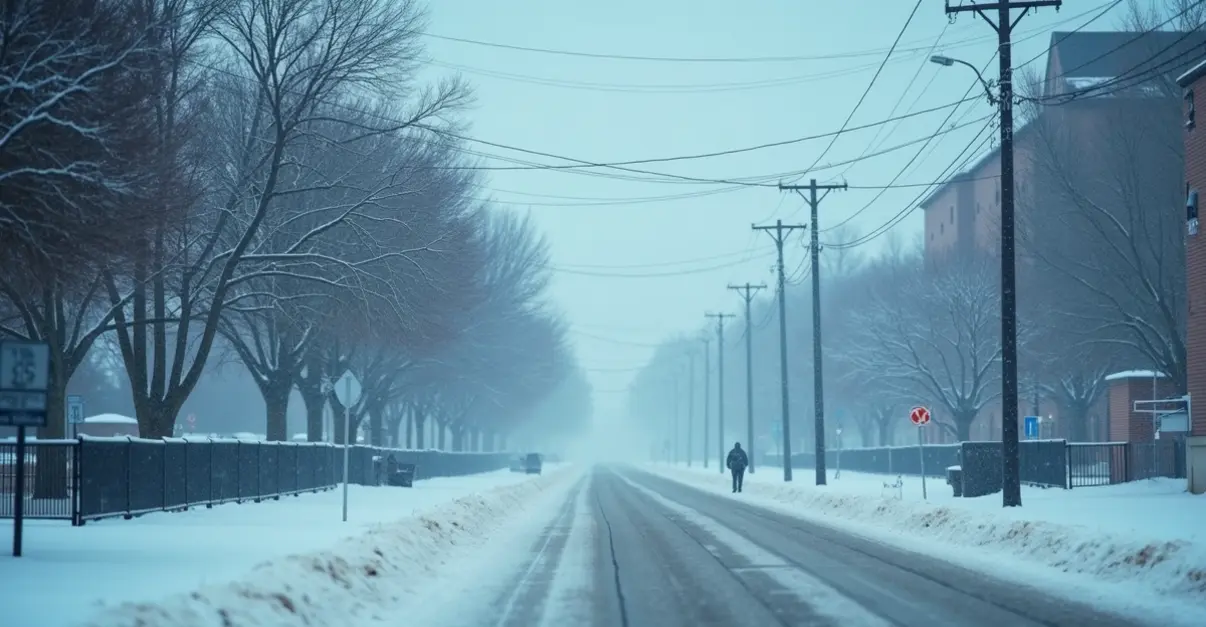
- Collapsed vortex: jet stream becomes wavier; cold Arctic air can spill south, and warm air can push north.
Why scientists call this collapse unique
Meteorologists and climate researchers say the timing is remarkable. Climate researcher Michiel Baatsen of Utrecht University pointed to recent history: “In 2018, for example, we could still skate at the end of February.” Last winter, the vortex broke down in early December, and Baatsen recalls: “That gave us a lot of snow and cold in early January.”
The trigger remains a mystery
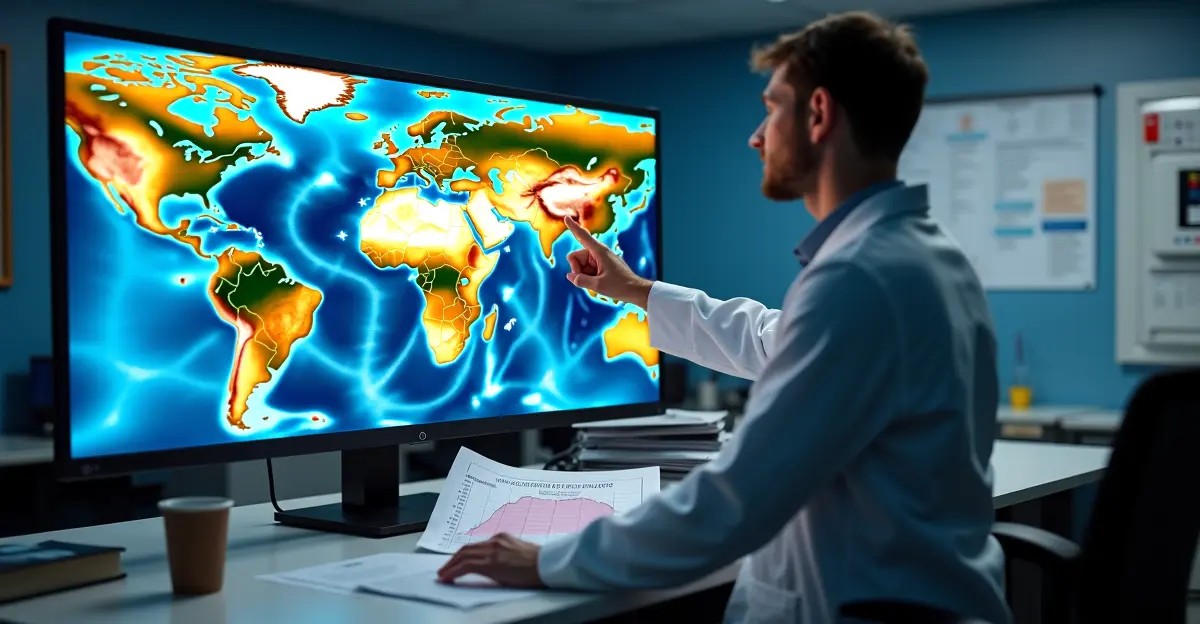
Yorick de Wijs, a meteorologist at the Royal Netherlands Meteorological Institute (KNMI), said researchers cannot yet explain why the vortex collapsed so early. “It is very interesting that we cannot yet put our finger on what causes this,” he said. Current data show no clear link to climate change or El Niño, and De Wijs described the pattern as chaotic but recurring: “The trigger we simply do not know.”
How a polar vortex collapse affects winter weather
The polar vortex sits in the stratosphere, above the troposphere — the roughly 10-kilometre layer where humans live and weather forms. “Spectacular things happen there, but that does not directly influence the weather we experience,” Baatsen said. However, the layers are not fully isolated. A few weeks after a collapse, the boundary between warm and cold air becomes more erratic, allowing warm air to push far north and cold air to plunge far south.
Why forecasts are suddenly more uncertain
The exact outcome depends on small details. De Wijs explained that if a high-pressure area settles southeast of the Netherlands, winds come from the south and temperatures may not drop. For cold air to arrive, a high-pressure system must linger over Northern Europe. “The only certainty we have is that our weather forecasts will be quite uncertain in the coming time,” Baatsen said.
What it means for Europe and the United States
The disruption could hit North America or Scandinavia while leaving the Netherlands untouched — or the reverse. Meteorologists say European winter weather forecasts will need frequent updating as models shift. De Wijs sees possible changes in high-pressure areas in the coming weeks, but wind direction and temperature remain highly uncertain. “You know that interesting things can happen that are different from usual,” he said. “That is enormously fun for a meteorologist.”
Meanwhile, the vortex is already recovering above the Arctic. Baatsen said it could break apart again later this winter: “We sometimes have winters where this happens more often.” That raises the possibility of further Arctic air outbreaks in January or February.
Frequently asked questions
What is a polar vortex collapse?
A polar vortex collapse occurs when the large area of cold, rotating air in the stratosphere above the Arctic weakens, splits, or breaks down, often due to a sudden stratospheric warming. This can disrupt the jet stream and influence surface weather weeks later.
Will this polar vortex collapse bring cold weather to Europe?
It is too early to say. A collapse increases the chance of cold air outbreaks, but the outcome depends on where high-pressure systems settle. Northern Europe or North America could be affected, but not necessarily the Netherlands.
Is climate change causing the early collapse?
Scientists found no clear link to climate change or El Niño in the available data. They describe the pattern as chaotic but recurring, and the exact trigger is still unknown.
How long after a collapse do we feel the effects?
Effects typically appear a few weeks after the stratospheric breakdown, as the disrupted circulation gradually influences the troposphere below.
Follow Discussion