


 Deutsch
 English
 Español
 Français
 Nederlands
 Português


 Share
Share




Starmer Resigns, Burnham Emerges as Frontrunner
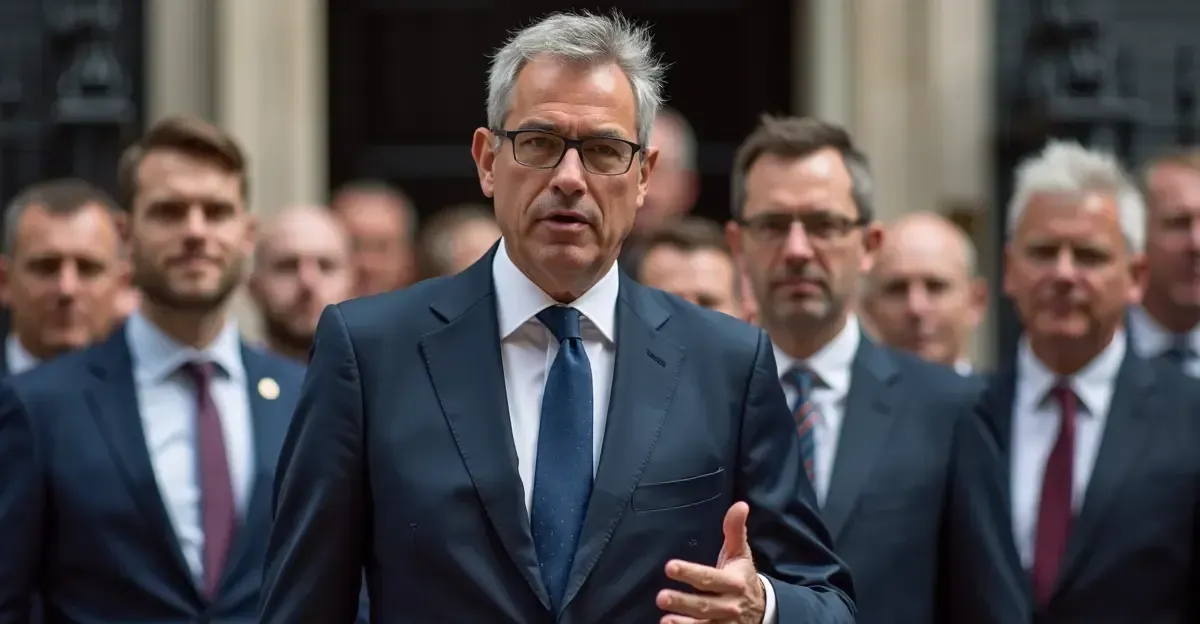
UK Prime Minister Keir Starmer announced his resignation on June 22, 2026, less than two years after leading Labour to a landslide general election victory. His departure opens the door for Andy Burnham, the charismatic former Mayor of Greater Manchester, to become the country's next prime minister. The 2026 UK leadership crisis has been building for months, with Starmer's approval ratings plummeting to -57% and Labour suffering heavy losses in local elections.
Who is Andy Burnham?
Andrew Murray Burnham, born January 7, 1970, in Aintree, Lancashire, is a Labour politician who served as Mayor of Greater Manchester from 2017 to 2026. He studied English at Fitzwilliam College, Cambridge, and joined the Labour Party at age 15. His early career included working as a researcher for Tessa Jowell and as a special adviser to Culture Secretary Chris Smith.
Burnham was first elected as MP for Leigh in 2001 and held several cabinet positions under Tony Blair and Gordon Brown, including Health Secretary (2009-2010), where he responded to the swine flu pandemic and launched the Stafford Hospital inquiry. After Labour's 2010 defeat, he ran for party leader twice, finishing fourth in 2010 and second behind Jeremy Corbyn in 2015.
King of the North
As Mayor of Greater Manchester, Burnham earned the nickname 'King of the North' for his successful campaign to secure furlough funding for northern communities during the COVID-19 pandemic. He implemented the Bee Network, bringing buses and trams under local public control in a London-style integrated transport system. He was re-elected three times, maintaining high approval ratings throughout his nine-year tenure.
His popularity and perceived electability made him the natural successor when Starmer's leadership began to falter. In August 2025, polls identified Burnham as the most popular senior Labour figure.
How Burnham Replaced Starmer
The Labour Party leadership election 2026 was triggered by a cascade of events. Labour lost control of 35 councils and nearly 1,500 councillors in the May 2026 local elections, along with ending 100 years of Labour control in Wales. Over 90 Labour MPs urged Starmer to resign.
Burnham returned to Parliament by winning the Makerfield by-election on June 18, 2026, with 54.8% of the vote — soundly defeating Reform UK's candidate, who secured 34%. In his victory speech, Burnham called it Labour's 'final chance to change.' Four days later, Starmer announced his resignation, saying he would remain until a successor is chosen. Burnham immediately declared his candidacy.
Wes Streeting, seen as Burnham's most likely competitor, announced he would not challenge and instead endorsed Burnham. With Streeting's support, Burnham is expected to win the leadership unopposed, potentially becoming prime minister by mid-July 2026.
Burnham's Policy Platform
Burnham has outlined a broad policy agenda that blends devolution, public ownership, and fiscal responsibility. His approach, sometimes called 'Manchesterism,' emphasizes place-based economic development and greater public control of essential services.
Economic Policies
- Raise the personal income tax allowance
- Review employers' National Insurance increases
- Cut business rates for pubs by 20%
- Reform council tax, possibly introducing a land value tax
- Pledge not to raise income tax, VAT, or employee NI
Constitutional Reform
- Introduce proportional representation for Westminster elections
- Overhaul the House of Lords into a 'Senate of Regions and Nations'
- Loosen the whipping system for MPs
- Rule out a snap general election
Foreign Policy
- Support eventual rejoining of the EU, but not immediately
- Increase defence spending, financed through borrowing
- Endorse Starmer's approach to US relations
Burnham has also pledged to review inheritance tax changes affecting farmers and to maintain Starmer's stance on Ukraine and European security. EU Commission President Ursula von der Leyen praised Starmer's contributions in those areas.
The Challenge Ahead
Burnham will become the UK's seventh prime minister in 10 years, reflecting the political instability that has gripped Britain since the 2016 Brexit referendum. He faces immense challenges: restoring public trust in politics, which polling shows is at an all-time low; managing strained public finances; and stopping the electoral rise of Nigel Farage's Reform UK party.
In a statement, Burnham called for a 'positive process of renewal.' 'We have to show that politics can be a force for good,' he said. 'The British people deserve a government that listens, that delivers, and that brings the country together.'
Nigel Farage, whose Reform UK party won 24 of 25 Wigan council seats in local elections, immediately called for a general election, arguing that a new Labour leader without a popular mandate should not govern. However, Burnham has ruled out an early election, citing the need for stability.
Market reaction was muted, with the pound dipping 0.19% against the dollar following Starmer's resignation announcement. Investors are watching closely to see whether Burnham can restore economic confidence and avoid the policy U-turns that plagued Starmer's tenure.
The UK prime minister succession 2026 process is expected to conclude by September at the latest, but if Burnham runs unopposed, he could be in Downing Street within weeks.
FAQ
Who is Andy Burnham?
Andy Burnham is a British Labour politician who served as Mayor of Greater Manchester from 2017 to 2026 and is the frontrunner to become the next UK prime minister after Keir Starmer's resignation.
Why did Keir Starmer resign?
Starmer resigned after his approval ratings fell to -57%, Labour suffered massive losses in local elections (losing 35 councils and nearly 1,500 councillors), and over 90 Labour MPs called for his departure.
When will the new UK prime minister be chosen?
Nominations open July 9, 2026, and a new leader is expected by mid-July if the contest is uncontested, or by early September if a full leadership election is held.
What are Andy Burnham's main policies?
Burnham supports raising the personal tax allowance, introducing proportional representation, reforming the House of Lords, increasing defence spending, and eventually rejoining the EU. He has ruled out a snap general election.
How did Burnham return to Parliament?
Burnham won the Makerfield by-election on June 18, 2026, with 54.8% of the vote, after incumbent MP Josh Simons stood down to allow Burnham to seek the party leadership.
Follow Discussion