


 Deutsch
 English
 Español
 Français
 Nederlands
 Português


 Share
Share




UK PM Keir Starmer Delivers Make-or-Break Speech After Devastating Local Election Defeat
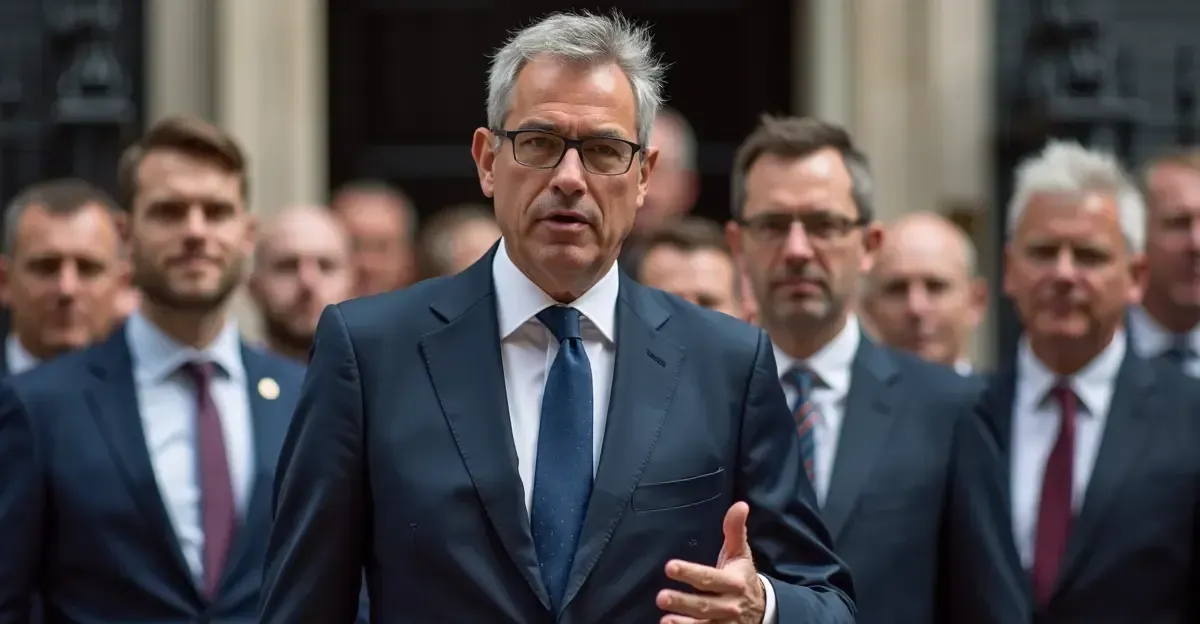
British Prime Minister Keir Starmer has delivered a high-stakes speech vowing to prove his critics wrong after Labour suffered a catastrophic defeat in the 2026 local elections. In an address at the Coin Street community centre in London on May 11, Starmer took full responsibility for the electoral debacle, in which Labour lost nearly 1,500 council seats in England and control of the Welsh Parliament, while Nigel Farage's Reform UK surged to hundreds of new seats. "I will prove my critics wrong," Starmer said, appearing in an open-collar shirt without a tie, receiving sustained applause from party loyalists. The speech was widely billed by British media as "the speech of his life" as the prime minister fights to salvage his premiership.
Starmer acknowledged the pain of the defeat, stating: "That hurt and it should hurt." He accepted responsibility not only for the election result but also for the task of rebuilding the party in the coming months and years. The address aimed to reassure voters and quell growing unrest within Labour, where at least 48 MPs have publicly called for his resignation. The UK local elections 2026 results have sent shockwaves through the political establishment, with Reform UK gaining hundreds of seats in traditional Labour strongholds across northern England and parts of London.
Context: Labour's Historic Local Election Rout
The 2026 local elections, held on May 7, were widely seen as a midterm verdict on Starmer's government since Labour's landslide victory in the 2024 general election. With approximately a quarter of votes counted, Reform UK secured hundreds of council seats in working-class areas that had been solid Labour territory for generations. The Conservative Party also lost ground, while the Liberal Democrats and Green Party made gains. Analysts describe the results as a historic fragmentation of British politics, moving away from the traditional two-party system toward a multi-party landscape.
Voter dissatisfaction has been driven by rising living costs, strained public services, and perceptions of policy inconsistency. Starmer's net approval rating has fallen to an average of -46%, with an Ipsos poll in November 2025 ranking him as the least popular prime minister since records began in 1977. The Labour Party internal divisions have become increasingly public, with backbenchers like Catherine West initially threatening a leadership challenge before stepping back, though she still called for Starmer to resign as prime minister.
Key Announcements in Starmer's Speech
New Policy Directions
Starmer outlined three major policy initiatives aimed at restoring public trust. First, he announced legislation to fully nationalise British Steel, arguing that state ownership was necessary to protect jobs and prevent economic damage around the Scunthorpe plant. Second, he pledged to reset relations with the European Union, stating: "The previous government was characterised by breaking the relationship with Europe. This Labour government will be characterised by restoring it." He proposed making it easier for young Britons to live, work, and study in Europe again. Third, he promised a youth experience scheme to foster international opportunities.
However, critics noted that these proposals were not new. NOS correspondent Arjen van der Horst commented: "With three concrete proposals, he is trying to regain voter confidence. But honesty compels me to say that the three proposals mentioned (nationalisation of the steel industry, strengthening ties with the EU, a youth programme) were old plans that Labour had been working on for some time."
Defence of His Record
Starmer admitted his government had made mistakes but insisted that the larger political choices were correct. He pointed to the government's stance on the Middle East war and investments in public services. He framed himself as a defender of working Britons, speaking about families working harder than ever but struggling to make ends meet, rising prices, and the need for better public services. He also highlighted the impact of the Iran war on British households: "People see images of falling bombs, then go to the petrol station and see prices rising because of wars that Britain is not part of."
Leadership Challenge and Internal Party Unrest
The speech came amid mounting speculation about Starmer's future. At least 48 Labour MPs have publicly called for his resignation, with the Blue Labour faction demanding a departure timetable. Former minister Catherine West initially announced a potential leadership challenge but later stepped back, though she described the speech as "too little, too late."
Starmer made clear he has no intention of stepping down. He warned that removing him would plunge the country into chaos and that a Labour government would "never be forgiven" for walking away from its responsibilities at this critical juncture. He also took aim at Nigel Farage, calling him a "fraud" and an "opportunist," and warned that if Labour fails, the country could head down a "very dark path" under Reform UK. The Reform UK electoral surge 2026 represents a direct threat to Labour's traditional voter base.
Impact and Implications for UK Politics
The 2026 local elections and Starmer's response have significant implications for British politics. The results confirm a deepening fragmentation of the electorate, with Reform UK emerging as a major force on the right, while Labour struggles to hold its coalition of voters. The Conservative Party faces its own existential crisis, having lost ground to both Reform and the Liberal Democrats.
Starmer's immediate survival appears assured, as no formal leadership challenge has been launched, and key figures like Deputy Prime Minister David Lammy have urged against changing "the pilot during the flight." However, the pressure on Starmer is unlikely to abate. The CWU trade union voted to maintain its affiliation with Labour despite criticizing government policies, while potential successors like Andy Burnham, Wes Streeting, and Angela Rayner are positioning themselves for a future leadership contest.
The coming months will be critical for Starmer. He must deliver tangible improvements in public services and economic conditions to rebuild trust. His pledge to reset EU relations and nationalise British Steel will face parliamentary scrutiny and implementation challenges. If the polls do not improve, the calls for his resignation will likely intensify.
Frequently Asked Questions
What did Keir Starmer say in his speech after the local election defeat?
Starmer took full responsibility for the defeat, vowed to prove critics wrong, and announced plans to nationalise British Steel, reset EU relations, and create a youth mobility scheme. He warned that failure could lead to a Reform UK government under Nigel Farage.
How many Labour MPs are calling for Starmer to resign?
At least 48 Labour MPs have publicly called for his resignation, with more than 40 demanding an immediate departure or a clear timetable. The number has grown steadily since the election results were announced.
What were the results of the 2026 UK local elections?
Labour lost nearly 1,500 council seats in England and control of the Welsh Parliament. Reform UK gained hundreds of seats, particularly in northern England. The Conservatives also lost seats, while the Liberal Democrats and Greens made gains.
Is Keir Starmer going to resign?
Starmer has repeatedly stated he will not resign, saying he was elected to meet challenges and will not plunge the country into chaos. No formal leadership challenge has been launched, though internal pressure continues to build.
What is Reform UK and why did it surge in the 2026 elections?
Reform UK is a right-wing populist party led by Nigel Farage, focused on immigration control, economic frustration, and anti-establishment messaging. It surged by capitalising on voter dissatisfaction with Labour's performance on the economy, public services, and immigration.
Sources
This article is based on reporting from NOS, The Guardian, The New York Times, Euronews, The Independent, and Modern Diplomacy. Additional context from Wikipedia.

Follow Discussion