


 Deutsch
 English
 Español
 Français
 Nederlands
 Português


 Share
Share




What is the Yoon Suk-yeol Appeal Case?
Former South Korean President Yoon Suk-yeol has officially appealed his life sentence for orchestrating a 2024 coup attempt, marking a critical juncture in one of the nation's most significant political trials. The 65-year-old conservative leader, who was convicted on February 19, 2026, for leading an insurrection during his presidency, filed the appeal through his legal team on February 24, 2026, challenging what his attorneys call 'legal errors' in the Seoul Central District Court's verdict. This development comes just days after Yoon became the first South Korean president to receive a life sentence for attempting to undermine the country's democratic constitution through martial law declaration.
Background: The 2024 Martial Law Crisis
The case stems from Yoon's controversial declaration of martial law on December 3-4, 2024, which triggered South Korea's most severe political crisis in decades. The former president accused the opposition Democratic Party of 'anti-state activities' and suspended the National Assembly, imposing media restrictions and ordering arrests of political opponents. This move was widely viewed as an attempted self-coup to rule by decree, similar to historical events during the Chun Doo-hwan military dictatorship era.
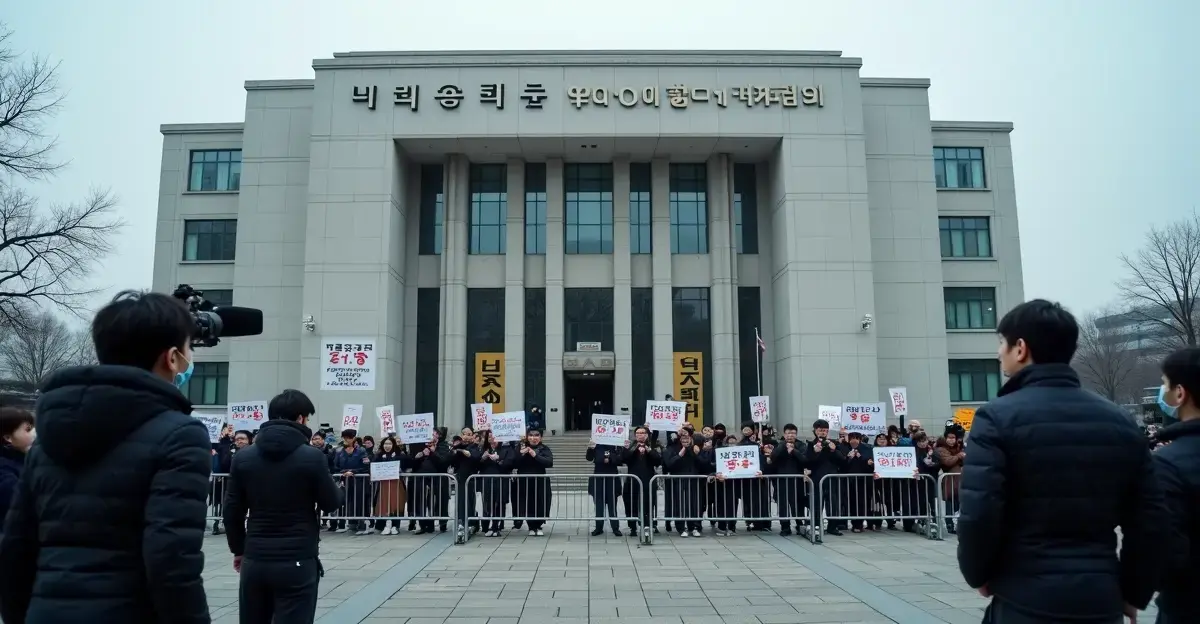
Within hours of the declaration, 190 legislators defied military blockades and unanimously voted to lift martial law at 01:02 on December 4, forcing Yoon to rescind the declaration by 04:30. The crisis led to widespread protests, resignations of key officials including Defense Minister Kim Yong-hyun, and impeachment proceedings against Yoon. He was eventually impeached by the National Assembly on December 14, 2024, arrested on January 15, 2025, and ultimately removed from office by the Constitutional Court on April 4, 2025.
Grounds for Appeal: Legal Arguments and Defense Strategy
Alleged Judicial Errors
Yoon's legal team has identified several alleged errors in the trial court's decision. According to their statement, 'We believe we have the responsibility to clearly explain the problems with this ruling, not only in the judicial records but also for the judgment of history in the future.' The defense argues that the court misinterpreted constitutional provisions regarding presidential emergency powers and failed to properly consider the national security context of December 2024.
Excessive Charges and Sentencing
The appeal contends that the insurrection charges against Yoon were 'excessive' and disproportionate to his actions. While the court found Yoon guilty of leading a rebellion and abusing his authority, his lawyers maintain that his six-hour martial law declaration was 'solely for the sake of the nation' and represented a legitimate exercise of presidential powers during a perceived crisis. The defense also challenges the court's finding that Yoon orchestrated a rebellion by mobilizing troops and police in an unlawful bid to seize the legislature.
Timeline of Legal Proceedings
- December 3-4, 2024: Yoon declares and lifts martial law
- December 14, 2024: National Assembly impeaches Yoon
- January 15, 2025: Yoon becomes first sitting president arrested
- April 4, 2025: Constitutional Court upholds impeachment
- February 19, 2026: Seoul Central District Court sentences Yoon to life
- February 24, 2026: Yoon files appeal against life sentence
Court's Original Verdict and Evidence
The Seoul Central District Court's 43 hearings featured testimony from 160 witnesses, including key military and political figures who described Yoon's orders to remove lawmakers by force. The court ruled that Yoon orchestrated a rebellion by mobilizing troops and police in an unlawful bid to seize the legislature and arrest political opponents. However, the judges noted that while Yoon sent troops to neutralize the legislature, the scheme wasn't carefully orchestrated and force was limited.
Prosecutors had sought the death penalty, arguing that Yoon's actions represented the most serious threat to South Korean democracy since the 1980 Gwangju Uprising. The court ultimately handed down a life sentence, citing that there wasn't sufficient evidence that Yoon had begun planning a power grab a year in advance, as prosecutors had alleged.
Impact on South Korean Politics and Democracy
This appeal represents more than just a legal challenge—it's a test of South Korea's democratic institutions and rule of law. The case will now move to a specialized panel at Seoul High Court established to handle rebellion, treason, and foreign subversion cases. The outcome could set important precedents for presidential authority and emergency powers in South Korea's constitutional framework.
The appeal also has significant implications for South Korea's political landscape, particularly for the conservative People Power Party that Yoon once led. The case continues to polarize the nation, with supporters viewing Yoon as a patriot protecting national security and opponents seeing him as a would-be dictator attempting to undermine democracy, similar to patterns observed in other Asian political crises.
FAQ: Key Questions About Yoon's Appeal
What are Yoon's main arguments in his appeal?
Yoon's legal team argues there were judicial errors in interpreting constitutional emergency powers, that charges were excessive, and that his actions were legitimate national security measures rather than insurrection.
How long will the appeal process take?
The appeal will go to Seoul High Court's specialized panel for rebellion cases. Similar high-profile appeals in South Korea typically take 6-12 months, though this case could extend longer due to its complexity and political significance.
What happens if the appeal is successful?
If successful, Yoon's sentence could be reduced or overturned. Possible outcomes include reduced prison time, house arrest, or complete acquittal, though legal experts consider the latter unlikely given the evidence presented at trial.
Where is Yoon currently imprisoned?
Yoon is serving his sentence at Seoul Detention Center, the same facility where he was held during his trial. He remains the first South Korean president to be imprisoned while appealing a conviction.
How does this affect South Korea's international relations?
The case is being closely watched by international allies, particularly the United States and Japan, with whom Yoon pursued friendlier relations during his presidency. The appeal's outcome could influence perceptions of South Korea's democratic stability.

Follow Discussion