


 Deutsch
 English
 Español
 Français
 Nederlands
 Português


 Share
Share




A grand mass wedding festival unfolded in Moscow this week, with 150 couples tying the knot simultaneously in a Kremlin-backed spectacle designed to reverse Russia's deepening demographic crisis. The III All-Russian Wedding Festival, titled "Russia. Connecting Hearts," saw brides in white gowns and grooms in sharp suits parade onto the festival grounds, hailing from across the vast country to exchange vows as part of a state-sponsored push for larger families.
Russia's Demographic Emergency
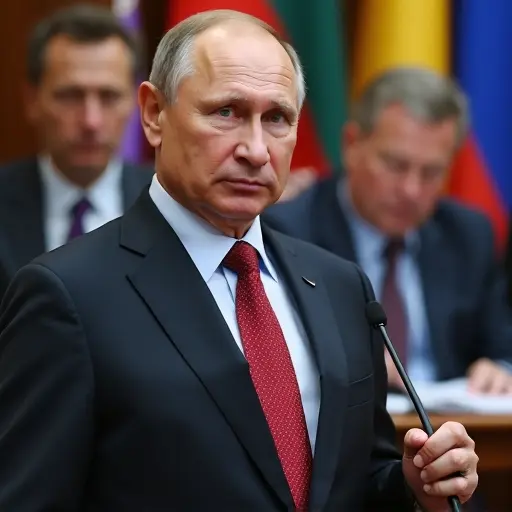
Russia's population is in steep decline. The birth rate has plummeted to a historic low of approximately 1.4 children per woman, far below the 2.1 replacement level needed to sustain the population. President Vladimir Putin has long championed pronatalist policies, declaring in 2024 that families with three or more children must become "the norm." Yet, the demographic crisis in Russia has only worsened, exacerbated by high male mortality from cardiovascular diseases, accidents, alcohol abuse, and the ongoing war in Ukraine.
Official demographic data has been classified since 2025, making it increasingly difficult for independent demographers to track the slide. Aleksej Raksja, a prominent Russian demographer recently labeled a "foreign agent," told NOS that Russia's death rate remains far above European levels, especially among men. "The use of strong alcoholic beverages is high, and smoking is much more prevalent than in Western countries," he explained.
A Festival of Family Values
Against this bleak backdrop, the mass wedding festival served as a buoyant celebration of traditional family values. Couples dressed in everything from modern suits and gowns to elaborate national costumes, with many incorporating elements of Tatar, Bashkir, or other ethnic attire. A young bride wearing a floral crown told reporters: "With this great event, we are giving our country children. We set an example for other couples not to be afraid."
Another pair in traditional dress shared their dream: "We think we will have at least three children. We want a big family, a big house. We are going to work on that." Such sentiments are music to the ears of the Kremlin, which has been rolling out ever more aggressive measures to boost births. These include cash bonuses for student mothers—up to 100,000 rubles in some regions—free fertility testing and egg-freezing in Moscow for women aged 18–40, and a ban on so-called "child-free propaganda."
Symbolism Over Substance?
Despite the festival's upbeat atmosphere, experts remain deeply skeptical that such events can meaningfully lift the birth rate. Raksja dismissed the festival as "symbolic" at best. "If it does anything, it's purely symbolic," he said. "Money is the key to a higher birth rate. Childcare, housing—if those are provided, you see an immediate impact on the birth rate. In the past, I would have said the money isn't there. But when I see what is being spent on the war in Ukraine... with that money we could achieve the highest birth rate in Europe."
The war has not only drained state coffers but has also directly deepened the demographic wound. Military casualties—though officially censored—are estimated to be staggering, while hundreds of thousands of working-age Russians have fled the country. The Russian population decline now appears irreversible in the near term, with some projections showing the population could fall below 100 million by the end of the century.
FAQ: Russia's Baby Boom Push
Why is Russia holding mass wedding festivals?
The Kremlin is trying to promote marriage and large families to combat a severe demographic crisis. The festival is part of a broader state effort to make family values a centerpiece of national identity.
What is Russia's current birth rate?
As of 2025–2026, Russia's fertility rate stands at around 1.4 children per woman, well below the 2.1 needed to maintain population size. This is among the lowest in Russian history.
How has the war in Ukraine affected Russia's demographics?
The war has sharply increased male mortality through combat deaths, driven mass emigration of educated citizens, and diverted public funds away from social programs that could support families.
What other pronatalist measures has Russia adopted?
Alongside wedding festivals, Russia offers financial incentives for childbirth, restricts abortion access, bans "child-free propaganda," and in some cases refers childless women to psychologists to encourage motherhood.
Are the pronatalist policies working?
So far, there is little evidence that they have reversed the demographic decline. Birth rates continue to fall, and experts argue that real economic support—affordable housing, childcare, and healthcare—would be far more effective than symbolic events.
Sources
This article is based on original reporting by NOS correspondent Fleur Kleinhuis and a producer/cameraman in Moscow. Additional data sourced from the Free Russia Foundation think tank and Wikipedia.


Follow Discussion