


 Deutsch
 English
 Español
 Français
 Nederlands
 Português


 Share
Share




Humanitarian Airbridge Opens to Reach Isolated Communities
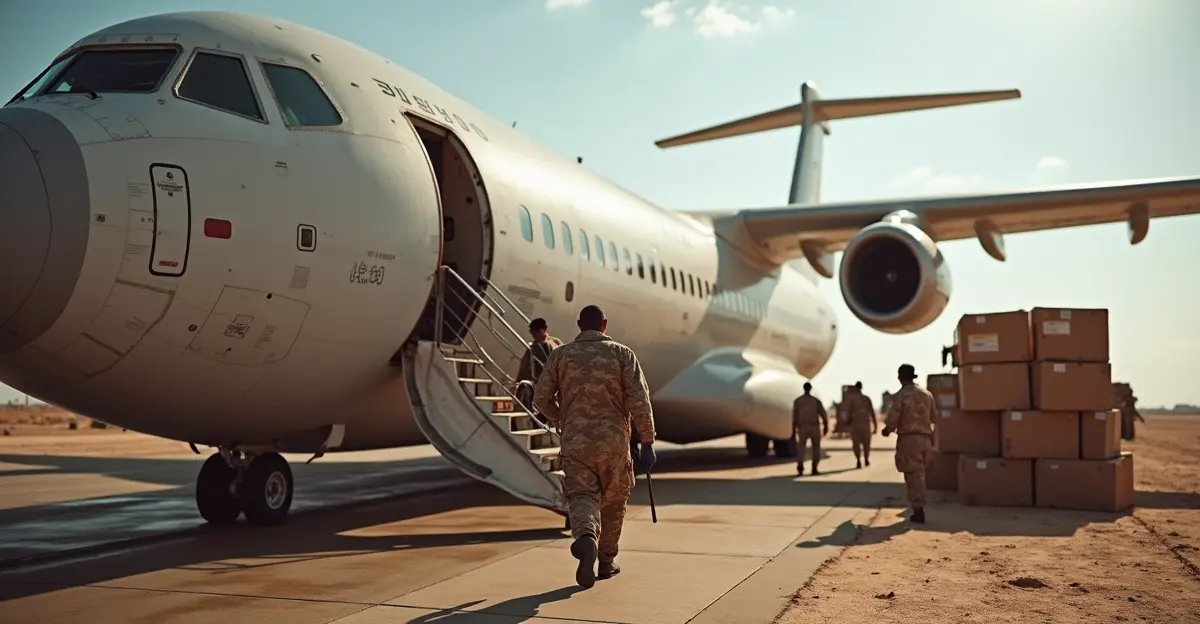
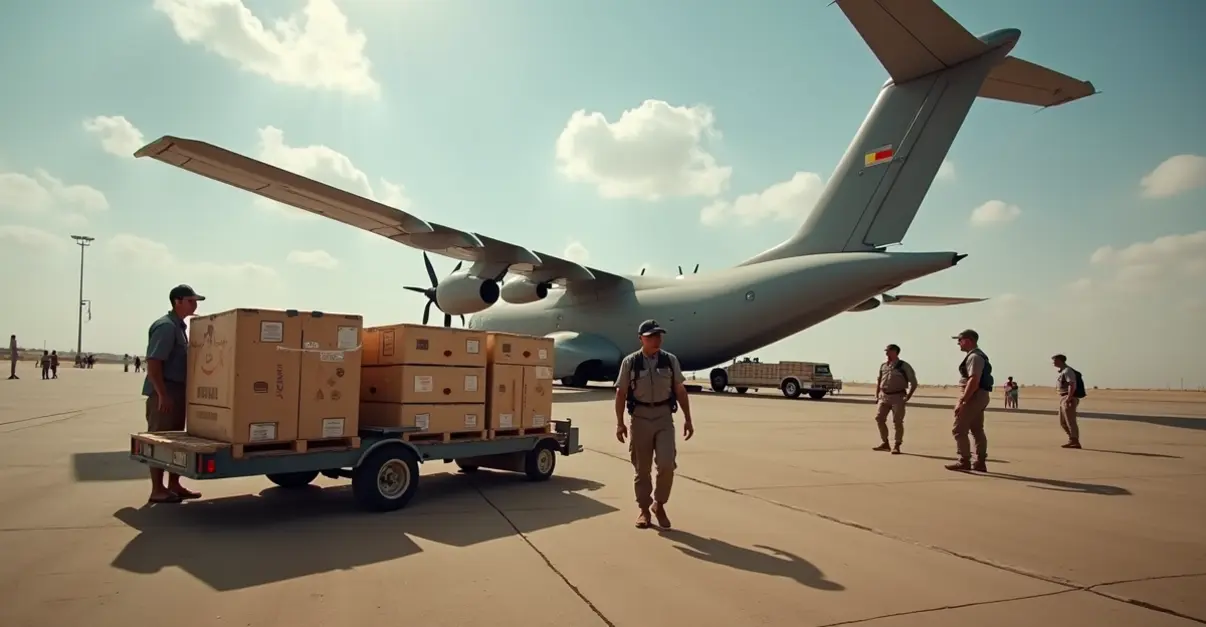
In a major breakthrough for humanitarian logistics, a new airbridge operation has been established to deliver critical aid to isolated communities facing severe crises. The initiative, coordinated by international agencies and supported by the European Union, represents a sophisticated response to the growing challenge of reaching vulnerable populations in hard-to-access regions.
Logistics Coordination and Security Challenges
The operation involves complex logistics coordination between multiple stakeholders, including government agencies, humanitarian organizations, and private sector partners. 'This isn't just about flying supplies from point A to point B,' explains logistics coordinator Maria Rodriguez from the International Organization for Migration. 'We're navigating complex security clearances, coordinating with local authorities, and ensuring every kilogram of aid reaches those who need it most.'
According to the EU Humanitarian Air Bridge program, which has been operational since 2020, over 80 flights have delivered more than 1,570 tonnes of humanitarian and medical aid to critical areas in Africa, Asia, and the Americas. The European Commission finances 100% of transport costs while partners provide cargo.
Distribution Plans and Last-Mile Delivery
The distribution plans for this new airbridge operation are particularly innovative, focusing on last-mile delivery challenges that often consume over 40% of logistics costs in humanitarian operations. 'We've learned from past operations that the final distribution is where most bottlenecks occur,' says William Lee, the author of this report and a humanitarian logistics expert. 'Our new approach involves pre-positioning supplies, working with local community leaders, and using technology for real-time tracking.'
Recent operations have demonstrated the effectiveness of such approaches. In June 2025, the first of three EU Humanitarian Air Bridge aid flights landed in Darfur, Sudan, delivering 21 metric tonnes of lifesaving aid to a region sheltering over half of Sudan's 10 million displaced people, as reported by CGTN. An additional 35 metric tonnes of aid was en route from Chad at the time.
Security Clearances and Operational Complexity
Obtaining security clearances remains one of the most challenging aspects of humanitarian airbridge operations. In conflict zones and politically sensitive regions, multiple layers of approval are required from national governments, local authorities, and sometimes armed groups. 'Each flight requires diplomatic coordination at the highest levels,' notes a European Commission official who spoke on condition of anonymity. 'We're working with specialized logistics partners who understand these complexities and can navigate the bureaucratic hurdles.'
The Specialized Logistics Solutions whitepaper highlights how companies are preparing for 2026 humanitarian projects by addressing challenges like climate-related disasters, geopolitical restrictions, and complex urban distribution networks. Their expertise includes customized supply chain planning, multimodal transport options, and compliance with international regulations.
Future Outlook and Scaling Operations
Looking ahead to 2026, humanitarian organizations are planning to scale airbridge operations to address growing needs. The European Commission's Humanitarian Implementation Plan for 2025 outlines strategies that will likely extend into the coming year, focusing on coordinated response mechanisms and improved delivery systems.
'What we're seeing is a maturation of humanitarian logistics,' says Dr. Anika Patel, a researcher at the Humanitarian Logistics Institute. 'From the EU's air bridge operations in Gaza delivering over 2,700 tonnes via 60 flights, to recent missions in Syria and Sudan, we're developing more efficient, responsive systems that can adapt to different crisis scenarios.'
The airbridge model has proven particularly effective in recent responses to crises in Gaza, Lebanon, Syria, Democratic Republic of Congo, Sudan, and Chad. These operations fill critical gaps when commercial transport is unavailable or insufficient, operating on a needs-based approach that coordinates with EU Member States, destination countries, and humanitarian organizations.
As climate change increases the frequency and intensity of natural disasters, and geopolitical conflicts continue to displace populations, the importance of reliable humanitarian airbridges will only grow. The current operation represents both an immediate response to urgent needs and a blueprint for future crisis management.




Follow Discussion