


 Deutsch
 English
 Español
 Français
 Nederlands
 Português


 Share
Share




Economic statecraft has become the new frontline of global power, according to the World Economic Forum's Global Risks Report 2026. Released on 14 January 2026 and based on a survey of more than 1,300 leaders and experts, the report ranks geoeconomic confrontation as the number one global risk for the next two years, with state-based armed conflict close behind as the second-ranked near-term threat. This marks a decisive shift: tariffs, export controls, investment screening and sanctions are now the primary instruments of coercion between great powers.
What Is Geoeconomic Confrontation?
Geoeconomic confrontation refers to the systematic use of economic levers—tariffs, sanctions, export controls, investment screening, subsidies and payment-system controls—by states to reshape economic interactions, build self-sufficiency, constrain rivals and consolidate spheres of influence. The WEF report defines it as the deployment of these tools for strategic advantage rather than purely commercial ends. Global supply chain resilience has become a national security priority, as interdependence is increasingly treated as a vulnerability rather than a guarantee of peace.
The Weaponization of Trade and Supply Chains
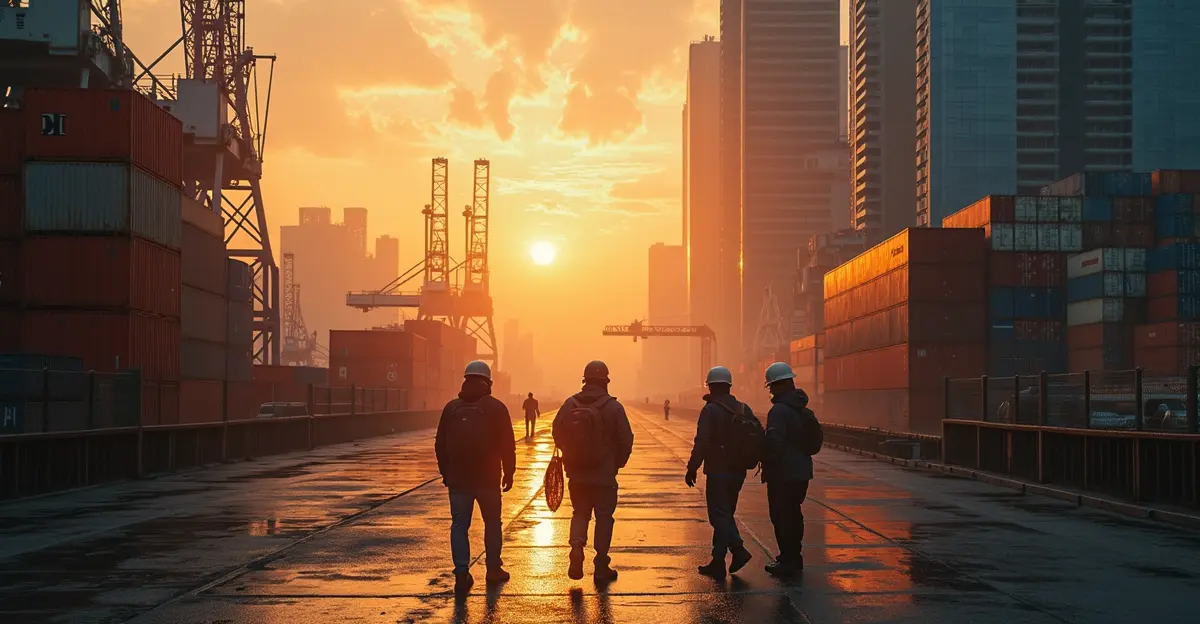
Critical minerals have emerged as the key battleground. China controls roughly 90% of rare earth processing and 60% of lithium processing, giving Beijing enormous leverage over technologies from electric vehicles to defence systems. In response, Washington has launched the FORGE partnership and the Export-Import Bank's $10 billion Project Vault to secure alternative supply chains. More than 18,000 discriminatory trade measures have been enacted globally since 2020, and US effective tariffs on Chinese imports now average around 22%. Export controls on critical minerals are no longer about regulatory compliance; they are strategic weapons. The result is a shift from just-in-time globalisation to friendshoring and reshoring, with 73% of large firms pursuing reindustrialisation and an estimated $2.5 trillion in planned investment. Experts warn that rebuilding independent supply chains could take 20 to 30 years.
Financial Fragmentation and Investment Screening
Sanctions-based financial fragmentation is accelerating. Western-led restrictions on Russian assets and expanding US secondary sanctions have pushed countries to build parallel payment systems and reduce dollar dependence. Cross-border investment screening has tightened across the EU, the United States and Asia, with national security reviews now covering semiconductors, data infrastructure and critical logistics. The WEF report notes that economic downturn and inflation risks climbed eight positions in the short-term ranking, while asset bubble risk rose seven—evidence that weaponized finance is compounding macro instability. This fragmentation is not merely bilateral; it is reordering the architecture of global trade and capital flows.
Middle Powers Caught Between Beijing and Washington
At Davos 2026, middle powers delivered a blunt assessment. Canadian Prime Minister Mark Carney told the annual meeting: We are in the midst of a rupture, not a transition. Singapore's president warned of a self-reinforcing decline into disorder, while EU Commission President Ursula von der Leyen insisted the change is permanent. For economies from Egypt to Morocco to Southeast Asia, the strategic choice is no longer between efficiency and resilience but between competing spheres of influence. Middle power diplomacy is being redefined around sovereignty as resilience: building industrial capacity, diversifying suppliers and joining coalitions that can negotiate with both Washington and Beijing. The Carnegie Endowment's Stewart Patrick calls this the middle power moment, arguing that second-tier powers may help reform multilateral cooperation even as the system remains bipolar.
FAQ: Economic Statecraft in 2026
What is geoeconomic confrontation?
It is the use of tariffs, sanctions, export controls, investment screening and payment-system restrictions by states to coerce rivals and build self-sufficiency.
Why did geoeconomic confrontation overtake armed conflict in the WEF report?
Economic tools are being used daily with lower escalation risk, while 68% of experts expect a fragmented multipolar order where trade and finance are weaponized.
Which sectors are most exposed to export controls?
Critical minerals, semiconductors, advanced manufacturing and data infrastructure face the tightest restrictions, with China controlling 90% of rare earth processing.
How are middle powers responding?
They are diversifying supply chains, tightening investment screening and building coalitions to avoid choosing sides between Washington and Beijing.
Conclusion and Future Outlook
While environmental risks still dominate the ten-year horizon, geoeconomic confrontation is the immediate shock reshaping investment, trade and diplomacy. Adverse AI outcomes climbed from 30th to fifth place in the ten-year outlook, underscoring the breadth of the new risk landscape. The report's finding that 68% of respondents expect a fragmented multipolar order suggests economic statecraft will remain the central arena of competition. For policymakers, the task is to navigate a world where economic interdependence is weaponized—without triggering the very conflicts they seek to avoid.


Follow Discussion