


 Deutsch
 English
 Español
 Français
 Nederlands
 Português


 Share
Share




In 2026, the global economic order is undergoing a structural realignment not seen since the end of the Cold War. Two parallel and reinforcing trends—the erosion of US dollar hegemony and the weaponization of critical mineral supply chains—are accelerating a multipolar transition that will define strategic competition for the rest of the decade. The US dollar's share of global foreign exchange reserves has fallen below 57% for the first time since 1995, while the BRICS bloc now conducts over 67% of intra-bloc trade in local currencies. Simultaneously, China's dominance in critical mineral refining—controlling over 60% of global capacity—has prompted the United States to launch FORGE (Forum on Resource Geostrategic Engagement) with 54 nations and mobilize over $30 billion to counter Beijing's stranglehold on the materials essential for AI, batteries, and defense technologies.
The Dollar's Declining Dominance: Data and Drivers
According to the IMF's Currency Composition of Official Foreign Exchange Reserves (COFER) database, the US dollar's share of allocated reserves fell to 56.32% in the second quarter of 2025, the lowest level since tracking began in 1995. This represents a dramatic decline from 71% in 1999 and a peak of 72% in 2001. While the euro has held steady at roughly 20% and the Chinese renminbi remains at just 2.1%, the real story lies in the surge of gold purchases by central banks. In 2025, central banks bought a record 1,100+ tonnes of gold, with BRICS nations alone accounting for 663 metric tonnes. Gold's share of global reserves has risen from 13% in 2017 to approximately 30% in 2025.
The primary catalyst for this shift was the 2022 freezing of $300 billion in Russian central bank reserves held in Western jurisdictions. This unprecedented weaponization of the dollar-based financial system sent shockwaves through reserve managers worldwide, particularly in emerging economies. As one senior Asian central bank official told Reuters on condition of anonymity: 'The Russian reserves freeze was a watershed moment. It told every country that dollar reserves are not safe if you fall out of favor with Washington.'
China's Cross-border Interbank Payment System (CIPS) has emerged as a key alternative infrastructure. By April 2026, CIPS had 193 direct participants and 1,573 indirect participants across 117 countries, processing ¥180 trillion ($24.5 trillion) in 2025—a 43% year-over-year increase. The multi-CBDC platform mBridge, involving China, Hong Kong, Thailand, and the UAE, has processed $55.49 billion in settlements. BRICS de-dollarization progress is accelerating, with India now settling some Russian crude purchases in yuan and dirhams, and Saudi Arabia increasing yuan-priced oil exports to China from 15% to 22%.
The Critical Minerals Chessboard
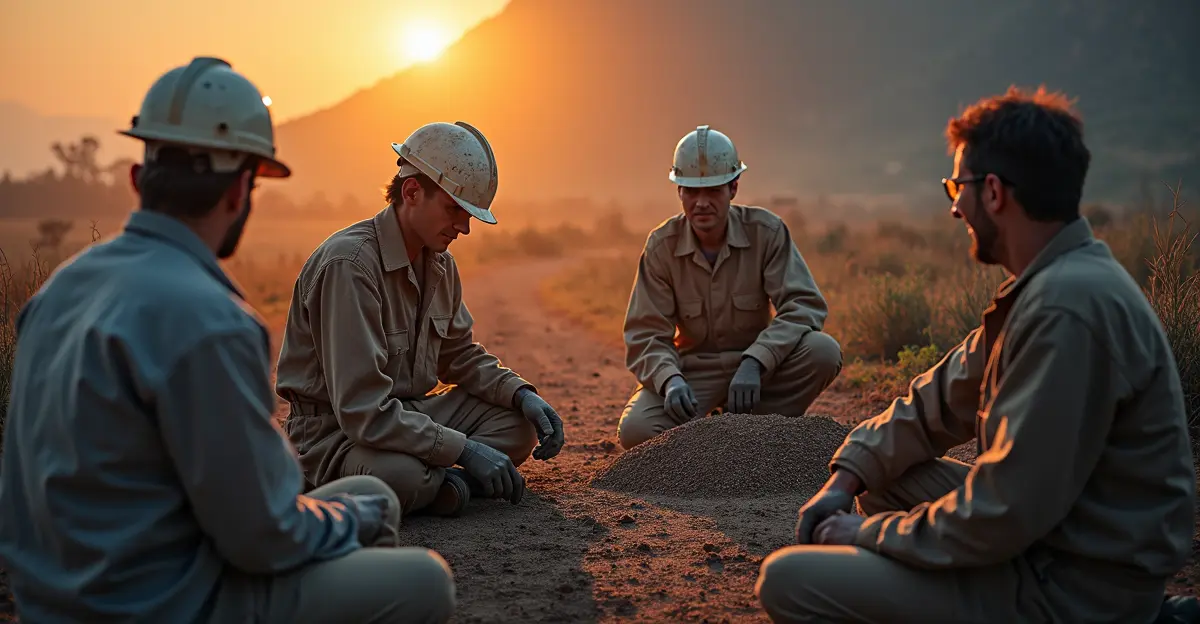
While the financial architecture shifts, a parallel battle is raging over the physical inputs of the 21st-century economy. China controls approximately 90% of global rare earth processing, 80% of tungsten, and 60% of antimony. According to the Institute for Energy Research, China is expected to maintain over 80% market share in rare earths and synthetic graphite through 2030. A March 2026 report from Climate Energy Finance revealed that China has locked in its dominance through a $120 billion surge in outbound investment in critical mineral supply chains.
In response, the United States has launched its most ambitious countermeasure to date. On February 4, 2026, the US Department of State hosted the 2026 Critical Minerals Ministerial, led by Secretary of State Marco Rubio and Vice President JD Vance. Representatives from 54 countries and the European Commission gathered to address the concentrated and vulnerable global market for critical minerals. The centerpiece was the announcement of FORGE (Forum on Resource Geostrategic Engagement), the successor to the Minerals Security Partnership. US critical minerals policy under FORGE aims to create a preferential trade-and-investment zone with coordinated price floors to counter adversarial market manipulation.
The US mobilized over $30 billion in letters of interest, investments, and loans over the preceding six months, including EXIM's Project Vault—a $10 billion domestic strategic reserve for critical minerals. Eleven new bilateral critical minerals frameworks or MOUs were signed with countries including Argentina, Morocco, the Philippines, the UAE, and the UK, bringing the total to 21 deals in five months, with 17 more countries reportedly completing negotiations. South Korea will chair FORGE through June 2026.
China's Export Controls Bite
China has not remained passive. Export controls introduced in 2025-2026 on rare earths, germanium, tungsten, antimony, and silver triggered price spikes of up to sixfold outside China. Licensing approval rates for European firms fell below 25%. A sweeping multi-institutional analysis published in early 2026 warned that over 80% of European companies depend on Chinese supply chains for materials essential to defense, EVs, and renewable energy. The report argued that China is weaponizing control—not scarcity—by using temporary, reversible restrictions to maintain pricing power and extract concessions while preventing large-scale Western alternative investment. Rebuilding independent alternatives could take 20-30 years, far exceeding the current geopolitical window.
Geoeconomic Confrontation: The New Normal
The World Economic Forum's Global Risks Report 2026, based on a survey of over 1,300 global leaders, ranks geoeconomic confrontation as the top near-term risk for the first time. Eighteen percent of experts surveyed ranked it as the risk most likely to trigger a material global crisis. The report describes an 'age of competition' marked by fragmentation, with half of respondents expecting 2026 to be 'turbulent' or 'stormy.' State-based armed conflict dropped to second place, underscoring how trade, finance, and technology are increasingly used as weapons of influence.
The convergence of de-dollarization and critical minerals competition creates a powerful feedback loop. As the dollar's reserve status erodes, US capacity to finance defense and industrial policy—including the $30 billion FORGE mobilization—faces structural headwinds. Conversely, as China tightens its grip on critical minerals, it gains leverage to promote yuan-denominated trade in those very commodities, further accelerating de-dollarization. Geoeconomic confrontation risks are thus self-reinforcing.
Expert Perspectives
Economist and former IMF official Dr. Eswar Prasad of Cornell University notes: 'We are witnessing the end of the dollar's monopoly, not its reign. The transition to a multipolar reserve system will be gradual but consequential. The critical minerals dimension adds a physical layer to what was previously a purely financial story.'
Jane Nakano, a senior fellow at the Center for Strategic and International Studies, emphasizes the urgency: 'The 12-18 month window for Western nations to act decisively on critical minerals is closing. China's export controls are a preview of a world where supply chain leverage translates directly into geopolitical power.'
FAQ
What is de-dollarization?
De-dollarization refers to efforts by governments, firms, and market participants to reduce the use of the US dollar in reserves, trade invoicing, cross-border finance, and domestic transactions. It is driven by geopolitical concerns, sanctions risk, and the desire for greater economic independence.
Why is the US dollar losing reserve share?
The dollar's share has declined from 72% in 2001 to 56.32% in Q2 2025 due to the weaponization of financial sanctions (especially the 2022 Russian reserves freeze), rising US fiscal debt ($38.86 trillion), central bank gold buying, and the emergence of alternative payment systems like CIPS and mBridge.
What is FORGE?
FORGE (Forum on Resource Geostrategic Engagement) is a US-led initiative launched in February 2026 to secure critical mineral supply chains. It succeeds the Minerals Security Partnership and involves 54 countries, with over $30 billion mobilized for investments and loans, including a $10 billion domestic strategic reserve called Project Vault.
How dominant is China in critical minerals?
China controls roughly 90% of global rare earth processing, 80% of tungsten, and 60% of antimony. It has invested $120 billion in overseas critical mineral supply chains and is expected to maintain over 80% market share in rare earths and synthetic graphite through 2030.
What is the connection between de-dollarization and critical minerals?
The two trends reinforce each other. China's dominance in critical minerals gives it leverage to promote yuan-denominated trade in those commodities, accelerating de-dollarization. Meanwhile, the dollar's declining reserve status limits US capacity to finance countermeasures like FORGE, creating a strategic feedback loop.
Conclusion: A Multipolar Future
The dollar's decline and the scramble for critical minerals are not separate stories—they are two sides of the same geopolitical coin. As the WEF report warns, the world is 'balancing on a precipice' of geoeconomic confrontation. The US retains structural advantages: the dollar still settles 88% of global forex transactions, and no credible alternative reserve currency exists at scale. But the trajectory is clear. The question is no longer whether a multipolar order will emerge, but how quickly—and how violently—the transition will unfold. For policymakers, investors, and citizens alike, understanding the interplay between financial and resource power is no longer optional; it is essential for navigating the decade ahead.




Follow Discussion